

Welcome to Kuala Lumpur – a city that pulses with powerful energy, weaving together tradition and modernity, past and future. Here every street tells a story of centuries of tolerance, cultural richness and human solidarity. It is a place where the noise of bustling markets mingles with the melodies of prayers from mosques, and the aromas of Malaysian satay and Indian curry drift through the warm air.
Kuala Lumpur, or as the locals call it – KL, is one of the most culturally diverse Asian capitals. Over the years people from all corners of Asia have settled here – Malays, Indians, Chinese, Thais, Tamils and many others, who have contributed to this whole mix of people, incredible culture, traditions, cuisine and religion. Thanks to this, Malaysia has an enormous number of places to visit, as well as lots of new things to try. Malaysia is a Muslim country, so don’t be surprised by the huge number of mosques you will see. The locals are extremely tolerant and treat other nationalities and religions with respect, which is why you will see Hindu temples as well as Catholic churches, Chinese temples and more.

The capital Kuala Lumpur has an enormous number of sights to offer the thousands of tourists who visit the city. Starting with the modern, futuristic skyscrapers, the colourful temples, mosques and churches, the historic sights, the green parks and jungles, the huge malls, the lively, noisy markets and, of course, the unique nightlife with bars and clubs bursting at the seams.
Like most people from the southern part of Asia, the locals are very friendly and speak excellent English. The infrastructure is very well developed, which will make a huge impression on you. Ever since I started travelling around Asia, I have noticed how far ahead they are, even if they are poorer than us Bulgarians. If you have the chance to travel to this part of the world, you will see huge boulevards with wide pavements, greenery, incredible buildings and skyscrapers.

In this article I have gathered the top 15 most interesting sights in Kuala Lumpur, as well as some tips that will make your stay there even more exciting and interesting.
When to visit Kuala Lumpur?
Kuala Lumpur enjoys a tropical climate with high temperatures and high humidity all year round. To make the best choice for your trip, have a look at the following periods:
- May – August: This is the best time to visit, as rainfall is rare and the weather is clearer.
- November – January: Watch out for the monsoon rains, which can be intense, although the festive season has its own charm.
- February – April: This period is also suitable, especially for lovers of festivals such as Chinese New Year.
How to get there?
Although there are no direct flights from Sofia to Kuala Lumpur, there are many and varied options for connecting routes. The major international airlines such as Turkish Airlines, Qatar Airways and Emirates offer convenient connections via their hubs in Istanbul, Doha and Dubai. The flights often have convenient connections, which makes the total travel time around 14-18 hours. Here is what to expect when planning:
Popular routes:
- Via Istanbul – Turkish Airlines offer short layovers and high-quality service. The flight to Istanbul is about 1 hour 20 minutes, after which you face a flight of about 10 hours to Kuala Lumpur.
- Via Doha – Qatar Airways provide a stopover at the modern Hamad International Airport, where you can enjoy excellent facilities. Flights from Sofia to Doha take about 4 hours, and from there to Kuala Lumpur about 8 hours.
- Via Dubai – Emirates provide first-class service and convenient connections. The flight to Dubai is about 5 hours, and on to Kuala Lumpur about 7 hours.
Getting from the airport:
Landing at Kuala Lumpur airport (KLIA) or KLIA2 is just the beginning of your adventure. Here is how to get to the city centre:
- KLIA Ekspres: A fast and convenient train that will take you to KL Sentral in just 28 minutes. The price is around 55 MYR for a one-way ticket.
- Buses: The ideal choice for budget travellers. The journey to the centre takes about 1 hour and costs 10 MYR.
- Taxi and Grab: Grab is a popular transport app in Malaysia that lets you book a ride easily and at a reasonable price. Expect to pay around 70-100 MYR depending on the traffic.
Where to stay?
Kuala Lumpur offers a variety of places to stay to suit every budget and preference:
- Luxury hotels: In the area around KLCC (Petronas Towers) you will find hotels such as the Mandarin Oriental and Four Seasons, which offer first-class service and refined amenities.
- Mid-range: Bukit Bintang is an excellent choice for those looking for good value for money. Hotels such as The Westin and Parkroyal are popular with tourists.
- Budget options: For economical travellers, the Chinatown and Brickfields neighbourhoods offer cosy hostels and guesthouses.
How to get around the city?
Kuala Lumpur is a city with well-developed infrastructure that makes getting around easy and affordable:
- The metro (LRT and MRT): The most convenient way to get around the city. Tickets are cheap (around 2-5 MYR), and the lines cover the key attractions.
- The monorail: Connects popular areas such as Bukit Bintang and KL Sentral.
- Grab: Easy to use and affordable, especially for evening outings or longer routes.
- On foot: Many of the sights are close to one another, which makes walking convenient and pleasant.
Which local dishes to try?
Kuala Lumpur is a gastronomic paradise offering a variety of flavours:
- Nasi Lemak: The national dish includes coconut rice, spicy sambal sauce, fried anchovies, eggs and often chicken or beef.
- Char Kway Teow: Traditional stir-fried flat rice noodles with seafood and spices.
- Roti Canai: A delicious flatbread served with aromatic curry.
- Laksa: A spicy soup with coconut milk, noodles and seafood.
What to see in Kuala Lumpur?
The Petronas Towers
The two twin towers are not only an architectural marvel but also the symbol of Malaysia’s modern spirit. At 452 metres high, they are the tallest twin towers in the world. Visitors can go up to the Skybridge on the 41st floor or to the observation deck on the 86th floor for a breathtaking view of the city. Lit up at night, the towers create a magical atmosphere.
As well as seeing the towers, you can stroll through KLCC Park, which offers green spaces and incredible photo spots. At the foot of the towers is Suria KLCC – a luxury shopping centre with numerous shops, restaurants and even an aquarium.
- Entrance fee: 80 MYR (around 16 euros)
- Useful tip: Book your tickets online in advance, as they often sell out quickly.

Menara Kuala Lumpur Tower (Menara KL Tower)
Menara Kuala Lumpur is another iconic structure in the city. At 421 metres high, the tower offers a unique 360-degree panorama from its observation deck. At the top – the Sky Deck – is also the popular Atmosphere 360 Restaurant, where you can enjoy dinner overlooking the city lights.
The tower also offers various attractions such as a mini zoo, an aquarium and a simulator theatre, which makes it suitable for families with children. Evening visits are especially popular because of the view of the city’s illuminated streets.
- Entrance fee: 49 MYR ( around 10 euros)
- Useful tip: Visit the tower towards evening to enjoy both the sunset and the night-time panorama.

Batu Caves

Batu Caves is one of the most sacred Hindu shrines outside India. The complex includes several limestone caves and temples decorated with statues of Hindu gods. The most impressive part is the 42-metre golden statue of the god Murugan, standing at the foot of the colourful 272 steps leading to the main cave. The place is also popular because of the Thaipusam festival, which attracts thousands of pilgrims.
Besides their religious significance, the caves offer incredible natural beauty and the chance to meet the monkeys that live there. They often come up to tourists, so be careful with your food and belongings, because they can become aggressive.
- Entrance fee: Free (the specialised caves charge a fee of about 5 MYR (1 euro))
- Useful tip: Wear comfortable shoes and be prepared for the heat, especially if you visit around midday.

Merdeka Square
Merdeka Square is the historic centre of Malaysia and the place where the country’s independence was declared in 1957. The highlight is one of the tallest flagpoles in the world, and the square is surrounded by colonial buildings such as the Sultan Abdul Samad Building. Its architecture is an impressive combination of Moorish and Victorian styles.
The place is popular for strolls and photos, especially in the evening, when the buildings are beautifully lit. Next to the square is the KL City Gallery, where you can learn more about the history and development of the city.
- Useful tip: The best time to visit is early in the morning or towards evening, to avoid the heat.

Chinatown (Petaling Street)
Chinatown is a lively market district that offers a unique mix of cultures, cuisine and trade. Petaling Street is the heart of the area, where you can find everything from cheap souvenirs to tempting street food. Among the must-try dishes are Wantan Mee (noodles with dumplings) and Hainanese chicken rice.
The area has many Buddhist and Taoist temples, including the Guan Di Temple and the Sri Mahamariamman Temple. This makes Chinatown not only a place for shopping but also for cultural enrichment.
- Useful tip: Haggle for better prices, especially when buying souvenirs or clothes.

Central Market
Central Market is one of the oldest shopping spaces in Kuala Lumpur. Founded in 1888, it has kept its charm as a cultural centre where you can find local crafts, including batik, woodcarving and silver jewellery. The market’s first floor has restaurants serving traditional Malaysian dishes.
One of the unique attractions is the “Art Lane” – an area dedicated to local artists and their works. It is the ideal place to buy an authentic souvenir.
- Useful tip: Visit the market early in the morning to avoid the crowds and find the best items.

Wilayah Persekutuan Mosque
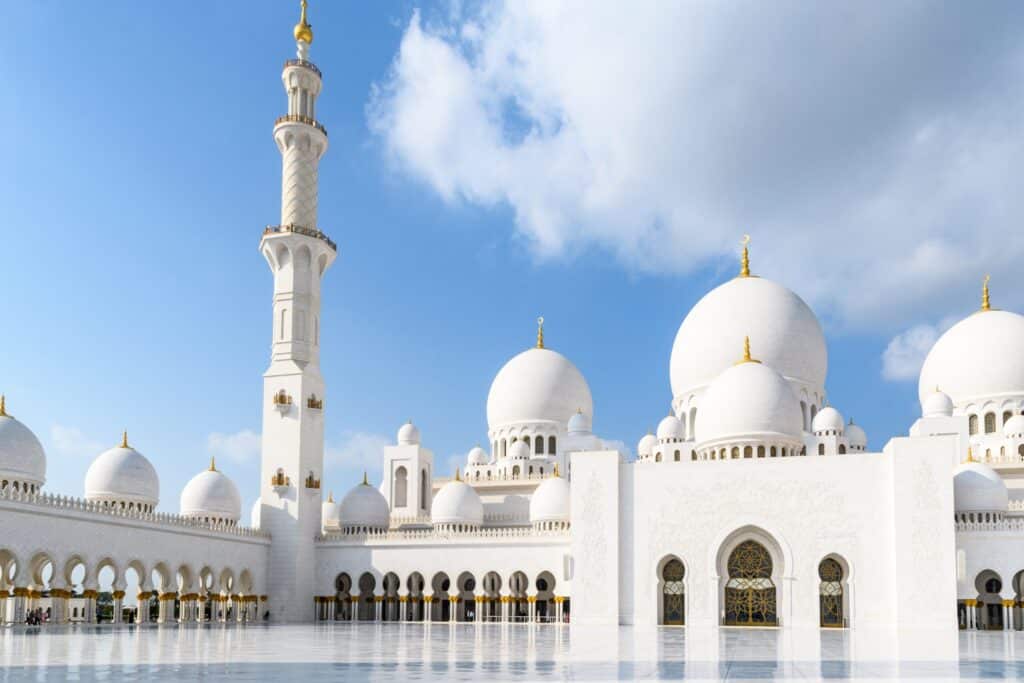
The Wilayah Persekutuan Mosque is known for its impressive architecture, which combines traditional Malay and Ottoman styles. Built in 2000, it is one of the largest mosques in Malaysia and can hold up to 17,000 people. Its exterior features beautiful domes decorated with exquisite mosaics, and the interior is adorned with intricate woodcarvings and crystal chandeliers. An interesting fact is that the architecture is inspired by the Blue Mosque in Istanbul, so those of you who have been to Turkey will quickly spot the similarities. Personally, I was particularly impressed by the mosque, considering that I have been to one of the largest in the world – the one in Abu Dhabi – but Wilayah Persekutuan definitely doesn’t fall short of it in beauty.
The mosque is located in a quiet area and surrounded by greenery, which makes it an ideal place for meditation and relaxation. Free guided tours are also offered here, providing interesting information about the history and significance of the building.
- Entrance fee: Free
- Useful tip: Visit the mosque in the morning, when the light creates magical effects on the domes. Respect the dress code and use the robes provided on site if necessary.

Perdana Botanical Gardens
Perdana Botanical Gardens is Kuala Lumpur’s green oasis. Located in the heart of the city, the gardens cover 91 hectares and offer peace and beauty in the midst of nature. Here you will find various themed areas such as the orchid garden, the hibiscus garden and the swan lakes.
It is the perfect place for a picnic, a stroll or a morning jog. In addition, the gardens also have a butterfly museum, which is especially popular with children.
- Entrance fee: Free
- Useful tip: Wear comfortable shoes and bring a bottle of water, as the area is large.

KLCC Aquarium (Aquaria KLCC)
Located near the Petronas Towers, Aquaria KLCC is one of the best aquariums in Asia. It offers a variety of marine life, including sharks, rays and coral fish. The main attraction is the tunnel with a transparent roof, which lets you watch the sea creatures up close.
The aquarium also has interactive zones where children can learn more about the marine world. This makes it a great destination for families and nature lovers alike.
- Entrance fee: 65 MYR (~13 euros)
- Useful tip: Visit during the shark feeding for the most exciting experience.

Thean Hou Temple
Thean Hou Temple is one of the largest Chinese temples in Southeast Asia. Dedicated to the goddess of the sea, it impresses with its six levels and intricate decoration, including statues, frescoes and ceramic details. The temple also offers a panoramic view of the city.
Traditional Chinese weddings and festivals are often held here, which makes it even more interesting to visit. The area around the temple is beautifully landscaped with gardens and statues of the animals of the Chinese zodiac.
- Entrance fee: Free
- Useful tip: Visit the temple early in the morning to avoid the crowds and take the best photos.

The Islamic Arts Museum Malaysia
This impressive museum is home to one of the largest collections of Islamic art in the world. It holds over 7,000 exhibits, including rare copies of the Qur’an, ceramics, textiles, weapons and models of famous mosques. The museum building itself is an architectural masterpiece, with its beautiful domed structure and exquisite mosaics.
The exhibitions are organised in themed galleries that allow visitors to trace the development of Islamic culture and art through the centuries. The museum is located near the National Mosque and is a must-stop for lovers of history and art.
- Entrance fee: 14 MYR (~3 euros)
- Useful tip: Spend at least two hours in the museum so you can explore all the galleries at leisure.

The Bukit Bintang neighbourhood
Bukit Bintang is the heart of nightlife and shopping in Kuala Lumpur. The area is known for its luxury malls, boutiques, restaurants and lively bars. Jalan Alor, the main street-food street, is the perfect place to try local specialities such as satay and durian.
During the day the area is ideal for shopping and coffee breaks, while in the evening it transforms into a lively entertainment hub. In addition to shopping, a number of cultural events and music performances take place here.
- Entrance fee: Free
- Useful tip: Try the street food on Jalan Alor and don’t miss a wander round Pavilion KL, one of the best-known shopping centres in the area.

KL Forest Eco Park
KL Forest Eco Park is a unique green oasis in the heart of the city. This urban park is one of the few remaining tropical forests in Kuala Lumpur and offers visitors the chance to immerse themselves in nature without leaving the city. The main attraction is the rope bridges (canopy walk), which offer incredible views of the forest and the city.
The park is home to many native plants and animals, which makes it a great place for lovers of nature and photography. A walk here is refreshing, especially if you want to escape the noise of the city.
- Entrance fee: Free
- Useful tip: Visit the park early in the morning or late in the afternoon to avoid the heat.

The National Museum of Malaysia (Malaysia National Museum)
The National Museum of Malaysia is a key sight for those who want to learn more about the country’s rich history and culture. The museum has four main galleries covering different aspects of history – from prehistoric times to the modern era. The exhibits include traditional clothing, weapons, musical instruments and replicas of ancient ships.
The museum building is remarkable in itself, with its traditional Malaysian architectural elements. As well as the permanent exhibitions, the museum often organises temporary exhibitions and cultural events.
- Entrance fee: 5 MYR (~1 euro)
- Useful tip: Explore the museum with a guide to get more in-depth information about the exhibits.

Sunway Lagoon Theme Park
Sunway Lagoon is one of the most popular amusement parks in Malaysia, offering a variety of entertainment for all ages. The park is divided into six zones, including a water park, an adventure park, a safari zone and an amusement ride zone. Among the main attractions are the huge water slides, the wave pool and the terrifying “Scream Park” attraction.
Here you can spend the whole day enjoying adrenaline-fuelled adventures or relaxing by the pools. The park is suitable both for families with children and for thrill-seekers.
- Entrance fee: 202 MYR (~40 euros) for adults; 170 MYR (~34 euros) for children
- Useful tip: Buy your tickets online in advance to save time and take advantage of discounts.


Author
Vilislav Alkantara