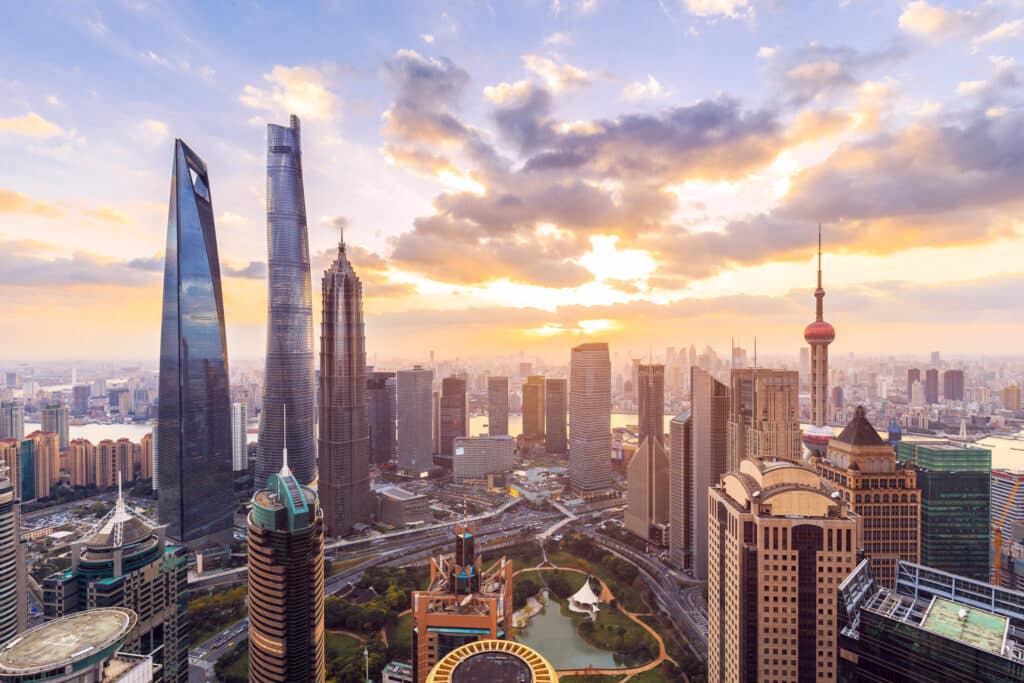

Shanghai, or “the City on the Sea”, as its name translates, is often called “the Paris of the East” – such is its reputation among travellers who want to experience the very best of cosmopolitan China. I had long dreamt of immersing myself in this stunning place, where the futuristic skyscrapers of Pudong tower over the riverfront, while the little lanes of the old town whisper memories of steadfast local traditions that neither time nor the modern spirit can fully erase. For me, this is “the face of Asia” – a millennia-old culture that strides confidently alongside the most advanced economic powers in the world, blending its flawless technology with an inimitable sense of spiritual depth and aesthetics.
Like other world megacities, Shanghai is a true “monster city” – it sounds extreme, but how else can you describe it when the sheer scale of the buildings and the crowds literally swallows you up? From the frantic traffic and the round-the-clock pulse of life along the boulevards, through the glossy shopping centres, to the hidden corners of traditional cuisine, where only the most curious dare to try some unexpected but incredibly tasty street snack. In the first hours after arriving, you feel a powerful surge of energy that sucks you in and won’t let you remain an outside observer – everything in Shanghai seems to run its own gigantic machine, charged with an indomitable spirit.
As is often the case with remarkable world cities, opinions about Shanghai range from wildly enthusiastic to flatly negative. Some people fall in love at first sight with the modern architecture and cosmopolitan atmosphere, while others prefer calmer destinations less crammed with skyscrapers. I definitely belong to the first group – I had been captivated for a very long time by the thought of seeing the “Paris of the East” with my own eyes. Now, as I write this blog and rewind the tape, I can still feel the adrenaline of my first encounters with the little street restaurants, the glances at the phenomenal neon lights in the evening and the natural excitement of a dream come true.
Shanghai lies on the shore of the East China Sea and has historically always been China’s gateway to the world. Travellers usually plan their stay here while making their way to the other provinces, but the truth is that this city deserves far more than a passing glance. In the lines below I will present the top 15 most interesting sights which, in my opinion, you should not miss if you truly want to feel the soul of Shanghai and realise that China is far more than ultra-modern buildings and technological innovation.

How to get there?
The most convenient way to get to Shanghai from Bulgaria is by plane, most often with a connection at one of the larger Middle Eastern airports, such as Istanbul, Doha or Dubai. The journey usually takes between 12 and 18 hours, depending on the connections. It’s a good idea to buy your tickets a few months in advance to find better deals.
Shanghai has two major airports – Pudong (Pudong International Airport, PVG), where most international flights land, and Hongqiao (Hongqiao International Airport, SHA), which is used more often for domestic flights. From Pudong Airport you can get to the city centre on the high-speed Maglev train, which reaches speeds of over 400 km/h and will take you to the city in only about 8 minutes. Alternatively, you can use the metro (Line 2), a bus or a taxi.
When to visit Shanghai?
Shanghai has a humid subtropical climate with four seasons, just like we have in Bulgaria. Spring (March–May) and autumn (September–November) are the best times to visit, when temperatures are moderate and the rain is not so heavy. Then you’ll be able to stroll around and explore the sights at leisure, without exhausting heat or unpleasant cold.
Summer in Shanghai is hot and humid, while winter can be fairly cold, though without heavy snowfall. If the weather doesn’t bother you, you can also go outside the “peak” seasons, when hotel prices are lower and the flow of tourists is not so great.
Where to stay?
Shanghai has a huge variety of accommodation – from luxurious five-star hotels in the Pudong and Bund districts, through boutique hotels in the old French Concession, to budget hostels and Airbnb apartments. If you want to be close to the main sights and enjoy a fairytale view of the skyscrapers, choose a hotel in Pudong or around the Bund.
For a more authentic feel, you can stay in the French Concession (Former French Concession), where the buildings are in Art Deco style and the streets are shaded by centuries-old plane trees. It’s a wonderful opportunity to immerse yourself in the calmer side of Shanghai, especially if the city noise and madness become too much for you.

How to get around the city?
The first thing you’ll notice is Shanghai’s impressive and extremely convenient metro network, which is one of the largest and most modern in the world. Tickets are affordably priced, and the signs and information boards are in Chinese and English, so finding your way shouldn’t be a problem. My advice is to buy a Shanghai Public Transportation Card so you can use the metro and buses without queuing for tickets every time.
Taxis are also a popular way to get around, but it’s a good idea to have the address written in Chinese, as not all drivers speak English. Alternatively, you can use apps such as Didi (the Chinese equivalent of Uber). If you want to feel even more Chinese, hire a bicycle or an electric scooter, but be careful in the heavy traffic.
Which local dishes to try?
Shanghainese cuisine (part of China’s rich gastronomy) is known for its slightly sweet flavour, thanks to the use of soy sauce and sugar. One of the must-try dishes is xiaolongbao – small steamed buns (dumplings) filled with meat and hot broth. Don’t miss shengjian mantou either – pan-fried buns with meat, the juicy version of xiaolongbao.
Another famous dish is “drunken” chicken (drunken chicken), prepared in a rice wine marinade. For lovers of fish and seafood there are plenty of dishes, such as wok-fried prawns or fish in sweet and sour sauce. For dessert you can try tangyuan – rice balls filled with sesame or bean paste, served in a warm, sweet soup.
What to see in Shanghai?
The Oriental Pearl (Oriental Pearl Tower)
The first thing you’ll notice is the unique futuristic design of spheres and columns rising above the Huangpu River in the Pudong district. Built in the 1990s, the “Oriental Pearl” was for a long time the symbol of modern Shanghai, and its observation deck offers an unforgettable 360-degree view of the whole city.
Besides admiring the cityscape from above, you can also visit the glass-floored skywalk for an extra dose of adrenaline. The tower itself also has a revolving restaurant, where you can enjoy dinner in an unforgettable setting.
Entrance fee: Around 160–220 CNY, depending on the levels and attractions you choose.
Useful tip: Choose a late afternoon visit so you can see the city both in daylight and in the evening, when the skyscraper lights are at their most impressive.

The Shanghai Tower (Shanghai Tower)
At 632 m tall, this is the second-tallest building in the world. It was designed with ecology in mind – its shape reduces the impact of strong winds, and the building uses modern energy-saving technologies. The observation deck (at around 561 m) lets you see the city literally at your feet.
Inside you’ll also find some of the fastest lifts in the world, reaching speeds of up to 20 m/s. The experience is almost like a flight – within seconds you find yourself at the top, from where the panorama of the Bund and the Huangpu River is unrivalled.
Entrance fee: Around 180 CNY for access to the observation floors.
Useful tip: Visit the tower early in the morning on a weekday to avoid the long queues of tourists.

The Shanghai World Financial Center (Shanghai World Financial Center – SWFC)
The SWFC is often called “the bottle opener” because of the distinctive shape of its upper section. At 492 m tall, the building was once the tallest in Shanghai, before the Shanghai Tower appeared. On the 100th floor you’ll find a glass floor and a picturesque view that seems to take your breath away.
Besides the main observation deck, the SWFC also hosts various exhibitions and events related to business and culture. On the lower floors there is a shopping centre and luxury restaurants, where you can combine the view with refined cuisine.
Entrance fee: Around 180 CNY for access to the highest deck.
Useful tip: Check the weather forecast – in foggy or rainy weather the view may be limited.

The Bund waterfront (The Bund, Waitan)
The Bund is one of the most iconic places in Shanghai – a colourful waterfront along the western bank of the Huangpu River. Here you’ll find beautiful buildings from the early 20th century, influenced by European architecture, from the time when the area was an international trading hub. A stroll along the Bund is a real delight – you’ll see imposing buildings in Art Deco, neoclassical and baroque styles.
On the other side of the river stretches the futuristic skyline of Pudong with its skyscrapers, as if you’ve stepped into a scene from a science-fiction film. The view is especially magical in the evening, when everything is bathed in light and the reflections shimmer in the water.
Entrance fee: There is no entrance fee, as this is a public waterfront.
Useful tip: Take a walk along the Bund at dusk, when the lights come on and make the view of Pudong truly magical.

Yu Garden (Yu Garden)
Yu Garden is an oasis of traditional Chinese architecture and garden art amid the noise of the city. Created in the 16th century, it is distinguished by its pavilions, artificial ponds with koi carp, little stone bridges and romantic corners for relaxation. Every nook speaks of the elegance of classical Chinese gardens.
A walk here is a real journey back in time – you’ll see typical curved roofs, exquisite carvings and dragon sculptures. Around the garden lies the Yu Garden Bazaar – a lively area with little shops and street food, where you can buy souvenirs and try local delicacies.
Entrance fee: Around 30–40 CNY.
Useful tip: Visit the garden early in the morning, before the crowds of tourists arrive, so you can fully enjoy its tranquillity.

Jing’an Temple (Jing’an Temple)
Located in one of the most modern and upmarket areas of the city (Jing’an District), this Buddhist temple dating from the 3rd century has undergone a number of reconstructions over the centuries. Today it impresses with its golden pagoda and massive wooden doors. Stepping into the courtyard, you’ll catch the scent of incense and see worshippers carrying candles and making offerings.
Jing’an Temple is an interesting contrast – it is surrounded by skyscrapers and shopping centres, while inside silence and calm reign. Its interior includes impressive statues of the Buddha, and the architecture combines traditional elements with more recent reconstructions.
Entrance fee: Around 50 CNY.
Useful tip: There are lots of interesting cafés and shops nearby, so you can combine your temple visit with shopping or lunch in this modern area.

The Jade Buddha Temple (Jade Buddha Temple)
This Buddhist temple is famous for its two jade statues of the Buddha, brought from Burma (today’s Myanmar). One statue is seated and the other reclining, and both are carved from a single piece of jade. The atmosphere inside is especially mystical – soft light and the aroma of burning incense create a feeling of being far removed from the chaos of the city.
The architecture is typically Chinese, with intricately curved roofs and bright colours. Many worshippers come to light candles and pray for luck, health and prosperity, so the place is always alive with religious rituals and ceremonies.
Entrance fee: Around 20–30 CNY.
Useful tip: Don’t take photos inside without permission, and respect the silence and the people who are praying.

Nanjing Road pedestrian street (Nanjing Road)
This is the most famous shopping street in Shanghai and one of the busiest in the world. It is divided into two parts – East Nanjing Road (closer to the Bund) and West Nanjing Road (the more upmarket area). Here you’ll find everything – from large shopping centres and boutiques of global brands to smaller shops with more affordable goods.
In the evening, Nanjing Road turns into a sea of neon adverts, people, street performers and food. You can try local snacks from the stalls or head to a trendy bar to immerse yourself in Shanghai’s nightlife.
Useful tip: Watch out for pickpockets in the more crowded areas and be wary of “special offers” from strangers.

The French Concession (Former French Concession)
This district is a remnant of the time when Shanghai was divided into foreign concessions. The buildings here are in Art Deco style, the streets are shaded by huge plane trees, and the atmosphere is calm, almost European. Stroll along famous streets such as Huaihai Road or Wukang Road to feel the romance of the old architecture.
In the past the area was home to diplomats, merchants and aristocrats, and today it is a popular spot for cafés, boutique hotels and trendy restaurants. You’ll also see lots of little galleries, bookshops and designer boutiques, which make the French Concession a favourite haunt of the art crowd.
Entrance fee: There is no entrance fee – this is an entire residential and commercial district.
Useful tip: Hire a bike or an electric scooter so you can explore more of the little streets and soak up the atmosphere.

Tianzifang (Tianzifang)
Located in the old French Concession, Tianzifang is an area of narrow, winding lanes and inner courtyards full of arty little shops, cafés, bars and workshops. Here you’ll find the authentic “shikumen” architectural style – stone houses with gateways that combine Chinese and Western elements.
The atmosphere is creative and bohemian, especially interesting for lovers of design, art and handmade crafts. You can buy unique souvenirs, try fusion cuisine or enjoy tea in some hidden little courtyard.
Entrance fee: There is no entrance fee for the area itself.
Useful tip: Visit on a weekday to avoid the weekend crowds, when Tianzifang fills up with tourists and locals.

Shanghai Disneyland (Shanghai Disneyland)
Located on the outskirts of the city, Shanghai Disneyland is relatively new (opened in 2016) and is the largest Disney park in Asia. Here you’ll find classic attractions such as Sleeping Beauty Castle, but also elements specific to China that give it a unique atmosphere. The park is divided into different “lands” – from Tomorrowland to Fantasyland.
Families with children (and not only them) will find endless opportunities for fun – parades, themed restaurants and shops, shows and fireworks in the evening. Get ready for a whole day of adventures, because there is lots to see and try.
Entrance fee: Prices range from around 399 CNY to over 600 CNY, depending on the season and the day of the week.
Useful tip: Buy tickets online in advance to secure quicker entry and avoid the long queues on site.

The Shanghai Museum (Shanghai Museum)
It stands on People’s Square (People’s Square) and is among the most prestigious museums in China, dedicated to Chinese art and history. Its architecture symbolises an ancient ritual vessel, the “ding”, hinting at the treasures you’ll discover inside – bronze vessels, ceramics, jade, calligraphy, paintings and other priceless artefacts.
The exhibitions are arranged by theme and will help you better understand the thousands of years of history and culture of the Celestial Empire. The halls are spacious, and the labels are in Chinese and English, which makes things easier for tourists.
Entrance fee: Entry is free, but on busy days you may have to wait.
Useful tip: Go early in the morning at weekends or on a weekday to avoid the longer queues. Bring an ID document – registration on site is sometimes required.

The China Pavilion from Expo 2010 (China Art Museum)
It was once the China Pavilion at the Expo 2010 World Exhibition, and today it has been transformed into the China Art Museum. The building has striking bright red architecture and is considered one of the largest art museums in Asia. The exhibitions inside include both traditional and contemporary Chinese art.
From the top level there is a view over the former Expo site, and the pavilion’s interior is spacious and well lit. Here you can see calligraphy, sculpture, painting and even digital art, showing the rapidly changing face of China.
Entrance fee: Entry is usually free, but a nominal fee is charged for some temporary exhibitions.
Useful tip: Check the opening hours in advance, and whether there are any special exhibitions that require booking tickets.

Shanghai Zoo (Shanghai Zoo)
If you’re travelling with children or simply love animals, Shanghai Zoo is a place where you can see over 6,000 animals from all over the world, including giant pandas, tigers, giraffes and exotic birds. It is set in a very green area, and the enclosures are quite spacious and well maintained.
Besides the animal world, the park has picnic areas, lakes and boat rides, as well as themed gardens, which make the place suitable for a full day out. Some of the rare species at the zoo are a real attraction, so don’t forget to set aside time for them.
Entrance fee: Around 40–50 CNY for adults.
Useful tip: Go in the morning, when the animals are at their most active, and to avoid the strong afternoon sun in summer.

Zhouzhuang – the Venice of the East (Zhouzhuang Water Town)
It lies about 80 km from Shanghai and is often called “the Venice of the East” because of its canals and old stone bridges. The little town has preserved its look from the past, with traditional houses and quiet waterways along which small boats glide. A stroll here takes you to a different era – far from the noise of the megacity.
Zhouzhuang is the ideal place for a day trip from Shanghai. You can enjoy local cuisine in one of the small family-run restaurants by the water or try the handmade crafts sold at the street markets. The atmosphere is romantic and peaceful – a true escape from the hustle and bustle of the city.
Entrance fee: Around 100–150 CNY (includes entry to the historic quarter and some of the house museums).
Useful tip: Plan your trip for early morning or a weekday to avoid the largest groups of tourists.

Author
Vilislav Alkantara