
There can hardly be anyone who has not, at some point in their life, dreamt of visiting mystical Egypt. This is one of the most enigmatic, ancient and exotic countries in the world – and for most of the year a rather hot one too – famous for its advanced civilisation, rich culture and unsurpassed architectural masterpieces. Ever since I was a child I dreamt of visiting this African “treasure trove”, shrouded in mysteries and riddles, of seeing the pyramids of Giza, riding a camel in the desert, wandering through the exquisite temples of Luxor and swimming over the beautiful reefs of the Red Sea. Now that it has finally happened and I have had the chance to see the beauty of Egypt with my own eyes, I can say that without doubt everyone should visit it at least once in their life.
It’s no secret that I am a huge fan of Arab culture. With undisguised excitement I bought the tickets to Egypt, and with a group of friends we decided to throw ourselves into a huge adventure by visiting the country completely on our own, independently – and I can safely say it exceeded our expectations. I made an effort to read everything I could find online beforehand so that we would be as prepared as possible. In this article I have gathered the top 10 places to visit in Egypt and all the condensed information you would need when planning your trip there.

When to visit Egypt?
Egypt is among the destinations that attract tourists all year round. Of course, it too has its high and low seasons. To the question “When is the best time to visit Egypt?” I would answer: “Any time except summer!”. The Christmas and New Year holidays are one of the busiest periods, prices are a little higher and the sights are packed with tourists. But at least the weather is rather pleasant in winter. The country has mild and relatively warm winters – with temperatures of around 20 degrees inland and around 25 on the Red Sea coast, so if you decide to see in the New Year in Egypt, you won’t go wrong. We visited at the end of March and the temperatures were pleasant – neither hot nor cold – and there weren’t such big crowds at the tourist sights, something I personally always try to avoid. Summer, on the other hand, is terribly hot, and although there are tourists then too, it is the low season in the country, with temperatures exceeding 40 degrees.
How to get there?
Unfortunately, there are still no direct flights from Bulgaria to Egypt, apart from charters. If you have decided to organise your trip yourself rather than through a travel agency, you can look at the various options online, the most convenient being via Istanbul and Athens (as the closest). WizzAir has flights from several European cities to the international airports in Cairo, Hurghada and Sharm El-Sheikh, so you can also buy tickets with a connection through a more budget-friendly destination. We flew with a connection in Rome and our Sofia–Rome–Hurghada tickets and back came to around 100 euros each way including luggage. From the airports in Egypt, my advice is to take a taxi to the accommodation you have chosen. For travelling between cities, you can also use the intercity bus network. The buses are clean, comfortable and safe, and some of them even offer wifi.
What do you need to know beforehand?
Egypt is a rather interesting destination, surrounded by all kinds of myths and legends. Before buying our tickets we hadn’t done particularly thorough research, and afterwards we started to have doubts about whether we would manage on our own without an agency. Quite a few people told us to be careful, that it was dangerous and that you couldn’t get from point A to point B safely outside the resorts. Well, nothing we heard turned out to be true. We managed, despite a few situations we found ourselves in where we had no idea what to do. Egyptians are extremely friendly and helpful and will always help, especially a tourist – firstly because tourism is the country’s main source of income, and secondly because they know that in most cases they will get a good tip for the help they have given.
- Do you need a visa? – The answer is yes, you do. All foreigners require a tourist visa, valid for 30 days after it is issued. You can get it online or simply on landing at one of Egypt’s international airports. My advice is to do it online in advance to save yourself the delay at the airport. The price is 25 USD.
- What documents do you need? – Apart from the tourist visa, which you can also get on arrival in the country, you will definitely need a passport, and here it’s important to point out that it must have at least 6 months left before it expires; otherwise there is a very high chance that you won’t be allowed into the country.
- What is the local currency? – The local currency is the Egyptian pound. It’s good to have some in advance, but even if you don’t manage to, locals accept both US dollars and euros – though when you pay this way they will round the amount in their favour and keep a much bigger tip than necessary.
- Is it safe? – Yes, but of course always keep your wits about you and be careful whom you trust. All the busy tourist sights have heightened security. Quite often you can see gendarmes with machine guns walking the streets. At first it seemed frightening to us, but at the hotel they explained that their job is to protect tourists and there is no real threat. If you have decided to travel on your own, ask the hotel staff to recommend a guide with whom to visit the sights you have picked out, don’t carry large amounts of cash with you and always lock your documents and valuables in the safe in your hotel room.
- Tips! – Tipping is part of the local culture, so make sure you have small change ready in advance. Leaving a tip for the taxi driver for putting your suitcase in the boot, or for the hotel chambermaid for cleaning, is considered absolutely normal, and if you don’t leave one, they will be offended and ask for it themselves.
What to see in Egypt?
Cairo
Cairo, besides being Egypt’s modern capital, is also the largest city in the country, with nearly 20 million inhabitants including the suburbs. In itself, Cairo is the typical Middle Eastern megacity – chaos, noise, smells, traffic, high crime, yet at the same time one of the most colourful and attractive cities for tourists in the whole of Africa. Without doubt the Egyptian capital offers its guests so many attractions that one day would certainly not be enough to see everything. From ancient Egyptian ruins, Roman remains, Islamic architectural masterpieces, markets, mosques, palaces, some of the museums richest in finds in the world, glitzy hotels along the Nile, to some of the poorest yet most overcrowded districts in the country – an absolute city of contrasts.
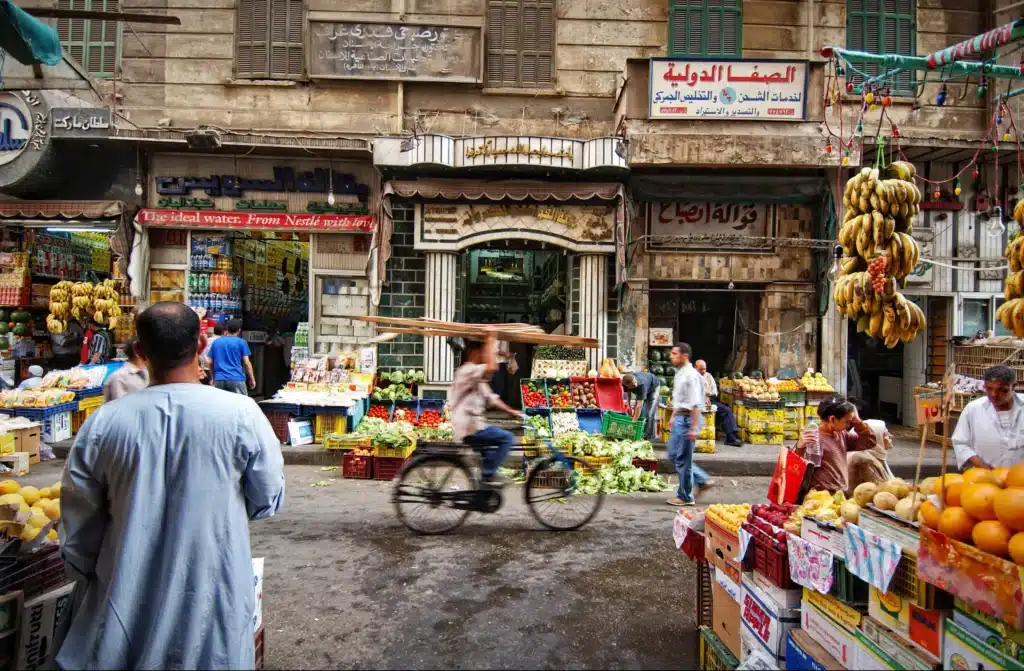
One of the most interesting and impressive experiences in the capital, at least for me, was visiting the largest open-air market – Khan El-Khalili souk, where you can buy spices, souvenirs, clothes, bags, jewellery, antiques and goodness knows what else. The highlight of any tour of Cairo, however, is the Egyptian Museum, where you can see the largest collection of finds from Ancient Egypt – an incomparable experience that will take you several millennia back in time for just 8 dollars.
And the best part is that even if you’ve chosen to spend your holiday by the Red Sea, you don’t have to miss out on the opportunity to explore Cairo. From the popular resorts of Sharm El-Sheikh and Hurghada, you can join organized day trips by plane, including round-trip flights, transfers, visits to the Pyramids of Giza and the Grand Egyptian Museum, as well as a professional English-speaking tour guide.
You can explore the itineraries and book your adventure with a Cairo Day Trip by Plane from Sharm El-Sheikh or a Cairo Day Trip by Plane from Hurghada.
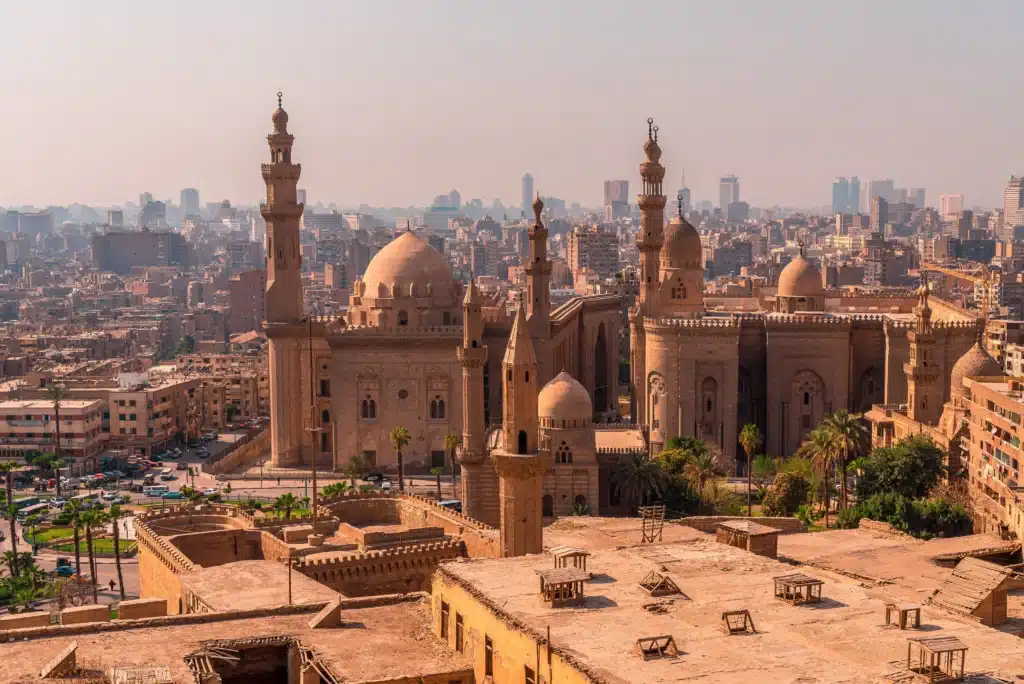
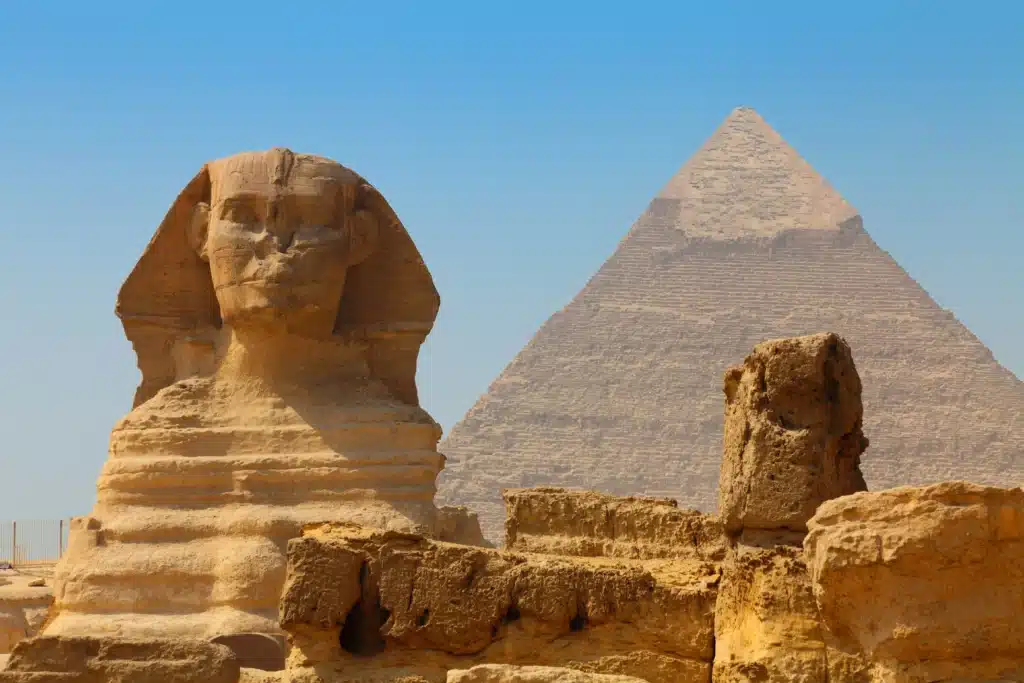
The Pyramids of Giza
Besides the fact that the imposing pyramids of Giza are the most popular sight in Egypt, they are also the only one of the Seven Wonders of the Ancient World to survive to this day. They are also part of the UNESCO World Heritage List. They are located just 25 km from Cairo and the complex includes the three pyramids – the Pyramid of Cheops, the Pyramid of Khafre and the Pyramid of Menkaure – as well as the one-of-a-kind Sphinx – a giant statue of a lion with a human head, symbolising the pharaoh of Egypt. Nearly 5,000 years ago the capital of Egypt was Memphis, and the Giza complex was used for the funerary ceremonies of the pharaohs of that time. The largest pyramid – that of Khufu, or Cheops, as his Greek name goes – is believed to date from then. All kinds of legends and theories surround the pyramids and their real function. Some even believe they were built long before the Egyptian civilisation spread across these lands. The area around the pyramids hides many more secrets, and archaeologists continue to discover new artefacts, tombs and mummies. Right next to the pyramid complex stands the Grand Egyptian Museum (Grand Egyptian Museum), whose opening is due to take place at the beginning of 2024. It will bring together some of the greatest finds from Ancient Egypt, including the golden mask of the world-famous pharaoh Tutankhamun and much more. It will be the largest museum in the world.
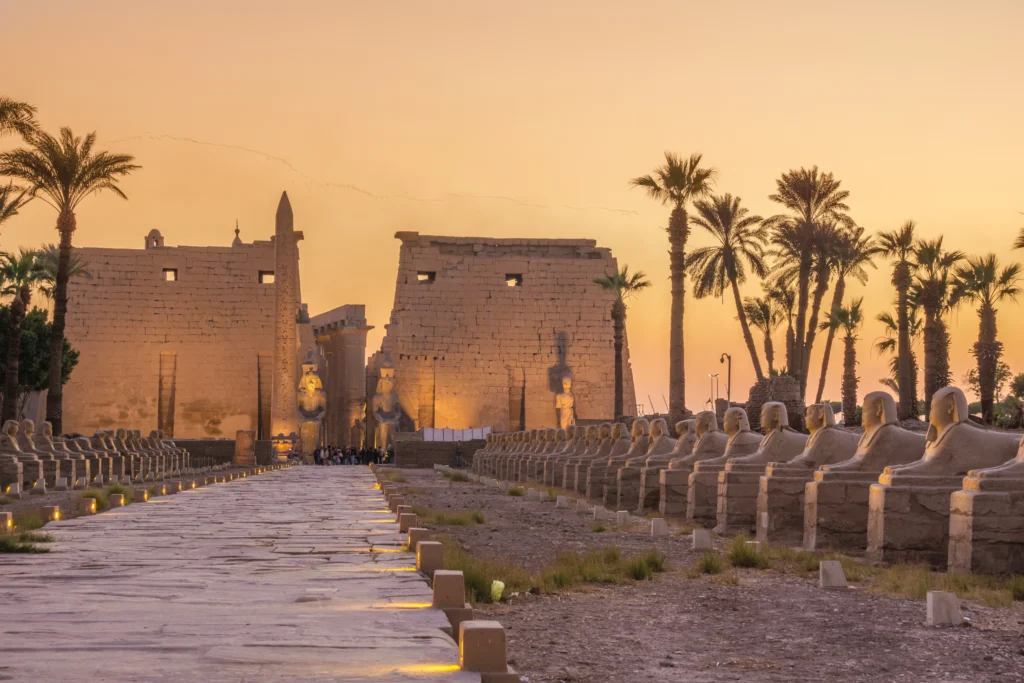
Luxor and the Valley of the Kings
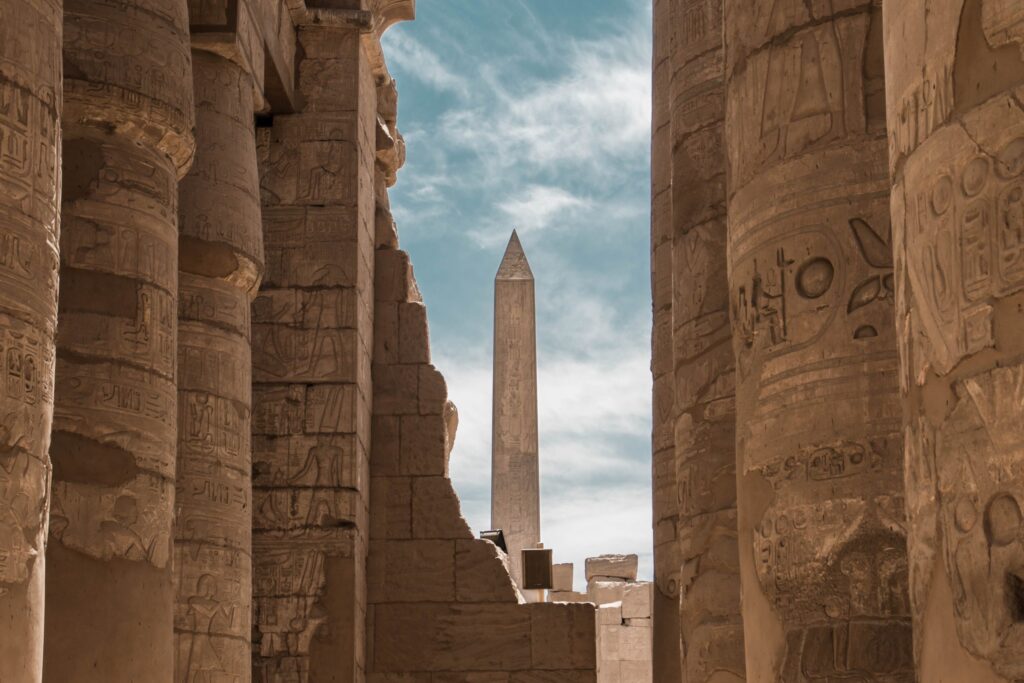
For now, Luxor is my favourite of the places we visited in Egypt. So much history and so many monuments left from Ancient Egypt are gathered in one place. Here I literally managed to transport myself into a fairytale ancient world that I had only heard and read about. The city lies on the banks of the River Nile, like most of the large cities in the country, and was the capital of Egypt nearly 3,500 years ago. Luxor is home to some of the most beautiful and historically valuable monuments of Egypt – the Valley of the Kings, the Valley of the Queens, the temples of Luxor, Karnak and Habu, the mortuary temple of Queen Hatshepsut, the Mummification Museum, the Luxor Museum and much more. You can read more in my blog devoted entirely to the sights of Luxor. It’s no coincidence that it is described as “the world’s greatest open-air museum”. Here you have the chance to take a sunrise balloon flight over the Valley of the Kings, similar to the flights offered in Cappadocia. You’ll be able to enjoy stunning views of ancient monuments woven into the modern urban landscape. To see everything in Luxor at a leisurely pace you will need at least two days. I strongly recommend hiring a guide to tell you about the sights themselves, so that what you are looking at has greater value for you.
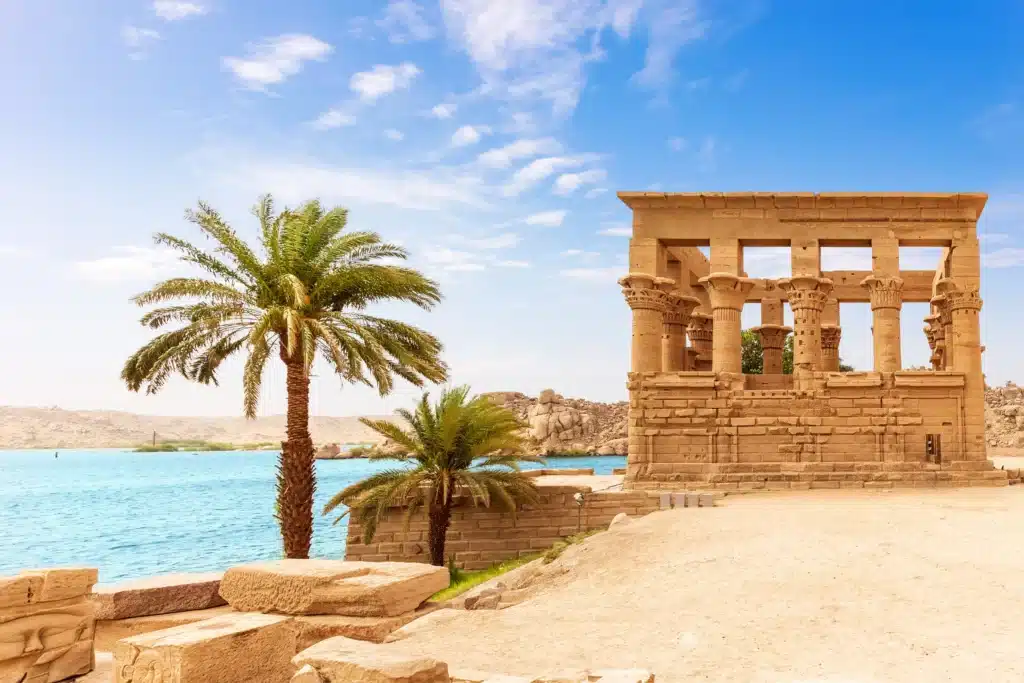
Aswan
Aswan was once a frontier city of Ancient Egypt, and today it is one of the country’s important trading centres thanks to its strategic position. It lies 240 km south of Luxor and you can easily get there by car, taxi or bus, but I most strongly recommend taking the opportunity to go on a Nile cruise between the two cities – an incredibly picturesque experience. The city has quite a few sights, the most significant of which are the Temple of Isis, set on the small romantic island of Philae, as well as the Unfinished Obelisk, Elephantine Island, the open-air city market and the Nubian Village. The Nubian Village will definitely impress you with its brightly coloured houses and cheerful hosts. For those of you who don’t know, the Nubians are a people who live in the historical region of Nubia, today located in southern Egypt and Sudan. On the west bank of the Nile, near Aswan and to the south of it, there are quite a few villages inhabited by members of various Nubian tribes, and this is a rather unusual and interesting experience for tourists, who normally visit Egypt to see the majestic pyramids and the tombs of the pharaohs. For me personally, this was one of the most memorable places we visited during our trip.
Abu Simbel
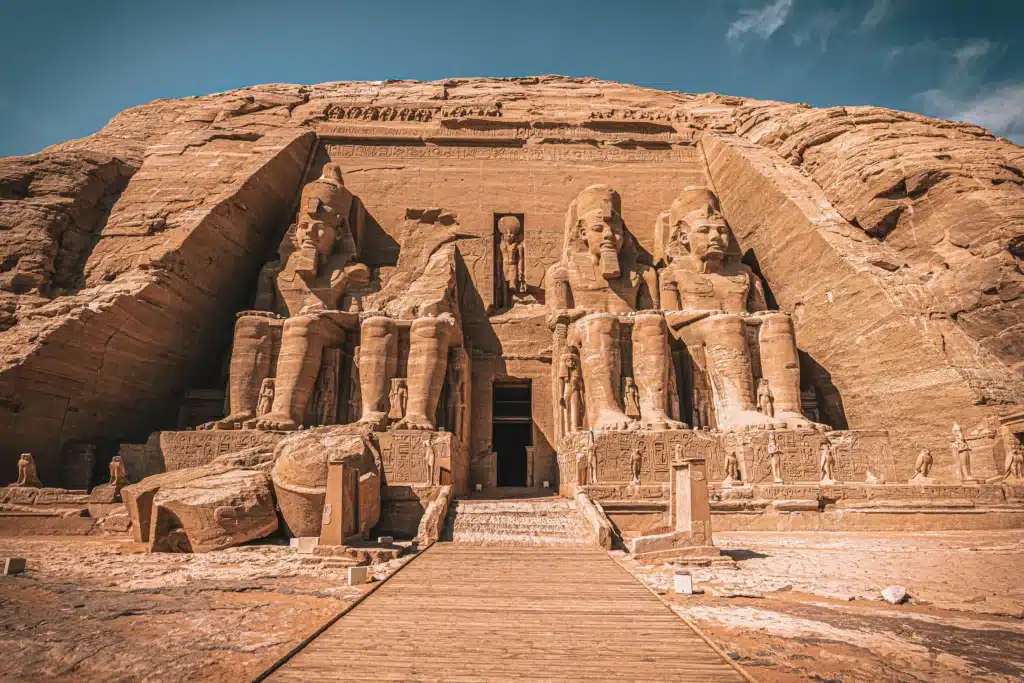
230 km south of Aswan, near the border with Sudan, lies another masterpiece of ancient Egyptian culture – the Abu Simbel complex, consisting of two magnificent massive rock-cut temples. The twin temples were built in the 13th century BC to mark the victory at the Battle of Kadesh and are dedicated to the pharaoh Ramesses II and his wife Nefertari. Of all the temples in Egypt that we managed to visit, I would definitely put Abu Simbel in first place.
A rather interesting fact is that the site where the complex was originally built turned out to be threatened with flooding by the newly created Lake Nasser reservoir. As a result, on UNESCO’s initiative, Abu Simbel was literally taken apart and moved to a plateau 64 metres higher than its original location. Can you imagine how you move something so imposing? Because I can’t.
Bear in mind that the Abu Simbel complex is not easy to reach because of its proximity to the Sudanese border. You can only get there by taxi or with an organised group. Even if you travel independently without an agency, absolutely every hotel in Luxor and Hurghada offers day trips to this destination.
Alexandria
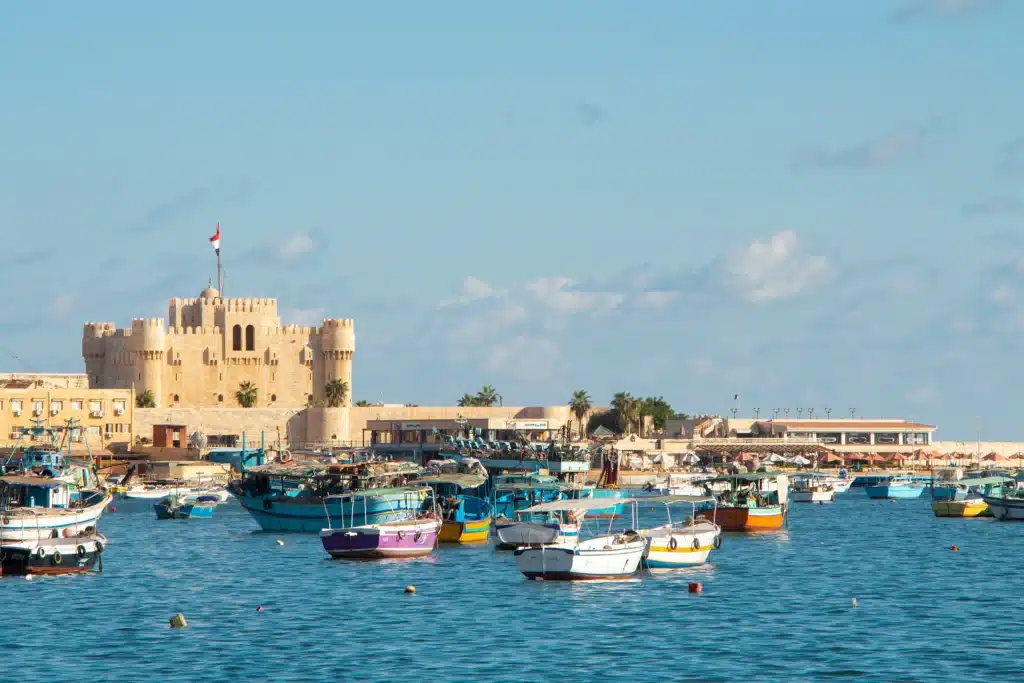
Alexandria is the largest seaport on the Mediterranean and the second-largest city in Egypt, founded by Alexander the Great in the 4th century BC. The city is well known for the former Lighthouse of Alexandria, which stood on the island of Pharos and was among the Seven Wonders of the Ancient World, along with the Library of Alexandria, which in its golden age held nearly 700,000 volumes. It was also from here that Cleopatra ruled – the last pharaoh of Egypt, whose tomb has still not been found. Today some of the city’s greatest sights are the citadel – the strongest defensive fortress on the Mediterranean in the 15th century – as well as the Graeco-Roman Museum, which has an exceptionally rich collection of artefacts from the period of Alexander the Great, Mark Antony, Julius Caesar and many more great rulers after the pharaohs. Alexandria has an international airport with direct flights to many European cities, so you could fly there with a connection.
A Nile cruise
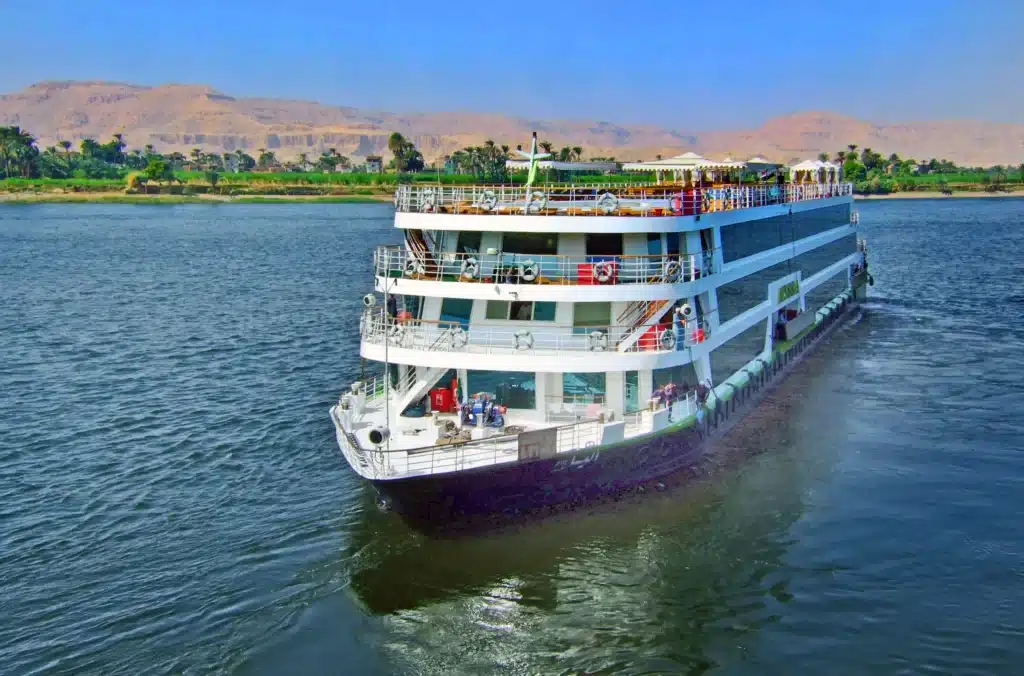
One of the most exciting and popular experiences for most tourists in Egypt is sailing on a cruise ship along the River Nile. There are various cruise options from the different cities along the Nile – from 3 to 7 days, the most popular being the route between Luxor and Aswan. The journey lasts two full days, giving you the best chance to delve into the depths of ancient Egypt, as most of the temples lie along the banks of the Nile. Bear in mind that most cruise operators employ not just guides but qualified Egyptologists, who tell you about the architectural sights you pass along the way, and this undoubtedly adds extra value to the whole experience.
If you want to fully immerse yourself in the magic of Ancient Egypt, I would highly recommend a 4-day Nile cruise from Aswan to Luxor, including a visit to Abu Simbel and a hot air balloon ride over Luxor.
The itinerary includes three nights aboard a cruise ship, a professional English-speaking Egyptologist as your guide, and visits to some of the country’s most breathtaking historical sites – the temples of Philae, Kom Ombo, and Edfu, the magnificent Abu Simbel, the Valley of the Kings, and the Temple of Hatshepsut.
The true highlight of this journey, however, is the sunrise hot air balloon ride over Luxor, offering a completely different perspective on the ancient temples and the endless landscapes of the Nile.
Between excursions, you can simply relax on the deck and watch life unfold along the riverbanks, where time seems to have stood still for thousands of years.
Without a doubt, this is one of the most unforgettable experiences Egypt has to offer.
The Red Sea coast
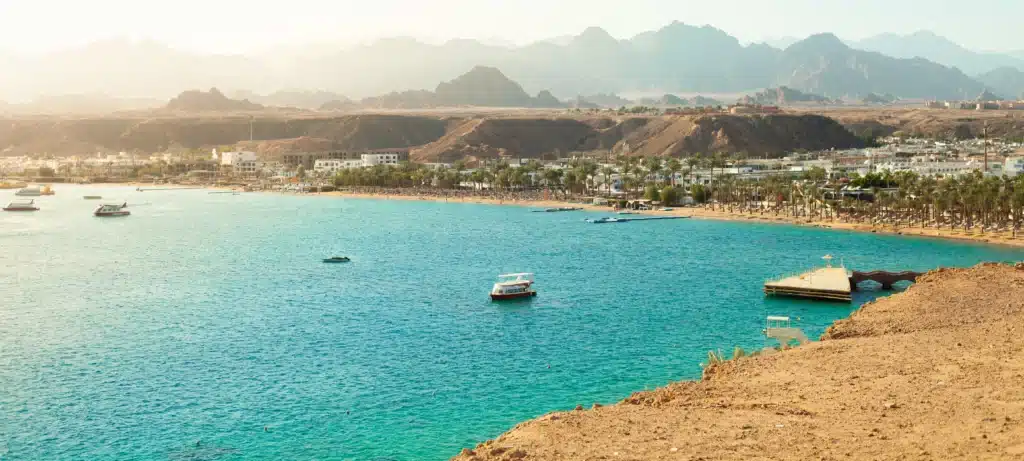
Most tourists in Egypt, like us, combine exploring the imposing ancient remains from the time of the pharaohs with a stay of a few days at one of the resorts on the Red Sea coast, famous for their beautiful beaches and coral reefs. Among Bulgarians the most popular resort is Hurghada, where we stayed too. Its proximity to some of the greatest sights in the interior of the country – Luxor, Aswan and Cairo – is what makes it so sought after among visitors to the country. From a logistical point of view, Sharm El-Sheikh – another popular and large Egyptian resort – is considerably further away and seems to remain in the shadows. In recent years another resort south of Hurghada has also been gaining popularity – Marsa Alam. Undoubtedly all three resorts have their pros and cons, but whichever you choose to suit the idea behind your trip, you won’t go wrong. The resorts offer their guests wonderful luxury all-inclusive hotel complexes, and you certainly won’t be bored. One of the main reasons tourists choose the resorts on the Red Sea coast is the opportunity to dive among the beautiful, colourful coral reefs, where you can see up close the incredible flora and fauna of the seabed. I told you about this kind of experience in my blog about the resort town of Aqaba in Jordan.
Siwa Oasis
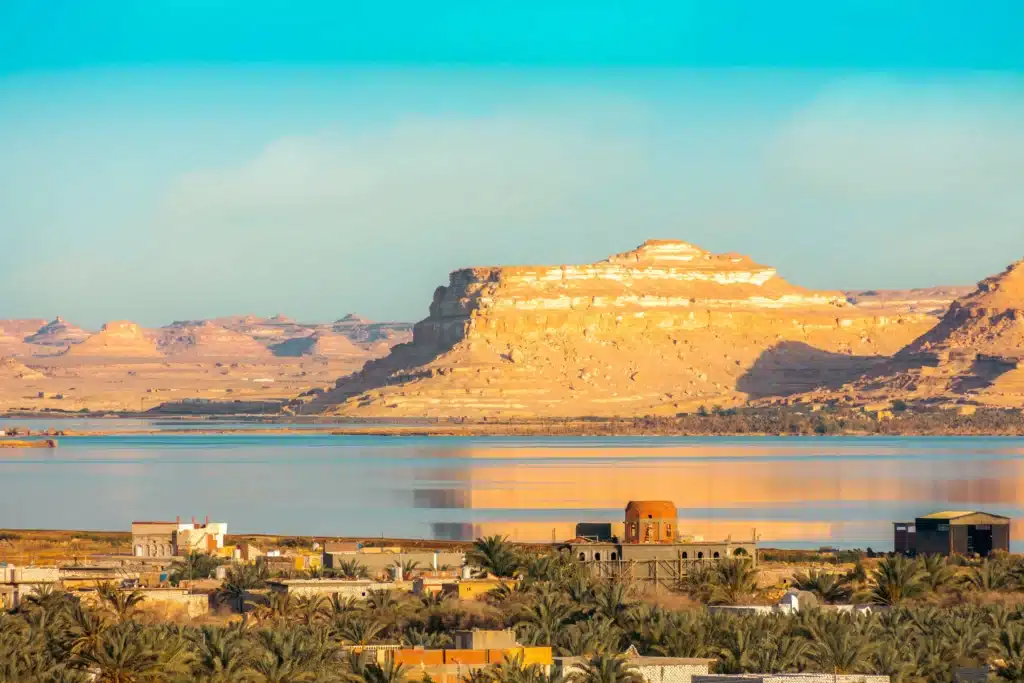
Siwa Oasis is certainly not among the most popular destinations in Egypt, because of its remoteness from the big tourist centres along the Nile and the Red Sea coast. It lies almost 800 km from the capital, Cairo, near the border with Libya, and is definitely not among the most accessible places. Nevertheless, over the last few years the area has been gaining more and more popularity on social media thanks to its beautiful exotic landscapes, and it is becoming a destination favoured by adventure seekers. To our great regret we didn’t manage to get there, but we have decided to do so on our next trip to Egypt. Who wouldn’t love to swim in the clear waters of salt lakes in the middle of the Sahara Desert, surrounded by palm trees? A true exotic idyll.
The main town in Siwa Oasis lies between two larger lakes and has existed for several centuries. It is certainly something quite different from the typical ancient Egyptian sights in the country. The town has a few hotels where you can stay, as well as quite a few guesthouses. Bear in mind that although people here are very open towards tourists, there is no well-developed tourist infrastructure. There are no large supermarkets and no banks. Have cash ready, because there is only one cash machine in the town.
The White Desert National Park
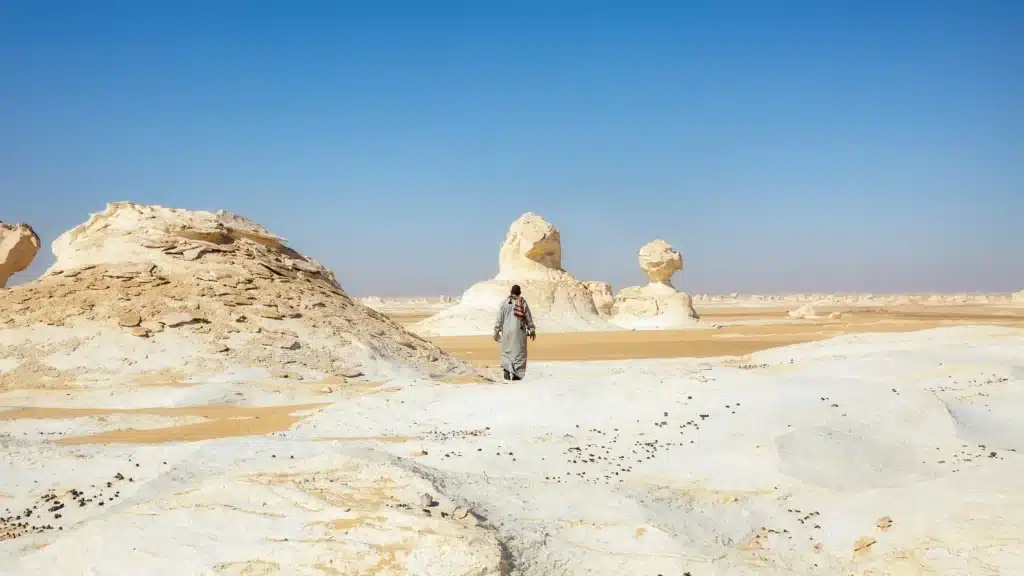
In Bulgaria we have the “Stone Mushrooms” near Zlatograd, and Egypt has its “White Desert”, where the curious rock formations resemble our “mushrooms”. The White Desert National Park is not among the most popular destinations in Egypt, but like Siwa Oasis it is attracting more and more attention from social media users. I personally have come across photos and videos from there several times. Near the little town of Farafra, in the heart of the Sahara Desert, lies this magical place, which bears the name “the White Desert” for good reason. As a result of erosion and countless sandstorms, nature has shaped very strange chalk rock formations which, as if sprung from nowhere, are scattered across the whole horizon. The view is fairytale-like, and for a moment you might think you are no longer in the land of the pharaohs but have been transported to some distant planet. Many of the tourists visiting the National Park prefer to spend the night here in the open at one of the Bedouin camps and enjoy the rocks changing shape in the starlight and the falling moonbeams. I highly recommend the place to lovers of unconventional experiences and beautiful views.
Author
Vilislav Alkantara