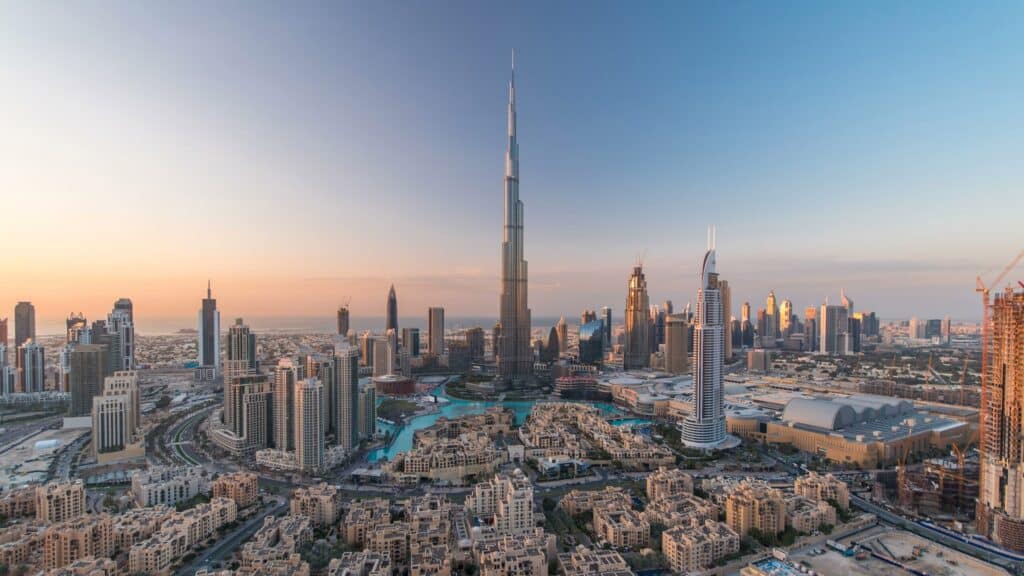
How often have friends or acquaintances from abroad asked you what our capital, Sofia, is famous for and what they could see if they came? I don’t know about you, but a few months ago I found myself in exactly that situation. Two close friends of mine from France told me they were coming to Bulgaria to ski, but wanted to stay in Sofia for a day or two and explore the city. I’ll admit it, I blushed, simply because apart from two or three things I couldn’t think of anything truly impressive in the capital. Yes, it isn’t my home town, but I have lived here for more than 10 years, and I realised that either there aren’t that many sights in the city, or I simply don’t know it at all. I got thinking – Rome has its Colosseum, Paris – the Eiffel Tower, London – Big Ben, Dubai – the Burj Khalifa, but what about Sofia? I did some fairly serious research, and asked friends who have literally lived here all their lives, and it turned out that our little Sofia has quite a few interesting places, which would impress visitors to the city and locals alike. After reading this blog you will definitely see Sofia through different eyes.
Sofia has an exceptionally rich history, even though very few of the monuments that bear witness to it have survived to this day. Our capital is also one of the oldest cities in Europe, and over the centuries it has changed not only its rulers but also the peoples who inhabited it and shaped its culture. A rather interesting fact is that the Roman emperor Constantine the Great often used to say “Serdica is my Rome” and even wanted the capital of the empire to be here rather than in Constantinople. In this article I have gathered 30 of the most interesting sights in the capital, Sofia – a varied mix of places to suit every taste and occasion, whether it’s a leisurely weekend stroll or a city walk to get to know the place.
St Alexander Nevsky Memorial Church
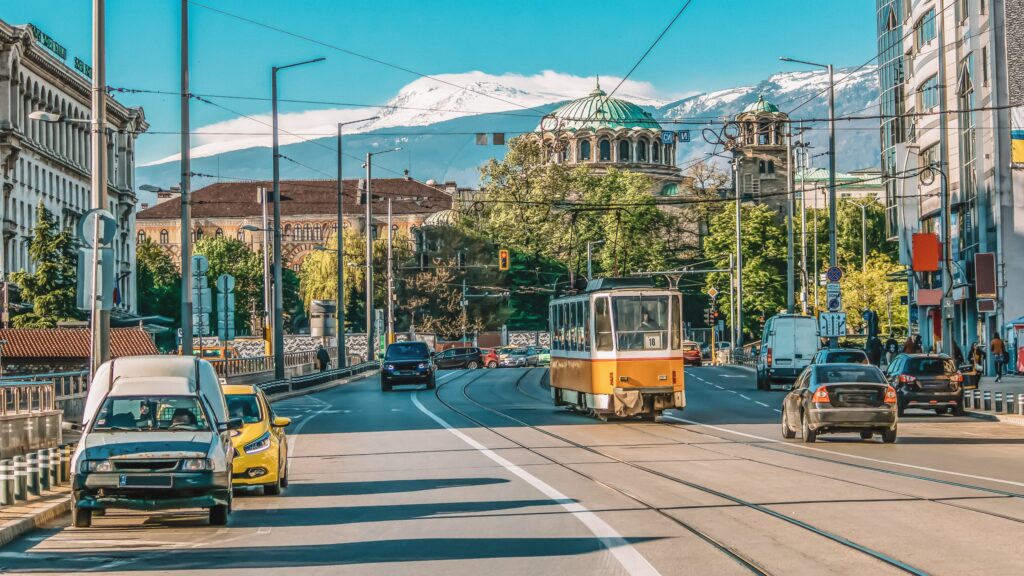
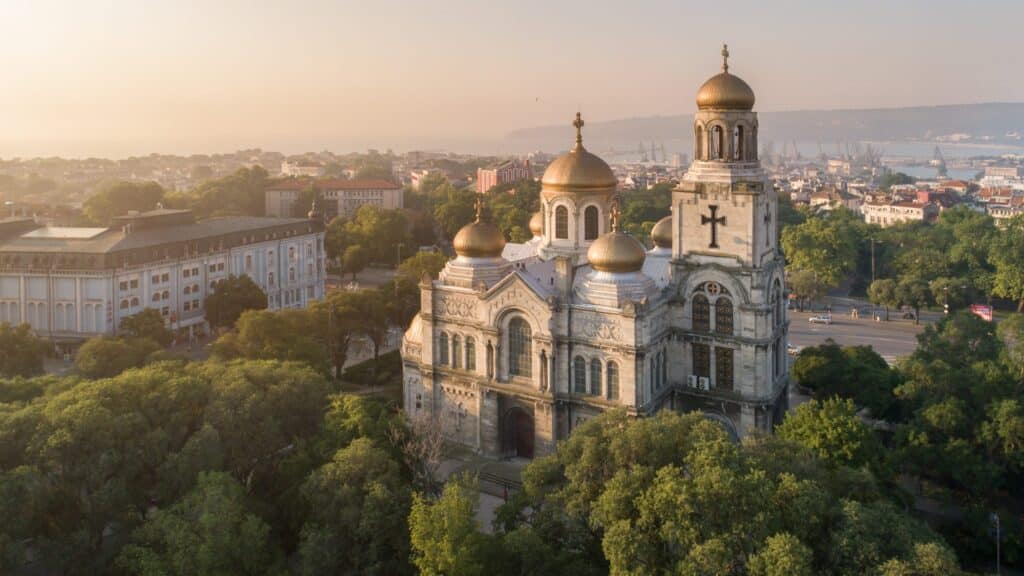
St Alexander Nevsky Cathedral is not only the greatest landmark in the capital, but also the spiritual heart of the city – a magnet for foreign tourists as well as for all Bulgarians and Orthodox Christians.
The cathedral was built between 1882 and 1912 with donations from the whole nation, in memory of the Russian soldiers who died in the Russo-Turkish War, which led to the Liberation of Bulgaria after nearly 5 centuries of Ottoman rule. For decades after it was built, the cathedral was the tallest building in Sofia – its gilded domes rise to a height of 45 m, and the bell tower to over 50 m. It is the second-largest Orthodox church in the Balkans after the Cathedral of St Sava in Belgrade and can hold up to 5,000 people.

The Church of St Sofia
The impressive Church of St Sofia is the most important monument of early Christian architecture in Bulgaria. It is believed to be more than 1,500 years old.
The church stands right next to St Alexander Nevsky Cathedral, so there’s no way you can miss it. Although I have lived in Sofia for quite a few years, I had never been inside until last summer. To tell the truth, the church has no decoration at all on the outside, but despite its simple exterior it looks impressive and harmonious.
Long ago St Sofia stood outside the boundaries of ancient Serdica, on a high hill, and even then it impressed the city’s residents and guests, because it could be seen from afar. A rather interesting fact is that the modern name of the capital comes from that of this ancient basilica. As early as the 14th century the city was mentioned several times under the name Sofia, which later replaced Sredets, the name officially accepted until then.
I highly recommend visiting the church’s catacombs too, located in its underground levels, where you can see unique Roman tombs and mosaics.

The Largo and Ancient Serdica
The Sofia Largo lies in the heart of Sofia and is a complex of buildings constructed in the 1950s to create a new, prestigious centre in the capital. The Largo includes the buildings of the Presidency, the Council of Ministers, TZUM, the Ministry of Education, as well as the Balkan Hotel, which are a perfect example of classic socialist architecture from the middle of the last century and one of the main sights in the capital.
Beneath the Largo, however, lies the capital’s true treasure – Ancient Serdica, part of which has been uncovered, conserved and put on display for visitors. In the underpass between the Presidency and the Council of Ministers you can see part of the fortress walls of the Roman city, built in the 2nd century AD. You can also walk along the Decumanus Maximus, where Emperor Constantine the Great himself once strode. Another part of the complex, uncovered beneath Maria Luiza Boulevard, consists of the remains of a residence and dwellings. Sadly, a large part of the ancient city’s remains is still undiscovered or was destroyed during the construction of the modern city centre. Had they been preserved and displayed, the remains of Serdica could probably easily rival those of ancient Rome or Athens.

The Church of St Petka Samardzhiyska
There can hardly be a Sofia local who, coming out of Serdika metro station, hasn’t noticed the little church in the space between TZUM and St Nedelya Square. It is one of the few medieval churches in the capital still in use today. It sits in the heart of the city and is part of the Largo. It’s pure luck that it survived intact during the construction of the modern city centre in the 1950s, when many other ancient remains were not spared.
A rather interesting and at the same time controversial claim is that the Apostle of Freedom – Levski – was buried in the altar of this very church. The grounds for these claims are various interpretations of the results of excavations carried out here at the beginning of the last century, as well as accounts from those who performed the burial, passed down from generation to generation.

St Nedelya Square
Squares have been the heart of city life since ancient times – a place where people meet and mingle. In ancient Greece the central square was called the Agora, and in the Roman Empire – the Forum. Just as sacred a place is St Nedelya Square, which has also been the geographical centre of the city since Roman times. This is exactly where the forum of ancient Serdica stood. Part of its colonnade was discovered during the construction of the Sheraton Hotel, and its northern façade lies right beneath the Church of St Nedelya. Around the forum itself stood a number of important public buildings, which today lie beneath the surrounding buildings. According to some archaeologists, the palace of Constantine the Great also stood here. In recent years archaeological research has continued here, and various options are being considered for displaying the finds within the modern urban environment.
On the square stands St Nedelya Cathedral, which became the scene of one of the bloodiest terrorist attacks in Bulgarian history. The church’s dome was blown up, the main target being Tsar Boris III, who, however, was late for the funeral service being held in the church. Nearly 200 people were killed and more than 500 were injured.

Sofia History Museum
All the major museums in the capital are housed in buildings that have been repurposed. The same goes for the Sofia History Museum, which is housed in the former Central Mineral Baths, right behind TZUM. There’s a certain logic to this coincidence, because the Baths embody the capital’s greatest treasure – its mineral springs.
The building is an architectural masterpiece in the Secession style, but with many Bulgarian and Byzantine ornaments and references. The interior is remarkable too, with the more than century-old mosaics being particularly impressive. All this splendour might distract you from focusing on the museum’s collection of exhibits, and there is certainly plenty to see there.
The greatest interest is drawn by the luxurious gifts of Prince Ferdinand, among them a gilded carriage that belonged to the French queen Marie Antoinette, a wedding gift for the tsar’s marriage to Marie Louise. Another unique exhibit is the royal throne of the Third Bulgarian Tsardom, which belonged to Tsar Boris III. The hall of vintage vehicles is interesting too, where you can see the first Mercedes ever imported into the country, which belonged to Ferdinand.

Banya Bashi Mosque
Sofia is often held up as an example of the peaceful coexistence of people of different religions. In the centre of the capital, within a stone’s throw of one another, stand Banya Bashi Mosque, the Jewish Synagogue, the Orthodox Church of St Nedelya and the Catholic Cathedral of St Joseph.
In Ottoman times there were some 30 mosques in Sofia, and Banya Bashi Mosque is the only Muslim place of worship from the Ottoman era to have survived to this day. Two more former mosques have been preserved, but repurposed. The former Buyuk Mosque has been converted into the Archaeological Museum, and the Koca Dervish Mehmed Mosque, also known as the Black Mosque, is today’s Orthodox Church of the Holy Seven Saints.
In Ottoman times Banya Bashi was part of a larger complex that also included a hammam, which is where the mosque gets its name. The hammam was fed with water from the hot mineral spring beneath it. Today the mosque is a working Muslim place of worship, but it is also open to visitors.

The Rotunda of St George
The Rotunda of St George is the oldest surviving building in the capital. It stands in the inner courtyard between the Presidency and the Balkan Hotel. It dates from the 4th century AD, when Emperor Constantine the Great lived in Serdica. It is also the oldest church in the city – more than 16 centuries old.
The building was most likely originally intended as a Roman mausoleum. Later, when Christianity became an officially recognised religion in the empire, the rotunda was turned into a baptistery (a place where Christians were baptised). Later still it became an Orthodox church, which has survived to this day, miraculously untouched by the barbarian invasions, the Ottoman conquest of our lands or the bombing raids of the Second World War.
During the Ottoman period the rotunda was converted into a mosque. It was called the Gul Mosque (“the Rose Mosque”). The Christian frescoes were covered with white plaster and Muslim floral motifs were painted in their place. Today it is precisely the restored frescoes that make the rotunda so remarkable. You can see frescoes from three different eras, the oldest image to survive to this day being the head of an angel.

The Archaeological Museum
Of all the mosques that existed in Sofia during Ottoman rule, only 3 survive today, and only Banya Bashi is a working Muslim place of worship. The other two have been repurposed, one of them being the Buyuk Mosque (“the Great Mosque”). According to historians it was the largest and grandest of all Sofia’s mosques. It stands between the buildings of the Presidency and the Bulgarian National Bank, and today it houses the Archaeological Museum – an essential stop on every sightseeing tour of the city.
The museum has a very rich collection showcasing part of Bulgaria’s archaeological wealth, and for me personally it’s a must-see that you should visit at least once in your life. The most interesting finds are the gold Thracian treasures displayed in the Treasury hall. Among them are the world-famous treasures of Valchitran, Lukovit and Nikolaevo. The unique gold relief mask of King Teres deserves special attention, as does the bronze head from a statue of a man found in the Golyama Kosmatka burial mound, which is believed to be of the Thracian ruler Seuthes III.

The Royal Palace
The Royal Palace building is a perfect example of the continuity between old and new Sofia. During Ottoman rule the saray of the city’s local rulers stood on this spot, and later a konak replaced it. Nearby stood the Chelebi Mosque, which served only as a “lordly” mosque – for Sofia’s beylerbeys. Under and around the mosque were dungeons in which many Bulgarians were held – freedom fighters, including Vasil Levski.
After the Liberation the konak building was designated as the princely residence, and it was later completely rebuilt, with several new wings in the spirit of the Viennese Renaissance with Baroque elements, thus taking on the look of a true royal palace. After 9 September the communists converted one of the palace halls into an office for Prime Minister Georgi Dimitrov. Today the palace houses the National Art Gallery and the National Ethnographic Museum. You can see more than 150 paintings presenting the history of Bulgarian painting from the National Revival to the 1960s, as well as the richest collection of woodcarvings – over 4,000 exhibits.

The Russian Church

The Church of St Nicholas the Miracle-Worker, or the Russian Church, as most Sofia locals know it, is one of the holiest and most visited places for Orthodox Christians in the capital. Most of you have surely heard of it, or at least seen photos of it online, but how many of you know why this church is so special? It isn’t just because of its unusual architecture, nor its golden domes or beautiful frescoes.
The church owes its popularity to the legend of its miraculous power. In the crypt of the church lies Archbishop Seraphim, regarded as a miracle-worker and canonised as a saint. Every year thousands of believers come to the church to write their deepest wishes on a slip of paper and place it in a box beside the saint’s relics, hoping their prayers will come true with his help. In his lifetime St Seraphim had an exceptionally powerful energy, and according to legend he had the ability to heal incurable diseases through prayer, as well as to foresee events. On the day before he died, he addressed the faithful with the words: “When I am gone, write me letters. If I am blessed with the chance to meet the Lord, I will intercede for you and ask Him to help you.” This gave rise to the tradition of writing letters with wishes to the Lord and placing them in an urn beside the sarcophagus holding the saint’s relics.
Tsar Osvoboditel Boulevard and the yellow cobblestones
Tsar Osvoboditel is the grandest boulevard in Sofia, famous for its yellow cobblestones – one of the symbols of the capital. It is named after the Russian Tsar Alexander II, who declared the Russo-Turkish War that led to Bulgaria’s liberation from nearly five hundred years of Ottoman rule.
As early as the first years after the Liberation, Sofia’s residents considered it very prestigious and loved strolling along it at weekends and on holidays. The two most important buildings stood on the boulevard – the National Assembly and the Royal Palace (today the National Art Gallery). So the boulevard naturally became the central “axis” and symbol of state power. The Russian Church, the Military Club, embassies and other important buildings are also located here, and until the early 1930s a tram rattled along the yellow cobblestones. Pride of place goes to the Monument to the Tsar Liberator, standing directly opposite the National Assembly building.
The yellow cobblestones appeared at the beginning of the 20th century: when the paving for Sofia’s streets was being discussed, it was taken into account that yellow ceramic cobblestones had considerably more advantages than stone ones. The municipal committee, however, decided they were far too expensive to pave all of Sofia’s streets with. In the end it was decided that only the central Tsar Osvoboditel Boulevard would have yellow cobblestones, together with the square around St Alexander Nevsky Cathedral and two or three other central streets.

Ivan Vazov National Theatre
For more than a century the Ivan Vazov National Theatre has served as a temple of Bulgarian theatrical art. It was built to a design by the Viennese architects Ferdinand Fellner and Hermann Helmer and opened in 1907.
It is one of the most beautiful and iconic buildings in the capital. Its impressive façade is in the neoclassical style, while the interior features exceptionally rich ornamentation and painted decoration on the walls and ceiling. Every time I attend a performance at the National Theatre, the feeling and the experience are very special to me.
All the seats in the main auditorium are upholstered in red, except two, which are yellow. They have been kept this way in memory of two remarkable figures connected with the National Theatre – the writer Ivan Vazov and Prof. Ivan Shishmanov, who issued the decree establishing the theatre – an interesting fact that very few people know.
The theatre regularly organises “behind the scenes” tours for anyone interested. The guide is usually one of the young actresses from the theatre’s company. You can see the actors’ dressing room, the wardrobe, the stages and the rehearsal rooms.

Lions’ Bridge
The lion is the national symbol of Bulgaria and also features on the state coat of arms. It symbolises the strength and courage of the Bulgarian army. The earliest use of a lion in the state’s coat of arms dates back to the time of the First Bulgarian Empire.
The junction at Lions’ Bridge is one of the busiest in Sofia. A bridge has spanned the Vladayska River, which flows through here, since Ottoman times; it was called the Colourful Bridge. It was built in the Ottoman architectural style typical of its time and painted with red and yellow stripes, which is where its name came from. Until the Liberation, criminals were executed on this spot, including freedom fighters.
Immediately after the Liberation it was proposed that a large-scale memorial complex to the hanged revolutionaries and booksellers be built here. The project cost the colossal sum, for the time, of 260,000 leva, yet only the bridge and the four bronze lions, made in Austria, were ever built. Back then Sofia’s residents joked that the lions had no tongues so they couldn’t tell how much money had been stolen during the bridge’s construction.

National Gallery “Square 500“
There’s no way I could leave out of my list of Sofia sights “the Bulgarian Louvre” – the largest art museum in Bulgaria, which brings together more than 2,000 works of painting, sculpture, graphic art, decorative and contemporary art.
Here you can see original works by Zlatyu Boyadzhiev, Tsanko Lavrenov, Vladimir Dimitrov – the Master, Ivan Mrkvička and other masters of the brush, as well as paintings by Christo Javacheff (Christo) from his student years. Among the most remarkable works in Square 500 is the “Self-Portrait” by Zahari Zograf. This work is also the most valuable in the gallery’s collection.
The exhibition is arranged across 28 halls on four floors. Half of the works on display are by Bulgarian artists. The other half presents art from Europe, Asia, Africa and the Americas.

Borisova Garden
Borisova Garden is the largest park in Sofia, located in the heart of the city, where you can find solitude and escape the noise of the city. Covering 3.02 sq km, the park can easily rival New York’s Central Park. It’s no coincidence that Sofia’s residents call Borisova Garden “the lungs of the capital”.
In Ottoman times the site of today’s park, which back then lay on the outskirts of the city, was a military training ground, and after the Liberation it was used as a plant nursery. As the capital grew, the nursery naturally turned into a city park, and later the Lily Lake and Ariana Lake were created. The park also has a concert arena, tennis courts, sports pitches, children’s playgrounds, a rock garden and a rose garden.
Within Borisova Garden you’ll find the Fraternal Mound – a monument to the fallen anti-fascists built during the communist era – as well as the Astronomical Observatory, where you’ll have the chance to learn more about the Solar System and see the nearer planets through a telescope – Mars, Venus, Saturn and Jupiter.

Museum of Illusions
Astonishing and, at the same time, enormous fun. One of the newest museums in Sofia, spread over almost 400 sq m, it is part of the international chain of museums of the same name. It is the first Bulgarian museum of optical illusions, a place where the incredible and the impossible become reality. The founding company is from Lithuania, and the Sofia Museum of Illusions is the third after the first two in Vilnius and Kraków. Most of the exhibits are about perceiving perspective and optical deception. Here you’ll find more than 50 exhibits – mirror rooms, an upside-down room, Newton’s colour wheel, Euler’s disk, a Chinese magic mirror, a lithophone and many more that complete the collection of this unconventional museum. Unlike most museums, where you can’t touch the exhibits and have to keep quiet, the Museum of Illusions draws its visitors precisely with its interactive exhibits and the chance to touch every one of them, take photos and laugh to your heart’s content. The place is especially suitable for children, as well as for any of you who want to try something new and different to unwind from your daily routine.

NDK
The National Palace of Culture, NDK for short, is a national cultural centre in Sofia for conferences, exhibitions, concerts and cultural events, as well as the largest congress centre in South-East Europe. The idea of creating such an imposing cultural complex was born in the mid-1970s, when terrible chaos reigned in the centre of the capital. Where NDK stands today, there were barracks abandoned after the war, a freight railway station for coal, old army barracks and hundreds of decares of wasteland. The Sofia City Committee of the Bulgarian Communist Party and the Sofia People’s Council decided to create a modern urban environment here as part of the main city centre, oriented towards Vitosha. In 1981, as part of the celebrations of 1,300 years since the founding of Bulgaria, the new modern cultural complex NDK was officially opened by Todor Zhivkov himself. In its 40 years NDK has hosted a number of world stars, including Montserrat Caballé, José Carreras, Andrea Bocelli, Sting and many others.
A very pleasant and favourite place for Sofia’s residents to stroll is the park area around the Palace of Culture, where, besides the beautiful and famous fountains, Sofia can boast a waterfall in the heart of the city, fed by an artificial stream.

Museum of Socialist Art
The five-pointed star from the Party House, which most Bulgarians remember as one of the symbols of the totalitarian regime in Bulgaria, is today one of the exhibits in the Museum of Socialist Art. You can see it among many other works from that era – mostly monuments to Lenin and Georgi Dimitrov, and sculptures of partisans and Soviet soldiers. As well as a park of statues that once stood in the streets and squares of the big cities, the museum has an exhibition hall displaying paintings and posters from the era of socialist realism. Quite a few Eastern European countries have museums like this, preserving memories of times they might otherwise have erased from their history. For me, as someone born after the changes at the end of the 1980s, the museum was really interesting, because I had the chance to learn more about this period of our history.

Sofia Zoo
Sofia Zoo has a 130-year history. It is also the oldest and largest in the Balkans. Its story began in 1888, when Prince Ferdinand decided to create a zoo in the park of Vrana Palace. The prince had a passion for birds, animals and botany. At first the zoo was private, just for the royal family and their entourage, but as the prince’s animal collection grew, Vrana Park became too small. The zoo was moved to today’s Knyazheska Garden, and nowadays it is located in one of the fastest-developing parts of the capital. You can see all kinds of exotic animals from around the world, including lions, tigers, a jaguar, a rhino, a hippo, various species of monkeys, reptiles, birds and predators. The zoo is an essential stop on any tour of the capital, especially if you have children.

Muzeiko
Whether you’re a child or a parent, Muzeiko is one of the places in the capital you mustn’t miss. It is the largest children’s science centre in Eastern Europe. The first children’s educational museum of its kind, it guarantees real fun for people of absolutely any age. Here little ones have the chance to learn lots of interesting facts about the Earth and the Universe through play. What could be better for a child? And adults can rediscover the world through the prism of a child’s imagination.
How much would you weigh on Mars? What causes volcanoes to erupt? What does it feel like to be in an earthquake? When will the first cities appear on the Moon? You’ll find out the answers to these questions, and many more, at Muzeiko. The museum is equipped with interactive screens, quirky installations, mini-labs and scientific devices that everyone can touch and try out.

Vrana Park-Museum
Vrana Palace and its adjoining park are a gem located at the entrance to Sofia from Tsarigradsko Shose. It’s a wonderful place for a family stroll at the weekend. Entry to the palace is not allowed, so you’ll only be able to see it from the outside, but the park is open to visitors every weekend. I advise you to set aside a whole afternoon for the park.
Vrana Palace was intended as the royal family’s summer residence outside the city. The palace’s architecture is very distinctive – an intricate interpretation of Byzantine architecture combined with National Revival monastic motifs.

The National History Museum
The largest and grandest museum in Bulgaria, and one of the largest in the Balkans, is worth visiting if only for the chance to wander around the former residence of the last communist leader, Todor Zhivkov.
The NHM sits at the foot of Vitosha, and some of its exhibitions are literally housed in the private quarters of the former “first man”. The monumental building is in the socialist realist style, with large marble foyers and staircases, carved ceilings and expensive crystal chandeliers. The museum’s exhibition covers the entire period from prehistory to the present day, the oldest exhibit being almost 6,000 years old. One of the most precious finds in the museum is the famous Panagyurishte Gold Treasure. Another find of enormous historical value is Kaloyan’s gold ring, discovered during excavations of the Church of the Forty Martyrs in my home town of Tarnovo. You can also see more gold and silver Thracian treasures from Rogozen, Letnitsa, Borovo, Duvanlii and elsewhere.

Boyana Church
Boyana Church is an essential stop on every sightseeing tour of Sofia. And there’s definitely a good reason why. The church is described as a masterpiece of medieval art. It’s no coincidence that it is on the World Cultural and Natural Heritage List and under the protection of UNESCO.
The church’s great significance is due to the frescoes preserved over the centuries, which impress with their elegance and detail. Particularly valuable are the portraits of the church’s donors – Sebastokrator Kaloyan and his wife Desislava – as well as those of the Bulgarian Tsar Constantine Asen and Tsaritsa Irina. The author of the frescoes is unknown, which is why historians call him “the Boyana Master”.
An interesting fact is that Princess Eleonore, the second wife of Prince Ferdinand, played a big part in saving Boyana Church. After the Liberation the local residents wanted a larger church to be built in its place, but the princess stood up for the church, and research began on her initiative.

Dragalevtsi Monastery
The Sofia Holy Mountain is a complex of 14 medieval churches and monasteries that grew up around Sofia and its surrounding mountains during the era of the Second Bulgarian Empire. The largest of these to survive is Dragalevtsi Monastery.
The monastery was founded by the Bulgarian Tsar Ivan Alexander and patronised by Tsar Ivan Shishman before the Bulgarian lands fell under Ottoman rule. The two rulers generously endowed the holy cloister with estates and money, which is why the local people called it “the royal one”.
The monastery was burnt and plundered by the Ottomans and then abandoned. It was restored in the 15th century and managed to survive the hard years of Ottoman rule as an important literary and spiritual centre. Vasil Levski often stayed at the monastery too.

The Golden Bridges
Vitosha’s stone rivers are the greatest natural landmark near the capital. These rock formations are remnants of the Ice Age, but they are not the typical “moraines”, as most hikers call them. They were shaped by the erosive action of water and the spheroidal weathering of the rock they are made of.
The most visited are those in the area known as the Golden Bridges. The name “golden” comes from the golden colour of the lichens covering the boulders. “Bridges”, meanwhile, comes from the fact that beneath the large rounded stones not only does the Vladayska River flow, but you can even walk along its bed. The easiest way to get to the area is by car or on bus line 63. Of course, you’ll be on a mountain hike, so get yourself suitable footwear, as some of the routes are harder. From the Golden Bridges you can reach Kopitoto, the Boyana Waterfall, Vladaya, Knyazhevo, Edelweiss Hut, Aleko Hut and Cherni Vrah.

Cherni Vrah
Sofia is the only European capital located at the foot of a high mountain. Less than an hour from the city centre rises a peak over 2,000 metres high. A century and a half ago, during his expedition to the European part of the Ottoman Empire, the German explorer Ferdinand Hochstetter wrote: “Sofia and Vitosha are inseparable, roughly like Naples and Vesuvius.”
Vitosha is a fairly high mountain by the standards of the Balkan Peninsula. It has 9 peaks over 2,000 metres in total, the highest being Cherni Vrah – 2,290 m. Every Sofia local has climbed to the summit at least once in their life, and from there you get an incredibly beautiful view of Sofia, the Balkan Mountains and Rila. Bear in mind that Cherni Vrah is the second windiest peak in Bulgaria after Murgash, so always bring something warm to wear when you climb up there, even in summer.

Kremikovtsi Monastery
Kremikovtsi Monastery of St George the Victorious is an interesting sight at the foot of the Balkan Mountains, just 20 km from the capital. It’s a pleasant destination, perfect for a day’s escape from the noise of the city. All you’ll need is a blanket, some water and something to eat.
The cloister sits on a rocky terrace with an incredible view of the Sofia plain and Vitosha, and in summer the monastery courtyard is awash with greenery and flowers and is perfect for a picnic.
The monastery was one of the first to form the Sofia Little Holy Mountain. It consists of two churches, and in the smaller one you can see frescoes from the 15th century. The second church is larger. It was built at the beginning of the last century, and it has beautiful woodcarving and a masterfully painted icon of the Holy Mother of God. During Ottoman rule the relics of St George of Sofia – a Christian martyr brutally killed by the Ottomans – were brought here.

Bells Park
Bells Park is one of the few creations of socialism that have managed to fit into modern life in Sofia. The place is interesting and attractive above all for young couples and families with small children. Here you’ll have the chance to try ringing various bells. The oldest bell dates from the 11th century.
As well as the tranquillity that will surround you here, there are spacious meadows nearby, perfect for a picnic, badminton and any other activities you can think of. There are also tables, ideal for celebrating children’s birthdays in the warmer months of the year.

Pancharevo
Pancharevo is the largest body of water around the capital. The lake is an ideal place for fishing and for walks in nature and the much cleaner air. Here you can hire a boat or a kayak and enjoy the calm of the water. There are also dedicated picnic areas with wooden gazebos.
The panoramic path around the lake, starting on the outskirts of the village of German, is suitable for cycling, but far more interesting is the narrow forest trail running along the hills above the lake. From there you get an incredible view of the lake and of the village of Pancharevo on the opposite shore.

Author
Vilislav Alkantara