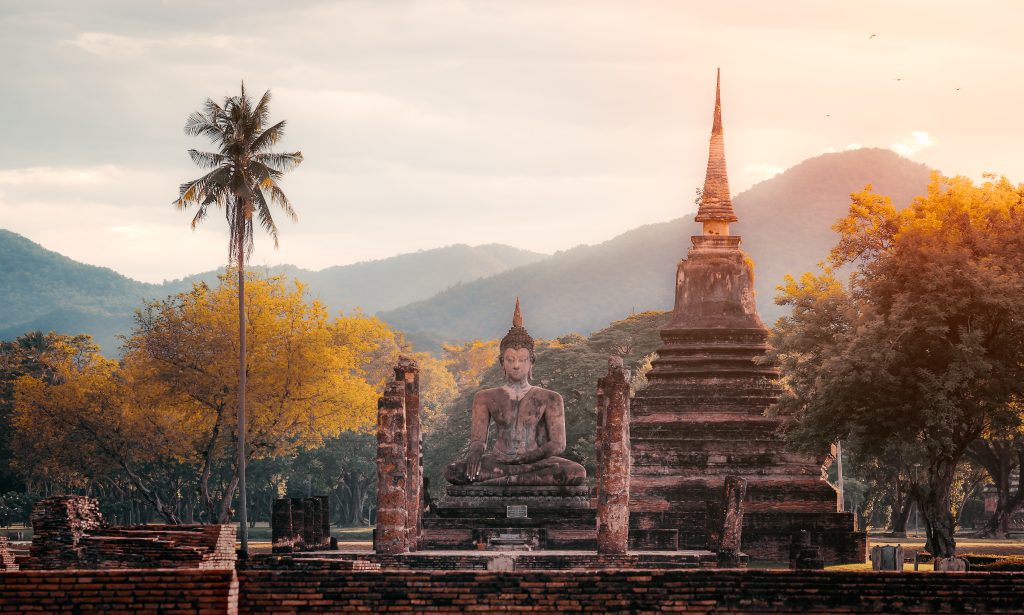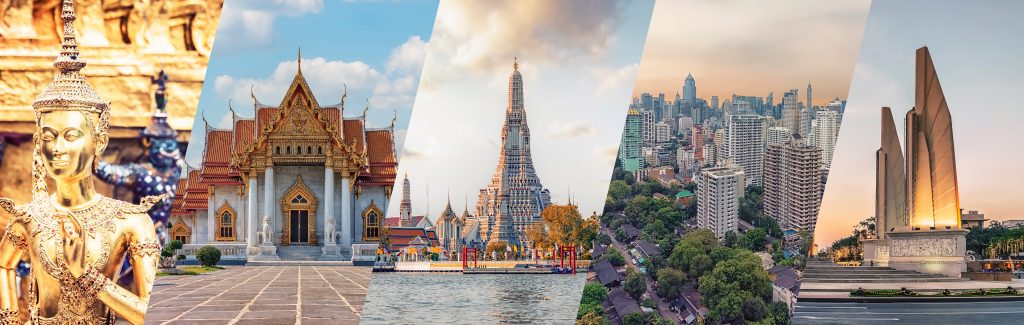

Thailand is famous for its mouth-watering street food, its imposing gold-covered temples, its beautiful beaches… and it wouldn’t be surprising to see Bangkok, Phuket and Chiang Mai on the wish lists of thousands of tourists. However, if you want to get to know the history of “the Land of Smiles”, Ayutthaya is definitely a destination you won’t want to miss.
The ancient city of Ayutthaya was once one of the largest cities in Asia after it was founded in 1350 by King U Thong. The city was the capital of the country until 1767, when the Burmese captured it and burnt it down. Today all that remains of the once majestic city are ruins of temples and fortress walls, yet it still attracts millions of tourists every year. The ruins are part of the UNESCO World Heritage list.

Historians describe the time when the city flourished and developed as a golden age for the Thai people. A 17th-century French traveller wrote in his travel accounts that the temples of Ayutthaya were “richer than all the churches and cathedrals of Europe put together”. In the 16th and 17th centuries there was no other city like it in the whole world – with a population of over a million people from all over the world –Japan, China, Vietnam, Mongolia, India, Persia, the Arab world, Laos, Malaysia, Portugal, France, the Netherlands and England. A diversity that certainly influenced the local culture and architecture, of which, sadly, almost nothing remains.
Ayutthaya lies about 80 km from Bangkok and is easily accessible for tourists – there are trains, buses and organised tours. On my trip to Thailand, after we had already been round most of the sights in the capital, we decided to take a trip to the old capital – a completely different place, in stark contrast to bustling Bangkok.

How to get to Ayutthaya from Bangkok?
Ayutthaya lies only about 80 km north of Bangkok, which makes it an easily accessible destination for a day trip. Here are the different ways to get there:
By train
- From: Trains depart from Hua Lamphong Central Station (Hua Lamphong) in Bangkok.
- Duration: About 1.5 hours depending on the type of train.
- Price: Between 20 and 100 baht, with third-class tickets the cheapest and first-class ones offering air conditioning and more comfort.
- Tip: This is an authentic and economical way to travel, and you can enjoy views of the Thai countryside.
By minibus or bus
- From: Minibuses usually depart from Victory Monument or the bus stations in Bangkok.
- Duration: About 1-1.5 hours, depending on traffic.
- Price: Between 50 and 100 baht.
- Tip: This is a convenient option for tourists looking for faster transport. Buses are more convenient for those travelling with a lot of luggage.
By taxi
- Price: Approximately 1000-1500 baht one way, depending on what you agree with the driver.
- Duration: About 1 hour, if there are no traffic jams.
- Tip: If you want a more flexible option, you can hire a taxi for the whole day for about 2500 baht, which will allow you to visit other sights around Ayutthaya too.
Organised tour
- Price: Between 1500 and 3000 baht, depending on the services included.
- What’s included: Transport, lunch and a guide who will tell you all about the sights.
- Tip: This is an ideal option for those who want to learn more about the history and culture of Ayutthaya without worrying about logistics.
By boat (along the Chao Phraya River)
- Description: Some tour operators offer cruises from Bangkok to Ayutthaya. This is a unique and picturesque way to reach the ancient capital.
- Duration: About 2-3 hours.
- Price: Between 2000 and 4000 baht, usually including lunch and a guide.
- Tip: Choose this option if you want a more relaxed and luxurious experience.
What to see there?
Bang Pa-In Summer Palace
Bang Pa-In Palace, located about 20 km south of Ayutthaya, has been a residence of the Thai kings since the 17th century. Also known as “the Summer Palace”, it is an architectural masterpiece that brings together Thai, Chinese and European styles.
Highlights of the palace:
- The Aisawan Thiphya-Art floating pavilion: An iconic building set in the middle of a lake, which impresses with its traditional Thai style.
- The Ho Withun Thasana observatory: A tall tower that offers a beautiful view of the area.
- The Royal Halls: Some of them, such as Wehart Chamrun, are furnished with antique Chinese furniture and offer a glimpse of the cultural exchange between China and Thailand.
The place is wonderful for strolling among the gardens and lakes. It’s advisable to allow at least an hour or two to enjoy the tranquillity and unique atmosphere.

Wat Chai Wattanaram – the Temple of the Long and Glorious Reign
Wat Chai Wattanaram, built in 1630 by King Prasat Thong, is one of the most majestic Buddhist temples in Ayutthaya. Set in the heart of the historical park, on the banks of the Chao Phraya River, the temple symbolises the link between Siam and Cambodia and was inspired by the architecture of Angkor Wat.
Highlights:
- The central prang (tower), surrounded by eight smaller stupas.
- Frescoes and sculptures depicting the life of the Buddha.
- The sunset here is especially impressive, as the light gives the ruins a magical look.

Wat Ratchaburana – the Temple of Royal Restoration
Wat Ratchaburana is another place that will take you back into Ayutthaya’s past. Built in 1424 by King Borommaracha II in memory of his two brothers, who died in a battle for the throne, the temple impresses with its tall prang (tower) and well-preserved murals.
Interesting facts:
- The temple’s underground crypts contain gold and silver relics, as well as ancient murals.
- The crypts hold the remains of Buddhist texts and artefacts that bear witness to Ayutthaya’s cultural flourishing.

Wat Phra Mahathat – the Temple of the Great Relic
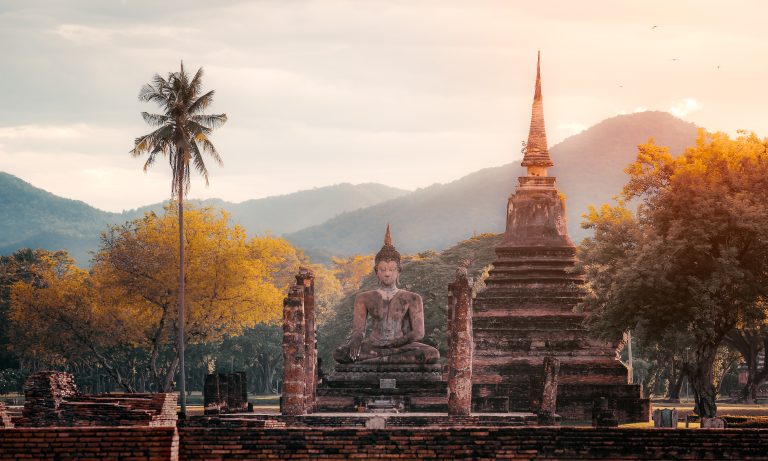
The Buddha head entwined in tree roots is one of the most recognisable symbols of Thailand, and it can be found right here at Wat Phra Mahathat. Like the other temples in the area, this one too was mercilessly destroyed by Burmese troops back in the 18th century. Here you’ll see a whole row of headless Buddha statues. As a matter of fact, nobody placed the head among the roots of the tree, as most tourists think. It turns out that the tree itself sprang up next to the discarded ancient statue and wrapped its roots around it. That’s how the head has survived to this day, since the others were stolen long ago and sold all over the world.

Wat Phra Si Sanphet – the Temple of the Holy Buddha
Wat Phra Si Sanphet is one of the most iconic sights in Ayutthaya and is considered the holiest temple in the ancient capital. Built in the 14th century as part of the royal palace, this temple was not used by monks but served solely for royal ceremonies.
Highlights of the temple:
- The three majestic stupas: They are the main attraction of the complex and contain the relics of three of Ayutthaya’s most important kings – King Borommatrailokanat, King Borommaracha III and King Ramathibodi II.
- A centre of religious and political life: Wat Phra Si Sanphet was part of the royal complex, used for important ceremonies such as coronations and prayers.
- A history of destruction: The temple was devastated by Burmese troops in 1767, when the golden statue of the Buddha (16 metres tall and covered in over 250 kg of gold) was looted and melted down.

Wat Yai Chai Mongkhon – the Temple of the Great Victory
This temple is one of the most peaceful and picturesque places in Ayutthaya. Built in the 14th century, it is home to a giant stupa surrounded by rows of statues of the seated Buddha. Visitors often climb to the top of the stupa, which offers a wonderful view of the city’s ruins.
Main highlights:
- The giant stupa, surrounded by rows of statues of the seated Buddha dressed in saffron robes.
- A panoramic view from the top of the stupa over the rest of the ruins.

The Reclining Buddha at Wat Lokayasutharam
Wat Lokayasutharam is best known for its impressive statue of the Reclining Buddha (Phra Noon), which is one of the largest and best-preserved in Thailand. This imposing statue, 42 metres long and 8 metres high, is a key attraction for the tourists and pilgrims who visit Ayutthaya. Made of brick and plaster, the statue depicts the Buddha in the nirvana pose – a symbol of peace and spiritual liberation. The Buddha’s face is gently smiling, radiating calm and harmony.
The temple was built during the period when Ayutthaya was the capital and flourishing, and while most of its other structures lie in ruins, the Reclining Buddha remains almost untouched. Pilgrims often leave flowers and incense sticks as a sign of reverence, and visitors can also explore the remains of ancient stupas and temple walls around the statue.

The Golden Buddha
The temple of Wat Phanan Choeng is home to a giant statue of the Buddha, almost 19 metres tall. The place is quite busy, so it’s a good idea to visit as early as possible. In the temple there was a Buddhist monk blessing the locals. I was curious and joined the queue, and he tied a white thread round my wrist for luck.

Ayutthaya Floating Market (Ayutthaya Floating Market)
If you want to feel the spirit of modern Thailand, Ayutthaya’s floating market is a wonderful place. Here you’ll find a variety of local goods – from souvenirs and handmade crafts to traditional Thai dishes. The chance to take a boat ride among the bustling traders will give you a unique perspective on the local culture.

Author
Vilislav Alkantara