
Although Poland isn’t one of the most popular or sought-after tourist destinations, whether in Bulgaria or in Europe as a whole, this Eastern European country has a rich culture and history that will impress any visitor. If anything, I think it’s a slightly underrated destination.
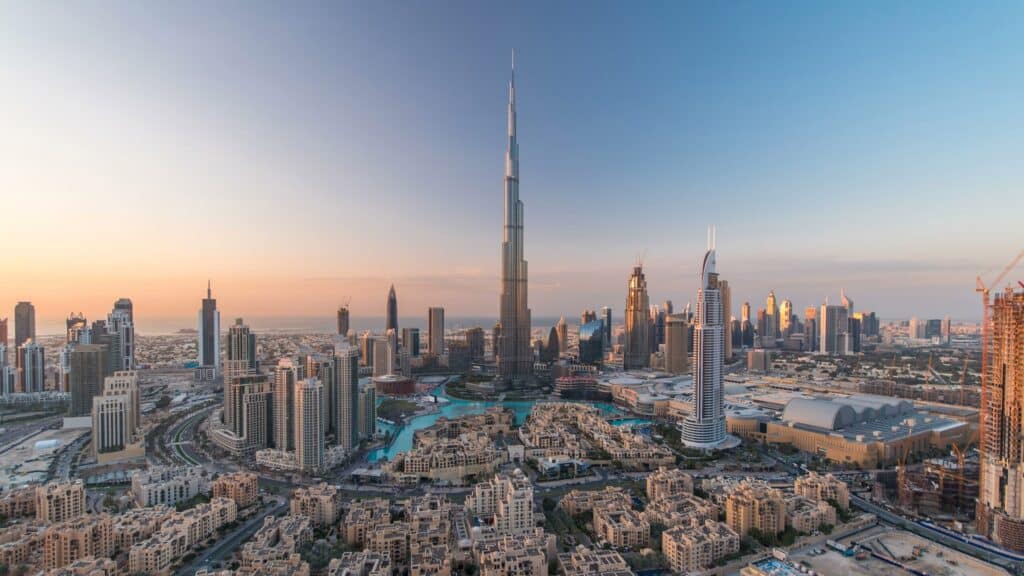
I visited the Polish capital, Warsaw, just before the COVID pandemic began – in February 2020. It was bitterly cold, especially as I’d just flown in from Dubai, where temperatures at that time of year hover around 30 degrees. Despite the bone-chilling cold, I managed to see the main sights, try the local food (more on that further down) and, of course, meet lots of interesting people and get a feel for the local culture and mentality. I’d say the Poles are quite a particular bunch and can swing between two extremes – either ice-cold and sometimes downright rude, or incredibly friendly and kind.
Warsaw is a city known for its grand, history-soaked palaces and charming old cobbled lanes. What struck me most was how different the atmosphere feels from one part of the city to the next. Romantic cafés tucked away down little Old Town lanes, glittering Baroque palaces proudly recalling the country’s glorious past, huge, lavish cathedrals with Gothic touches, and imposing steel buildings from the communist era, hemmed in by shiny new skyscrapers.

The Polish capital lies on the banks of the River Vistula, which flows right across the country. Although nearly 85% of the buildings in Warsaw were destroyed during the Second World War, the capital has managed to keep its key historic and architectural sites intact. For several decades after the war, the centre of Warsaw was literally turned into a building site by restorers, who used photographs and old sketches to rebuild many of the bombed-out buildings. You could say the Polish capital has risen from the ashes – a true Phoenix city, given how badly the war scarred it. Today the city is Poland’s political, historical, cultural and economic centre. In the past Warsaw was known as “the Paris of the East” because of its lavish Baroque buildings. Today the capital has no fewer than 8 sites on the UNESCO World Heritage List.
What to see in Warsaw
The Old Town
The Old Town of Warsaw is one of the most beautiful I’ve seen in Europe – colourful, and bringing together the architecture of several eras. The spacious market square and the old part of Warsaw date from the 13th century, but sadly, during the Second World War a huge number of the buildings here were razed to the ground in the bombing of the city. Even the Royal Castle on the Old Town square was destroyed. In 1950 the Polish government began rebuilding and managed to restore the old part of Warsaw to its former glory. In 1980 the Old Town and the Royal Castle were added to the UNESCO World Heritage List. On one of the Old Town squares you’ll also find the statue of the mermaid – the symbol of Warsaw – by the sculptor Konstanty Hegel.

Many of the city’s sights are concentrated in the old part of Warsaw – the beautiful brick-red Royal Castle, a string of museums and galleries, spacious squares and countless places to eat where you can try the local food. One of Poland’s signature dishes is pierogi. These are dumplings that are boiled and then fried, and they come with all sorts of fillings, sweet or savoury. They’re so popular that they’ve become fast food, and you’ll find them literally everywhere, especially in the Old Town.

The Royal Castle
The impressive Royal Castle stands on Castle Square in the Old Town. It was built between 1598 and 1618 for Sigismund III Vasa, King of Poland and Grand Duke of Lithuania, on the site of an old medieval castle. It’s undoubtedly one of the symbols not just of Warsaw but of Poland. As they retreated, the Nazi troops deliberately destroyed the entire Polish capital, and the Royal Castle didn’t escape either – it was blown up in 1944. After the war the site stood empty until 1971, when the Polish parliament dropped its plans to build new government offices and decided to rebuild the historic castle from photographs and surviving fragments. Very fortunately, much of the castle’s antiques, artworks and lavish furniture had been hidden by the authorities of the day before the Germans invaded, so they survived and weren’t looted. Once the castle had been rebuilt they were brought back, and in 1984 the Royal Castle became a museum and opened to visitors.
From the outside the castle certainly looks fairly modest, but the sumptuous interior, finished down to the smallest detail, and the antiques gathered inside are what draw thousands of tourists every day. Since 1980 the Royal Castle has been on the UNESCO World Heritage List.

The Little Mermaid – the symbol of Warsaw
As we wandered around the Old Town, we came across a statue of a mermaid with a shield and sword on one of the squares, with quite a long queue of people in front of it despite the cold. To be honest, none of us knew anything about the mermaid, and when I looked it up online it turned out that this very mermaid is the symbol of Warsaw. So I want to give her some special attention and tell you her story.
There are many legends about why the mermaid became the symbol of the Polish capital. According to one of them, two beautiful golden-haired mermaids, twin sisters, lived in the waters of the Baltic Sea. One day they went their separate ways. One headed for the Danish coast (she’s the mermaid in Copenhagen who inspired Andersen to write “The Little Mermaid”), while the other swam up the mighty River Vistula. The river carried her to a small fishing village (today’s Warsaw). A fisherman called Wars noticed that something in the water was scaring the fish away and decided to catch the creature. Then he heard the mermaid singing, fell in love with her and came back every day to listen to her voice. Before long a local merchant heard about the mythical creature. He captured the mermaid, hoping to sell her and get rich. Wars was beside himself searching for her, until one day he heard her weeping, found her and rescued her. From then on the mermaid stayed here and defended the city from invaders, and the little fishing village grew into a big, beautiful city. The locals say the mermaid’s name was Sawa, which is why the city is called Warsaw (Warszawa) – a combination of the fisherman’s and the mermaid’s names.

The Old Town walls
Strolling around the Old Town, we came to the city walls and the Warsaw Barbican. A barbican is a defensive structure – a fortified outpost in front of a fortress or castle. The Warsaw Barbican isn’t the largest in Poland, nor the best preserved, but it’s very pretty and interesting. During the Second World War, after the defence of Warsaw in 1939 and the Warsaw Uprising in 1944, it was almost completely destroyed. After the war the Polish government decided to rebuild it as a tourist attraction, and the barbican was put back up from 17th-century plans (between 1952 and 1954), using bricks taken from historic buildings in Wrocław and Nysa. On the walls you can still make out where the original sections end and the rebuilt parts begin.
The largest and best-preserved barbican in Poland is in Kraków and was built in the 15th century. I highly recommend visiting Kraków too. It’s much smaller than Warsaw, but it’s definitely beautiful and impressive.

A stroll in Łazienki Park
The royal summer residence, the Łazienki Palace, is a wonderfully eclectic late-classicist fantasy, mixing the nymphs and fauns of the classical ideal with an 18th-century European’s idea of China and the Far East. The palace is set in a huge, beautiful park that’s a magnet not just for visitors to the city but for locals too, especially in the summer months.

Łazienki simply means “baths” in Polish. By the 18th century Warsaw had long been Poland’s capital, so the last king, Stanisław August Poniatowski, decided to turn the 17th-century pavilion of the former royal bath house into a palace and a “centre of leisure and culture”. The result was a vast, magnificent park full of squirrels, peacocks and other gorgeous birds, with a lake and an artificial island, and a whole series of extra buildings discreetly scattered around – including an orangery. The palace itself was built in the Chinese style – or at least it was back when it was just a bath house. The ancient Greek and Roman nymphs on the roof are one of the hallmarks of classicism. Unlike most buildings in Warsaw, the royal summer residence came through the Second World War almost unscathed.
The park also has a monument to Chopin (the famous Polish composer), put up in 1910 to mark the centenary of his birth. The Nazis removed it in 1940, and in 1958 the Polish government fully restored it to its original form.
The Warsaw Rising Museum
The Warsaw Rising Museum is one of the most fascinating in Poland. Although it only opened quite recently – in 2004 – it brings together the story of the uprising against the Nazi occupiers towards the end of the Second World War. Its exhibits were collected through donations from thousands of Poles, some of whom live abroad. It opened to mark the 60th anniversary of the outbreak of the 1944 uprising and is the largest museum devoted to this “dark” chapter in the history of the Polish people.
There are plenty of historical events the Poles are proud of, and plenty that stir horror and grief. But they remember those too. Monuments, plaques, museums, the names of streets and public buildings – everything there speaks of and brings back the memory of the past, above all the memory of the Second World War. Poland paid a terrible price in it – around 6 million Poles and over 600,000 Polish Jews were killed. The largest museum devoted to this chapter of the nation’s history is the Warsaw Rising Museum. As its name suggests, though, it marks not only the tragedy but also the Polish people’s drive for freedom, and it reveals a secret that was closely guarded under communism.
Even the floor in the museum is authentic – visitors walk on real grey cobblestones dating from the building’s former life as a tram power station. The collection is made up of weapons, documents, letters, personal belongings, thousands of photographs and many military and geographical maps. The whole exhibition is spread over three floors, covering more than 3,000 square metres. There are video and audio recordings of nearly 4,000 interviews with survivors of the Nazi terror, and documentary footage plays non-stop on the many screens built into the walls.

Wilanów Palace
Wilanów Palace, also known as “the Polish Versailles”, is a classic out-of-town royal residence built in the lavish Baroque style. It’s undoubtedly one of the most impressive sights in Warsaw, so it’s worth setting aside plenty of time for it. The palace was built by King John III Sobieski in the late 17th century and was later extended several times. Architecturally, the exterior is highly original, blending European art with the Polish building traditions of the day. The interior and façade are linked to the Sobieski family, and in particular to the king’s military triumphs. As well as the inside of the palace, I highly recommend a stroll through its gardens, especially if you’re visiting Warsaw in the summer months.
Wilanów is about 10 km from the centre of Warsaw. As well as by car, you can get to the palace by public transport (bus lines 116, 180 and 519). A ticket for Wilanów Palace costs 20 Polish zloty (5 euros), and for children it’s just 1 zloty.

The Palace of Culture and Science
As you wander around the new part of Warsaw, you can hardly miss the huge, imposing Palace of Culture and Science. Although this iconic building has only 30 floors, with its spire it reaches 230 m. That makes it the tallest building not just in Warsaw but in the whole of Poland. The Palace of Culture and Science was built in 1955 on the orders of Stalin, as “a gift from the Soviet people to the Polish nation”. Architecturally, it’s very close to Moscow’s typical tower blocks. Precisely because of when it was built, it stirs very mixed feelings among locals today. Some can’t imagine the capital’s skyline without it, while others see it as a symbol of Soviet domination over Poland and think it should be torn down. Whatever Varsovians think, the Palace of Culture and Science is now a listed architectural monument of national importance. It houses the offices of a number of companies and institutions, plus a theatre, a library, concert and lecture halls – even a nightclub.

Author
Vilislav Alkantara