
Although it’s one of the biggest cities in Germany, Frankfurt often stays in the shadow of the country’s more popular tourist destinations. The city sits on the River Main – which gives it its full name, Frankfurt am Main – and is the most important commercial and economic centre in Europe. Frankfurt is the financial heart of Europe, which is hardly surprising given that it’s home to the European Central Bank. The city’s skyline, dominated by a huge cluster of skyscrapers in the banking district, has a distinctly North American look, earning it the nicknames “Mainhattan” and “Chicago on the Main”.
To be honest, this trip wasn’t planned – chance took me there. In 24 hours I managed to meet some amazing people, try one of the very best steaks and discover just how varied this city is. Short as it was, that time was more than enough to see the main sights, find some great places to eat and enjoy the shopping Frankfurt has to offer.
In this article I’ve gathered the top 15 most interesting sights in Frankfurt, along with a few tips that will make your stay even more exciting and memorable.

When should you visit Frankfurt?
Frankfurt is a year-round destination, but the best time to visit is in spring (April–June) and autumn (September–October). In these seasons the temperatures are pleasant and perfect for wandering around, and the tourist crowds are smaller. The city comes alive with cultural events and festivals during these months, giving you a chance to get to know the local customs and way of life.
If you love the magic of Christmas, Frankfurt is famous for its Christmas market, one of the most beautiful in Europe. In December the city centre turns into a winter wonderland, with beautifully decorated stalls, traditional Christmas treats and fun for the whole family.
How do you get to Frankfurt?
The quickest and easiest way to get to Frankfurt from Bulgaria is by plane. Frankfurt Airport is one of the largest and busiest airports in Europe, with direct flights from Sofia. The flight takes about two and a half hours, which makes it ideal for short breaks. Once you land, you can hop on the train (S-Bahn), which will take you straight into the city centre in about 15 minutes.
How do you get around the city?
Frankfurt has a very well-organised transport network, made up of the underground (U-Bahn), trams, buses and suburban trains (S-Bahn). Public transport is convenient and reliable, and gets you easily to every part of the city. If you’re planning to see several sights in one day, it’s worth buying a day card (Frankfurt Card), which gives you unlimited travel on all types of transport plus discounts at various museums and attractions.
If you like walking, Frankfurt’s centre is fairly compact and many of the main sights are within walking distance of one another. Getting around by bike is easy too, as the city has plenty of well-maintained cycle lanes.
What should you see in Frankfurt?
Römerberg
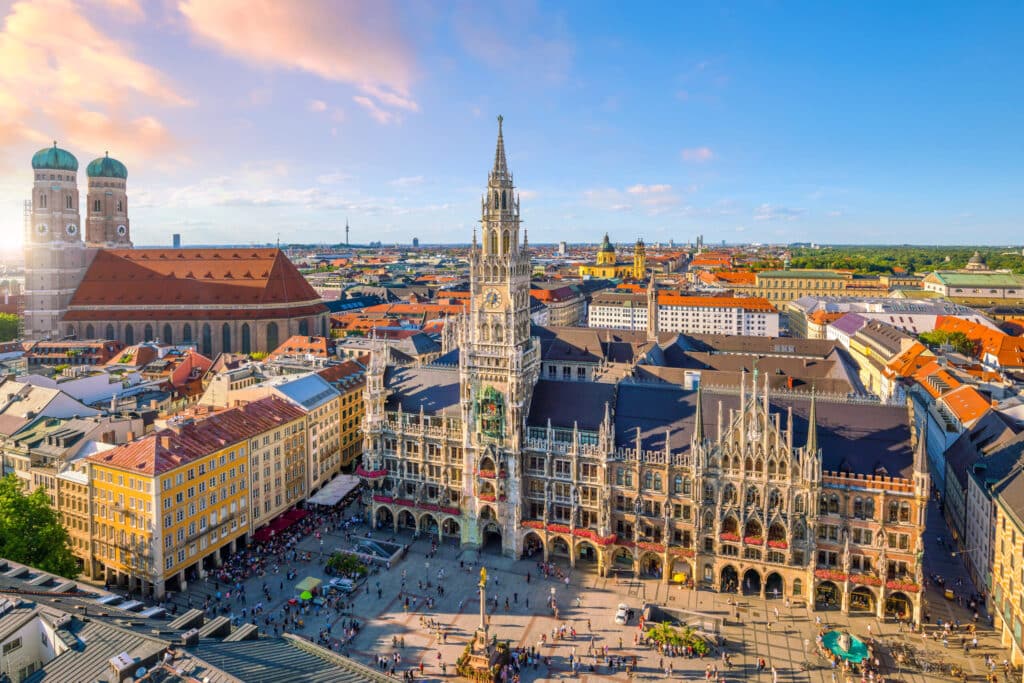
Römerberg is the historic square in the heart of Frankfurt and one of the city’s most iconic spots. Surrounded by traditional half-timbered houses and buildings of real historical importance, the square has been the scene of fairs, coronations and other major events down the centuries. The most remarkable building here is the Römer, Frankfurt’s old town hall, which dominates the square with its Gothic façade.
The old town was renovated in 2018, and many of the houses were restored or rebuilt to give this part of the city a more polished, welcoming look for visitors. That makes the square the perfect place to soak up the true German spirit.

- Tip: The square often hosts festivals, such as the traditional Christmas market in December, so check the events calendar before your visit.
St Bartholomew’s Cathedral (Frankfurter Dom)
St Bartholomew’s Cathedral (Kaiserdom St. Bartholomäus), known as Frankfurt Cathedral, is one of the most important historic and religious buildings in the city. Built in the Gothic style in the 14th and 15th centuries, it was where the Holy Roman Emperors were crowned from 1562 to 1792. Although it has never officially been a bishop’s seat, it’s known as the “Imperial Cathedral” because of its historical importance.
At 95 metres tall, the cathedral tower dominates Frankfurt’s old town, and visitors can climb to the top for a panoramic view of the city. The interior is impressive, with soaring vaults and beautiful stained-glass windows. The high altar is decorated with masterfully crafted religious figures and scenes from the life of St Bartholomew.
The cathedral was badly damaged during the Second World War but was fully restored in the 1950s. Today it’s still a working church and an important part of Frankfurt’s cultural and spiritual life.

- Admission: Entry to the cathedral is free, but there’s a charge to climb the tower – 3 euros for adults and 1.50 euros for children.
- Tip: Climb to the top of the tower for incredible views of the city, especially at sunset.
Goethe House (Goethe-Haus)
The Goethe House museum in Frankfurt is the family home of one of Germany’s most famous writers and philosophers – Johann Wolfgang von Goethe. It was here, on “Großer Hirschgraben”, that Goethe was born in 1749 and grew up. The house was rebuilt after being destroyed in the Second World War, and today it looks almost exactly as it did when Goethe lived here.
The museum offers a unique insight into Goethe’s life and work, with 18th-century furniture and belongings, including personal items that belonged to the writer and his family. On top of that, it holds a collection of his manuscripts, drawings and letters, as well as a library of specialist literature on the Age of Enlightenment.

- Admission: 7 euros for adults, 3 euros for students and pupils.
- Tip: Visit the museum in the morning to avoid the crowds.
The Iron Bridge (Eiserner Steg)
Just 5 minutes from the Römer you’ll find the River Main and the Eiserner Steg (“Iron Bridge”). This is actually Frankfurt’s oldest footbridge. Taking in the view of the city from the bridge is one of the classic things to do here. Don’t miss the chance to grab a few selfies with the old town and the cathedral behind you, or with the new part of the city, known as “Mainhattan”. Another thing you can see from the bridge is the European Central Bank building.
The bridge’s iron structure is “decorated” with thousands of padlocks left by couples as a token of their love. Even if you’re not a fan of these soppy romantic gestures, the padlocks make the bridge more colourful and interesting. From here you can also hop on one of the boats offering river cruises.

- Tip: Visit the bridge at sunset for the most beautiful views of the city and the river.
Main Tower
Main Tower is one of Frankfurt’s most impressive and famous buildings. Standing 200 metres tall with 56 floors, it’s the fourth-tallest skyscraper in the city and one of the few buildings with an observation deck open to the public. Completed in 1999, Main Tower is one of the symbols of Frankfurt’s modern financial district, nicknamed “Mainhattan” for its resemblance to Manhattan in New York.
The tower takes its name from the River Main, which flows through the city, and offers stunning 360-degree views of the city and the surrounding area. The observation deck sits 198 metres up and is open to the public, making Main Tower one of the most visited places in Frankfurt.
At the top of the tower there’s also a restaurant where you can enjoy dinner with a panoramic view, which makes it a popular spot for romantic evenings and special occasions.

- Admission: 10 euros for adults, 7 euros for children under 12.
- Tip: Go at sunset for the most beautiful views and photos.
Hauptwache Square
Hauptwache is one of Frankfurt’s liveliest and most popular squares, right in the heart of the city. It takes its name from the Baroque “Hauptwache”, a building that served as a military guardhouse in the 18th century. Today it has been turned into a café, but it has kept its architectural character and is one of the square’s best-known landmarks.
The square blends a historic atmosphere with modern city life. It’s surrounded by shopping centres, shops, cafés and restaurants, making it a hub for shopping and relaxing. It’s also home to one of the largest underground stations, which makes Hauptwache an important transport hub in Frankfurt. From here you can easily reach major sights such as the Zeil shopping street, Main Tower and other key tourist spots.
Thanks to its central location and the many cafés and bars around it, the square is also a popular meeting point. In summer you can enjoy a cup of coffee or a light bite in one of the cafés while watching the bustling city life go by.

- Tip: Grab a coffee from one of the local cafés and take in the atmosphere of this iconic spot.
The Old Opera House (Alte Oper)
Frankfurt’s Old Opera House is one of the city’s most beautiful and iconic buildings, and a symbol of its cultural scene. Built in 1880 in the Neo-Renaissance style, it was destroyed by bombing in the Second World War and only rebuilt in 1981, thanks to a determined campaign by local people. The inscription on its façade, “Dem Wahren Schönen Guten” (To the true, the beautiful, the good), reflects its lofty cultural ambitions.
Today the Old Opera House is a concert hall hosting all kinds of musical events, from classical concerts and operas to jazz and contemporary music. World-famous orchestras, soloists and conductors perform in its halls, which impress with both their acoustics and their atmosphere. With its imposing exterior, the building itself is also popular with tourists, who come to admire and photograph it even if they’re not planning to see a concert.

- Admission: Entry to the opera house is free, but concert ticket prices vary depending on the event, usually between 20 and 100 euros.
- Tip: If you’re not planning to see a concert, just stroll around the building and admire it from the outside – it’s especially beautiful at night, when it’s lit up.
Eschenheim Tower (Eschenheimer Turm)
Eschenheim Tower is one of the oldest and best-preserved medieval defensive towers in Frankfurt. Built in 1428 as part of the city walls, it was an important stronghold guarding the northern entrance to the city. At 47 metres high, it’s a symbol of old Frankfurt and one of the few surviving parts of the medieval fortifications.
Today Eschenheim Tower is a historic attraction surrounded by modern buildings and streets, making for an interesting contrast between past and present. Inside the tower there’s a restaurant and bar where visitors can enjoy a meal or a drink in a setting that combines the tower’s old-world charm with the modern life of the city.
Although the tower doesn’t have a viewing platform for visitors, its architecture and historical significance make it a popular stop for tourists.

- Tip: Unfortunately, the tower is closed to visitors, but you can admire it from the outside or stop for a drink in the bar on its ground floor.
The Museum Embankment (Museumsufer)
The Museum Embankment is one of Frankfurt’s cultural treasures, stretching along the south bank of the River Main. This is where you’ll find some of the most important museums in the city – and in Germany as a whole. The area has more than a dozen museums covering every aspect of art, culture, history and science. From classical and modern art to film, architecture and world cultures, the Museum Embankment has something for everyone.
The most important museums here include:
- The Museum of Modern Art (Museum für Moderne Kunst) – known for its collection of contemporary art.
- The Museum of World Cultures (Museum der Weltkulturen) – specialising in ethnographic collections and exhibitions from different cultures.
- The Museum of Communication (Museum für Kommunikation) – with exhibitions on the history of communication and the development of the media.
- The German Film Museum (Deutsches Filmmuseum) – exploring the history of cinema and the development of film as an art form.
Every August the Museum Embankment hosts the “Museum Embankment Festival” (Museumsuferfest), which brings together music, culture and food from all over the world and draws thousands of visitors.

- Admission: Each museum charges a different entry fee, usually between 8 and 14 euros. Many of the museums offer reduced prices on Sundays.
- Tip: Buy a combined ticket if you’re planning to visit more than one museum. The Museum Embankment is perfect for a stroll, so give yourself plenty of time.
The Städel Museum
The Städel Museum is one of the oldest and most important art museums in Germany, with a rich collection spanning more than 700 years of European art history. Founded in 1815, the Städel is home to more than 3,000 paintings, over 600 sculptures and around 100,000 prints and drawings, as well as a sizeable photography collection. Its works range from the Renaissance, Baroque and Classicism right through to contemporary art.
Among the highlights of the collection are works by artists such as Rembrandt, Botticelli, Vermeer, Picasso, Rubens and Gerhard Richter.

- Admission: 16 euros for adults, 14 euros for concessions.
- Tip: There are special exhibitions and events on Sundays, so check the programme in advance.
The Senckenberg Natural History Museum (Senckenberg Naturmuseum)
The Senckenberg Natural History Museum is one of the largest and best-known natural history museums in Europe. Founded in 1821, it’s a hit with children and adults alike, thanks to its impressive collection of fossils, dinosaur skeletons and displays on the planet’s biodiversity.
The museum is especially famous for its enormous dinosaur skeletons, which make up one of the largest displays of dinosaur fossils in Europe. Senckenberg also has a wide range of exhibitions on the evolution of animals and plants, as well as interactive displays about the Earth and its ecosystems.
Highlights of the museum include:
- Dinosaur skeletons, including Tyrannosaurus rex and Triceratops.
- Bird collections – the largest bird exhibition in Europe, featuring both living and extinct species.
- Exhibitions on human evolution and archaeological finds.

- Admission: 12 euros for adults, 6 euros for children and students.
- Tip: Visit on a weekday to avoid the queues and have more time to explore the exhibits.
The Museum of Modern Art (Museum für Moderne Kunst)
Frankfurt’s Museum of Modern Art, also known as the MMK, is one of Germany’s leading museums of contemporary art. Opened in 1991, it catches the eye with its unusual architecture – the building looks like a slice of cake. It was designed by the architect Hans Hollein and is a striking example of modern architecture.
The MMK’s collection spans more than 5,000 works of art from the 1960s to the present day, including paintings, sculptures, installations, video art and photography. The museum shows works by famous artists such as Roy Lichtenstein, Andy Warhol, Bruce Nauman, Jeff Koons and others.

- Admission: 12 euros for adults, 6 euros for students and pupils.
- Tip: Visit on a Thursday afternoon, when admission is reduced.
The Palm Garden (Palmengarten)
The Palm Garden is one of the largest and most beautiful botanical gardens in Germany, in the west of Frankfurt. Founded in 1871, it covers around 22 hectares and boasts an impressive collection of exotic plants from all over the world. The garden is divided into different climate and themed zones, including a tropical glasshouse, a desert zone and an alpine garden.
The Palm Garden is a wonderful place for a stroll and some time out in nature, with plenty of attractions for visitors of all ages. In summer you can hire a boat and paddle around the lakes. Special exhibitions and botanical events showcasing rare plant species are also held regularly.

- Admission: 7 euros for adults, 2 euros for children and pupils.
- Tip: In summer the garden has boats for hire, so you can take a trip around the lake.
The Zeil
The Zeil is Frankfurt’s main shopping street and one of the busiest shopping areas in Germany. Right in the city centre, it draws locals and tourists alike, who come here to shop, stroll or simply soak up the atmosphere. Along the Zeil you’ll find shops from world-famous brands, boutiques, malls and all sorts of places to eat.
One of the most striking spots on the street is the MyZeil shopping centre, which catches the eye with its unique architecture and huge glass roof. MyZeil has lots of shops and restaurants, as well as a cinema and a gym.

- Tip: If you want to avoid the crowds, it’s best to visit on a weekday morning.
Frankfurt Zoo
Founded in 1858, Frankfurt Zoo is one of the oldest and most visited zoos in Germany. Located in the city centre, it’s home to more than 4,500 animals from around 500 different species. The zoo strives to give the animals an environment as close as possible to their natural habitat.
Some of the most fascinating attractions at the zoo are:
- The Big Cat House (Exotarium) – where you’ll see tigers, lions and other big predators.
- The Bornean orang-utan – a protected species at the centre of the zoo’s work to conserve endangered animals.
- The Nocturnal House – a unique exhibit that shows nocturnal animals during their active hours.
The zoo is actively involved in conservation programmes and works with international organisations to protect endangered species. It also runs plenty of educational programmes for children and adults.

- Admission: 12 euros for adults, 6 euros for children and students.
- Tip: Plan your visit for the morning or for feeding time, when you can watch some fascinating demonstrations and activities.
Author
Vilislav Alkantara