
If I said that Catania is the most beautiful city in Sicily, perhaps I wouldn’t be entirely objective. But if I said it’s the most alive, the most genuine and the most unvarnished — then I wouldn’t be wrong. Catania is like fire and ash at the same time – a city built and destroyed countless times by the mighty volcano Etna, yet each time rising again with even more strength and character. Here everything is a little more intense than normal — the aromas, the sounds, the gestures, the temperament. Even the sea seems wilder as it crashes against the black rocks of solidified lava.
The city is a mix of contrasts that, at first glance, shouldn’t exist side by side, but that is precisely where its magic lies. Baroque cathedrals and palaces built of volcanic stone stand proudly next to crumbling façades and dusty little streets where time seems to have stopped. On one side — grandeur and history; on the other — a noisy market where the vendors all shout at once and the air is thick with the smell of fish, olives and freshly fried arancini. Catania doesn’t try to be perfect. It’s loud, messy, sometimes irritating, but genuine to the bone. And it’s in this very lack of pretence that its charm lies. This is a city that doesn’t try to make you like it, but simply shows itself to you as it is — raw but beautiful, chaotic but alive. Catania is like a person who has been through a lot but hasn’t lost the ability to smile. And that smile, even if covered in volcanic dust, is infectious.
There’s no way to remain indifferent here. From your very first steps along Via Etnea you’ll feel the pulse of the city — – loud, warm, real. Scooters whizz past you, baristas pour fragrant espresso into little porcelain cups, and from somewhere you hear laughter mixed with Italian words spoken in that particular Sicilian dialect that sounds like a song. People here don’t just live – they experience every moment with such energy that even a simple “Buongiorno!” sounds like an invitation to life.
But behind this explosion of emotion and noise lies a deep and noble soul. Catania is a city with a memory, marked by the fire of Etna and by the earthquakes that have more than once wiped it off the face of the earth. And yet each time it is reborn – more beautiful, bolder, more defiant. Just like a phoenix. And perhaps that’s exactly what makes it so special — the feeling that you’re walking through streets that don’t just preserve history but radiate it with every brick, every façade and every scent of lemons mingled with the salty breath of the sea.

How to get there?
The most convenient and fastest way to get to Catania from Bulgaria is by plane. Catania-Fontanarossa (CTA) International Airport is the second busiest in southern Italy and has direct flights from Sofia all year round. The airlines Wizz Air and Ryanair offer regular connections – the flight takes about 1 hour and 45 minutes, which makes Catania an ideal destination even for a long weekend.
After landing, you’ll find yourself at one of the most conveniently located airports in Italy – just 5 kilometres from the centre. You can get to the city in several ways:
- By Alibus – it leaves every 20–25 minutes from the terminal and stops at all the key locations: the railway station, Via Etnea, Piazza Stesicoro and Piazza Borsellino. A ticket costs around €5 and can be bought directly from the driver or at the airport.
- By taxi – the fare is between €20 and €25 to the central area, and the journey takes no more than 15 minutes.
- By hotel transfer – some hotels in Catania offer their own transport if booked in advance, which is handy for late flights.
- Hire car – a very easy and convenient way to get around the island’s interior, but be sure to park in paid, guarded car parks in the city.
When to visit Catania?
Catania can be visited at any time of year, but the season will determine which face the city shows you.
In spring (April – June) Catania is at its most beautiful – it smells of lemon blossom, temperatures are around 22–26°C and the air is clear, ideal for walks and for climbing Etna. Autumn (September – October) is also wonderful – the sea is still warm and there are fewer tourists.
Summer is hot, even exhausting. Temperatures often exceed 35°C, the streets empty in the afternoon, and the best thing you can do is hide away on the beach or in one of the seafront spots with granita and brioche.
Winter is mild and quiet. The city lives at a slower pace and hotel prices drop. It’s the ideal season for travellers who want to experience Catania from the inside, without the crowds. Particularly impressive is February, when the Feast of Saint Agatha takes place – a three-day religious festival during which the whole city turns into a procession of lights, music and the scent of almonds.
Where to stay?
The best place to stay in Catania is the historic centre – around Via Etnea, Piazza Duomo and Piazza Stesicoro. That’s where most of the sights are, and the atmosphere is typically Sicilian – loud, fragrant and full of life. From early morning until late at night the squares buzz with energy, and every terrace offers a view of Baroque façades or of majestic Etna. It’s the best choice for people who want to feel the city’s pulse up close.
If, however, you prefer peace and quiet and sea views, choose the coastal districts such as Ognina or Aci Castello – old fishing areas with volcanic rocks, beautiful sunsets and cosy seafood restaurants. For a more aristocratic atmosphere, Acireale, just a few kilometres to the north, offers Baroque streets, flower-filled balconies and a calm you’ll appreciate after the noise of the centre.
How to get around?
The best way to get to know Catania is on foot. Most of the sights are concentrated in the central area, and the city’s atmosphere is best felt when you walk its cobbled streets and stop for an espresso on every corner.
Public transport is run by AMT Catania – a ticket costs €1 and is valid for 90 minutes. The metro line is short but handy if you want to get from the station to the northern part of the city. Taxis are also an option, but a more expensive one, so use them for longer distances.
For trips outside the city – for example to Etna, Taormina or Syracuse – the most practical solution is to hire a car. It will let you stop wherever you like and enjoy the little coastal villages you’d otherwise miss.
Which local dishes to try?
Catania is the gastronomic capital of eastern Sicily. Street food is a way of life, and the aromas are part of the city’s identity. The most popular dish is arancini – golden rice balls filled with minced meat, cheese, spinach or mushrooms, which you’ll find at every turn. Don’t miss Pasta alla Norma, a dish born right here – a combination of aubergine, tomatoes, ricotta salata and basil, named after the opera by the composer Bellini.
For dessert – cannoli with ricotta cream and orange peel, or granita with brioche, the best way to cool down in the summer heat. The local wine Nero d’Avola is the pride of Sicily – full-bodied, aromatic and perfect for an evening stroll along the seafront.
What to see in Catania?
Piazza Duomo (Piazza Duomo)
The heart of Catania beats right here – in Piazza Duomo, one of the most majestic Baroque squares in Sicily. The space is framed by buildings of black volcanic stone and white limestone – a contrast that symbolises the city itself: light and darkness, life and destruction. The square was completely rebuilt after the earthquake of 1693 and today is surrounded by the cathedral, the town hall and the famous Elephant Fountain – the symbol of Catania.
In the morning it smells of coffee and freshly baked croissants here, and in the evening the square comes alive with conversation, music and the clink of glasses. It’s a place where you can simply sit, watch the passers-by and feel the pulse of the city. Piazza Duomo isn’t just a tourist attraction but a stage on which Catania’s daily life plays out.
Useful tip: Visit the square early in the morning – that’s when the light falls softly on the façades and you’ll take the most beautiful photos.

Catania Cathedral (Cattedrale di Sant’Agata)
Dedicated to Saint Agatha – the city’s patron saint – the cathedral is one of the most imposing creations of the Sicilian Baroque. It was built in the 11th century on the ruins of ancient Roman baths and was destroyed many times by earthquakes and eruptions of Etna. Its present appearance is the work of the architect Giovanni Battista Vaccarini, who in the 18th century gave it its majestic style. The interior impresses with marble columns, lavish altars and the tomb of the composer Vincenzo Bellini, who was born right here in Catania.
Climbing the bell tower is one of the most magical experiences – from there a panoramic view opens up over the city, the sea and Mount Etna, which towers over the horizon like a silent guardian. During the February festival the cathedral is at the centre of the celebrations and turns into a sea of light, music and believers.
Entrance fee: €3
Useful tip: Climb the bell tower in the late afternoon – the view of the golden sunset over Etna is unforgettable.

The Elephant Fountain (Fontana dell’Elefante)
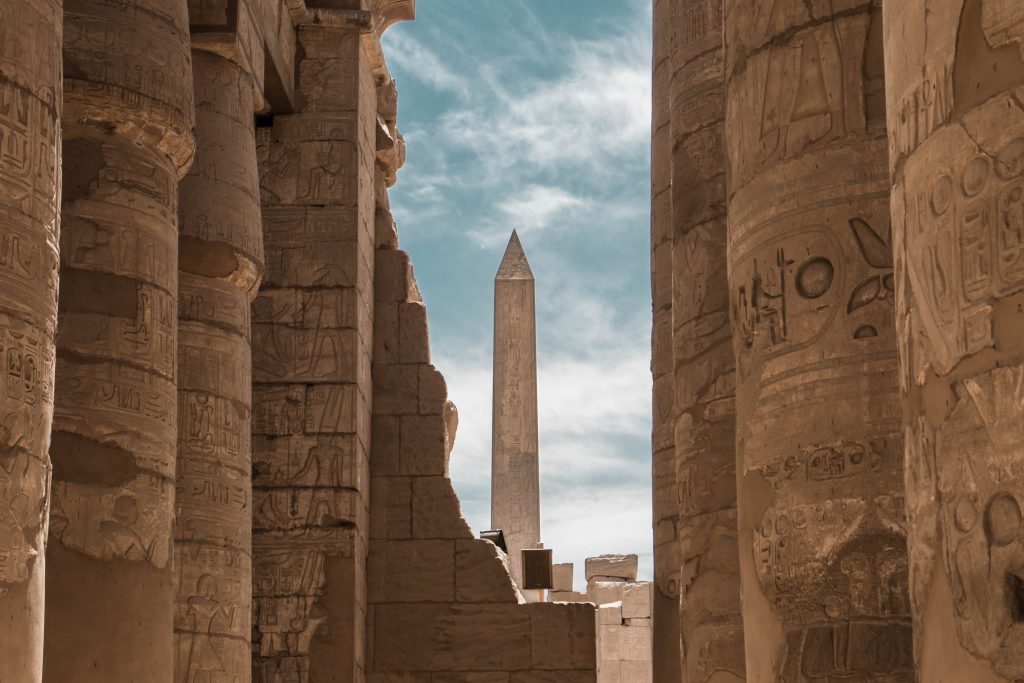
There isn’t a Catanese who won’t smile when you mention “Liotru” – the affectionate name locals give their stone elephant. Standing in the centre of Piazza Duomo, the Elephant Fountain is the emblem of the city. It’s carved from black volcanic stone and carries an Egyptian obelisk on its back – a blend of ancient cultures and a symbol of strength and resilience.
According to legend, the statue protects Catania from the wrath of Etna and from disasters. The design is by the architect Vaccarini, who created the fountain in the 18th century as an allegory of the city’s ability to survive. In the evening the lighting turns it into a mystical figure, and the fountain becomes a meeting point for locals.
Useful tip: If you visit at sunset, you’ll catch the perfect light for photos with the cathedral in the background.

The Roman Theatre of Catania (Teatro Romano di Catania)
Hidden among the old houses and almost invisible from the outside, the Roman Theatre is one of the most unexpected discoveries in Catania. Built in the 2nd century AD, it once held around 7,000 spectators and was the centre of the ancient city’s cultural life. Today its ruins, built of black volcanic stone and marble, reveal how the Romans wove their architecture into the Sicilian landscape.
The small theatre, right next to the large one, was used for musical performances and private events. Walking among the ancient arches and tiers of seating is like travelling back in time – especially in the quiet of the early afternoon, when the sun falls on the stones and lights up the white marble fragments.
Entrance fee: €6
Useful tip: Buy a combined ticket that also includes entry to the archaeological museum – it’s next to the theatre and completes the story of ancient Catania.

Castello Ursino (Castello Ursino)
When you look at Castello Ursino, it’s hard to imagine that it once stood right on the seashore. Built in the 13th century on the orders of Emperor Frederick II, the castle was part of Catania’s defensive system. After Etna’s eruptions and the earthquake of 1693, the sea receded, leaving the castle surrounded by lava – a witness to the city’s turbulent history.
Today its walls house the Civic Museum, which holds collections of ancient statues, Byzantine mosaics and medieval weapons. The castle impresses with its austerity and sense of strength – its thick walls, black with lava, tell of centuries of battles and survival.
Entrance fee: €8
Useful tip: Climb up to the upper terrace – from there you get a wonderful view of the old part of the city and the sea.

Mount Etna (Monte Etna)
Seeing Etna up close is an experience you never forget. It’s the highest active volcano in Europe (around 3,350 m) and one of Italy’s greatest natural wonders. The mountain is a living organism – smoking, unpredictable, yet majestic. It takes about an hour to reach from Catania, with the road climbing through vineyards, olive groves and frozen lava fields.
From the Rifugio Sapienza station (at 1,900 m), cable cars and jeeps will take you up to the Silvestri craters, or even higher when conditions allow. The weather up there is changeable, but the feeling is out of this world. The ground beneath your feet is warm, and the smell of sulphur reminds you that here nature still makes the rules.
Entrance fee: €50–120 (depending on the tour you choose). I recommend THIS or THIS organised climb to the summit.
Useful tip: Dress warmly, even in summer – the temperature at the top is 15–20 degrees lower than in Catania.

The Roman Baths (Terme della Rotonda)
This is one of the oldest archaeological sites in Catania – the remains of ancient Roman baths from the 1st century BC. The complex was built around a large domed pool and served as a public bathhouse. Later a church was built on top of it, whose round shape gives it the name “Rotonda”.
Today the site combines layers from different eras – Roman, Byzantine and Baroque. A walk among the remains is quiet and inspires respect for history, especially when you realise that two millennia of life lie hidden beneath your feet.
Entrance fee: €2
Useful tip: Visit in the early afternoon, when the light streams through the openings in the dome and creates an incredible play of shadows.

The Bellini Gardens (Giardino Bellini)
If Catania is the city of fire, then Giardino Bellini is its green breath. This elegant garden, which locals call Villa Bellini, is the oldest public park in the city and a favourite place for a stroll and a rest. Laid out on several levels, it combines shady paths, fountains, sculptures and panoramic terraces. In spring everything smells of jasmine and lemon blossom, and the view of Mount Etna is almost unreal.
Giardino Bellini isn’t just a park but a stage for life in Catania – children play here, older people read their newspapers, and couples stroll in the early evening when the light turns golden. If you need a moment of peace after the lively chaos of Via Etnea, this is the place where the city finally falls quiet.
Entrance fee: Free
Useful tip: Climb up to the top terrace at the end of the day – the view of the setting sun over Etna and the sea is stunning.

The Monastery of San Benedetto (Monastero dei Benedettini)
One of the most impressive buildings in Catania is undoubtedly the Monastero dei Benedettini – a Baroque masterpiece on the UNESCO list. Built in the 18th century after the earthquake of 1693, this enormous monastery was a centre of science, art and spirituality. Today it houses the Faculty of Humanities of the University of Catania, and some of its halls are open to visitors.
A walk through the monastery is like an encounter with another era – long corridors, imposing courtyards, marble fountains and a silence that seems to stop time. The inner courtyard with its stone arcades is especially beautiful, and from there you can feel the grandeur of the Sicilian Baroque in all its splendour.
Entrance fee: €10
Useful tip: Take a guide – the tours with local guides are extremely interesting and reveal secrets of the building that you’d struggle to discover on your own.

Porta Garibaldi (Porta Garibaldi)
Erected in the 18th century in honour of King Ferdinand IV and Queen Maria Carolina, Porta Garibaldi is one of the most majestic arches in Sicily. Made of black volcanic stone and white limestone, it’s a classic example of Catania’s contrasts. It was once the entrance to the city, and today it’s an imposing monument to the past, towering over the old San Cristoforo district.
In the evening the arch is lit up and looks especially beautiful, and all around it local life is in full swing – markets, cafés and little grocery shops. From here Catania looks at its most authentic: loud, colourful and real.
Entrance fee: Free
Useful tip: Stroll to Porta Garibaldi in the early evening – the streets are lively but not packed, and the view of the arch against the sunset is magnificent.

Palazzo Biscari (Palazzo Biscari)
Palazzo Biscari is perhaps the most beautiful palace in Catania – an 18th-century architectural gem built by the noble Biscari family. The building impresses even from the outside with its façade adorned with ornaments, balconies and sculptures. But its real magic is inside – richly decorated halls, frescoes, crystal chandeliers and a large ballroom that has served as a stage for concerts and receptions.
The palace is privately owned, but part of it is open to visitors. Every room here tells a story of the wealth and taste of the old Sicilian aristocracy. It’s no coincidence that films, concerts and even music videos are shot here – the atmosphere is so imposing that it recalls the time when Catania was called “the black pearl of the Baroque”.
Entrance fee: €8
Useful tip: Check the tour times in advance – access is by guided tour only, but the hosts’ stories are utterly fascinating.

Catania’s Beach
Few cities can boast a beach of their own almost in the centre. La Playa di Catania is a long sandy strip stretching south of the city – 18 kilometres of fine, soft golden sand and warm waters, ideal for swimming from May to October. The beach offers both free areas and organised sections with parasols, sunloungers and bars.
In the evening the place is transformed – the clubs and bars along the coast come alive, music mingles with the sound of the waves, and locals and tourists dance until late. Catania’s beach isn’t just a place to relax but part of the city’s identity – a mirror of its vitality and free spirit.
Entrance fee: Only the parasols and sunloungers are paid for – €10–15 a day.
Useful tip: If you love peace and quiet, choose the early morning hours or the off-season – the beach is spacious and ideal for a walk.

The Church of San Nicolò l’Arena (Chiesa di San Nicolò l’Arena)
San Nicolò l’Arena is the largest church in Catania and one of the most imposing religious complexes in southern Italy. Built by Benedictine monks, it’s part of a huge monastery that today houses university departments. The church impresses with its unfinished façade – a symbol of the constant building and change so characteristic of this city.
Inside, the church is bright, spacious and filled with a sense of calm. Most impressive of all is the bell tower – from its top a panorama opens up over the whole city, the sea and, of course, Etna.
Entrance fee: €3
Useful tip: Climb the bell tower in clear weather – the view is among the most beautiful in Catania and will let you take panoramic photos of the whole city.

Acireale (Acireale)
About 15 kilometres north of Catania lies Acireale – a small town that looks like a postcard come to life. Set on black rocks of solidified lava, it overlooks the Ionian Sea and impresses with its Baroque architecture. The central square, Piazza del Duomo, is surrounded by majestic buildings, among them the cathedral and the Church of Saints Peter and Paul.
Acireale is also famous for its carnival, one of the most lavish in Sicily – a colourful parade of masks, flowers and music. But even outside the festive season the town charms with its narrow streets, old-fashioned cafés and views you’ll remember for a long time.
Useful tip: Visit Acireale in the afternoon – the light over the sea is soft, and at that time the locals come out for a stroll, which brings the town even more to life.

Author
Vilislav Alkantara