
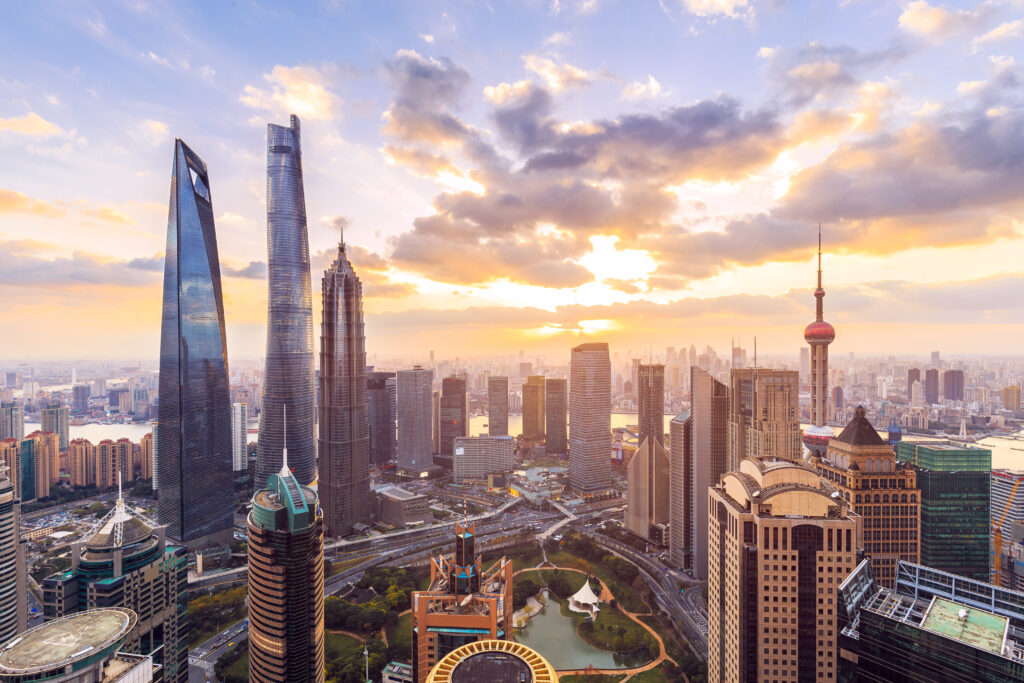
Bangkok, or Krung Thep as the city is really called, is quite possibly the most colourful city in Southeast Asia. For years I had dreamt of visiting Thailand, for its beautiful wild islands and for its incredible Buddhist temples, whose architecture is simply dizzying. Quite literally, this is the face of Asia, for me at least. A civilisation thousands of years old, different from Europe’s yet entirely its equal, thanks to spiritual and cultural achievements built on deep and important values. Such a rich history, traditions and culture, an extraordinarily warm and spiritually uplifted people, far, far away from grey reality, wild nightlife, delicious food (I finally plucked up the courage to eat street food and I’m still alive), the best massages… I could go on and on, and this blog would turn into an entire book devoted to Bangkok.
The City of Angels – that is what the city’s name means. Sounds familiar, doesn’t it? Just like its bigger and more famous American namesake, this megalopolis wants to rise high through its name and leave an imposing impression on people with its monstrous scale. Yes, that’s right! Bangkok is a monster of a city. It sounds alarming, but I think it’s the right description for any city crammed to bursting with so many buildings and people that it has itself become a supernatural being, emancipated from its own inhabitants to the point of being ungovernable. This feeling of monstrousness is powerful and, at the same time, hard to explain. There is never a moment when you can see all of the millions of inhabitants of such a city together, nor can you be everywhere along its thousands of streets at once to feel its inhuman size. And yet the sense that you have stumbled into a gigantic organism is persistent and captivating. Probably because of the frantic pace at which everything in this city moves, sweeping you along with no right to refuse, and because of the rhythm of life whose pulse winds up your own spring too, turning you into a clockwork toy running through the labyrinths of the enormous game called Bangkok, in search of hidden tourist treats – temples, views, shopping centres.

In fact, most people’s opinions of Bangkok vary hugely, quite literally at opposite poles. Some fall in love with the city at first sight, others need more time, and others still are utterly repulsed and want to leave as quickly as possible. I suppose I belong to the first group. As I’ve already mentioned, this was one of my dream destinations, and I’m very excited writing this blog as I look back.
Bangkok lies in the heart of Thailand and is crossed by the Chao Phraya River. Tourists usually stay in the city for no more than a day or two, on their way to some of the more than 1,400 amazing Thai islands. In this article I’ve gathered the ten most interesting places that I think you should visit to get a feel for the rich culture and mentality of the locals, and to get an idea of a Thailand that is far more than just beaches and massages.
When to visit Thailand?
Thailand lies in the tropical climate zone, and the year can roughly be divided into three periods: hot – from March to May, rainy – from June to September, and cool – from October to February. My advice is to visit the country between November and mid-March, when the weather isn’t so hot and rainfall is at its lowest. This is also the country’s peak tourist season. Bear in mind that in the hot period (from March to May) temperatures exceed 40 degrees.
How to get there?
Travelling to Thailand, and to the capital Bangkok in particular, is relatively easy. Although there are still no direct flights from Sofia to Bangkok, there are quite convenient options with a connection via Istanbul, Doha, Dubai and Abu Dhabi. Of course, you can also fly via other larger European airports, depending on prices. The plane ticket to Bangkok will certainly be the most expensive part of the whole trip, but on the other hand accommodation and food there are quite affordable, below the average for European destinations. Flight prices from Sofia to Bangkok range between 500 and 700 euros one way, though again this depends on the season.
What documents do we need?
To enter the Kingdom, you need a valid passport and a visa. It can be one of two types: a Transit visa or a Non-Immigrant visa. You fill in a form, attach a photo and your plane tickets, and pay a fee at the Royal Thai Embassy in Sofia.
There are no vaccination requirements to get beforehand, but my advice, just in case, is to drink only bottled water and not to eat soups.
What to see in Bangkok?
The Grand Palace and the Temple of the Emerald Buddha
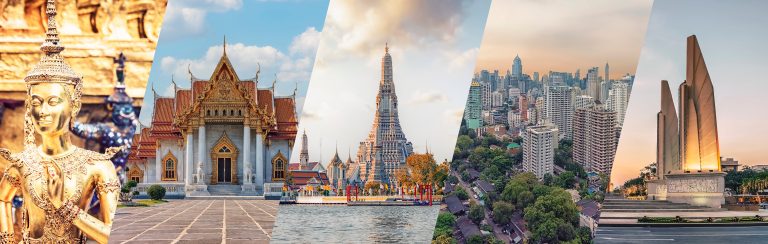
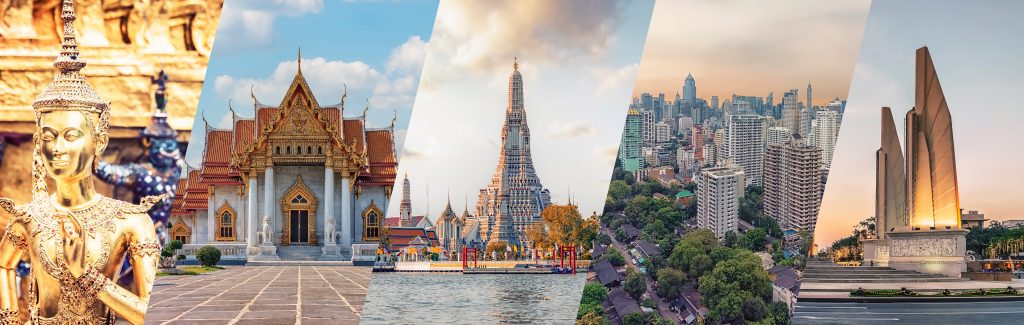
The former official residence of the kings of Siam (as Thailand used to be called) consists of hundreds of buildings decorated with gold and precious stones, exquisite gardens and secluded inner courtyards. Created by the hands of thousands of Thai craftsmen, the Grand Palace inspires amazement and admiration in everyone who sees it. Right next to the palace is Wat Phra Kaew (Wat Phra Kaew) – the Temple of the Emerald Buddha – one of the most lavishly decorated temples in the world. And the library building in the temple complex, studded with golden medallions on a green background and adorned with numerous gilded statues of guardian angels, not only captivates with its jewel-like craftsmanship but literally dazzles you with its brilliance. Don’t miss taking close-up, detailed photos of the individual fragments.

It is very important to be dressed appropriately – no flip-flops, shorts, cropped trousers or ripped jeans, and no vests. The rules apply to both men and women. I had a problem because of my jeans and had to buy their traditional trousers with Thai illustrations. The good thing is that they’re sold in so many places around the entrance to the palace that you won’t be left outside.
I recommend buying your tickets in advance from HERE. The price is €17.


The Temple of the Reclining Buddha – Wat Pho
About a 10-minute walk from the Grand Palace is Wat Pho (Wat Pho) – the oldest temple in Bangkok. The place is a little calmer compared to the Grand Palace and also gives you the chance to get a closer look at traditional Thai architecture. The key feature of the temple is the huge statue of the Reclining Buddha – 15 metres high and 46 metres long. The pose represents the entry into nirvana and the end of reincarnation. The gilded statue reclines on cushions inlaid with gold and precious stones, and 108 Buddhist symbols are depicted in mother-of-pearl on the soles of the Buddha’s feet. The temple is also famous for the best school of traditional Thai massage.

For getting around over shorter distances, you can also use a tuk-tuk – a very interesting experience. But be sure to haggle over the price, because they’ll fleece you if you don’t pay attention.
The National Museum
The National Museum is a real gem in the heart of the capital, Bangkok. The truth is that Thailand is an extremely popular destination with tourists from all over the world, but very few of the country’s visitors know its history. The National Museum holds some of the most valuable exhibits of Thai art, culture and history, and it is undoubtedly the ideal place to learn plenty of interesting facts about the country. The museum building is right next to the Grand Palace. It was founded almost 150 years ago – in 1887 – and the museum’s halls are divided into several main areas presenting valuable artefacts from the different periods of Thailand’s history – from the Palaeolithic to the present day.

The Temple of Dawn – Wat Arun
On the west bank of the Chao Phraya River stands another iconic landmark – the temple complex of Wat Arun (Wat Arun). It is named after the God of Dawn – Arun. It’s no coincidence that the temple is also called the Temple of Dawn. Its construction draws on the symbolism of the Buddhist idea of the cosmos and Mount Meru as the centre of the world. Meru is represented by a central tower 81 m high, while the four smaller ones are for the gods of the four cardinal directions. All of them are covered in multicoloured ceramic tiles painted with flowers and mythical creatures. This whole colourful picture is a feast for the eyes and a wonderful backdrop for a photo. If you visit the temple at the end of the day, you can climb to the top and enjoy an incredible view of the sunset over the river. Around Wat Arun there are dozens of little restaurants and cafés along the banks of the Chao Phraya, from where you can also watch the sunset and try the local cuisine.

The Temple of the Golden Mount (Wat Saket)
One of the most impressive sights in Bangkok is the temple of Wat Saket (Wat Saket), better known as the Golden Mount. Today it is one of the highest points in the old part of the city, offering a stunning 360° panoramic view of Bangkok. At the foot of the hill lies an old 18th-century cemetery where nearly 60,000 people who died during a plague epidemic are buried. On top of the hill stands a golden stupa (a cone-shaped Buddhist shrine), which holds a relic of the Buddha brought from India. For the locals this is a truly sacred place. From the foot of the hill to the top you climb 318 steps winding around it. The climb is easy and takes less than 10 minutes. The big reward is the incredible view from the top towards the Palace, the temples around it, and the dozens of skyscrapers soaring towards the clouds above Bangkok – the perfect spot to see the contrast between old and new with your own eyes.

A cruise on the Chao Phraya River
The Chao Phraya River is key to the life and development of Bangkok, which is sometimes called “the Venice of the East”. A boat trip will show you the city in a different light. You’ll watch tall skyscrapers and luxury hotels give way to ancient temples or poor houses. You’ll feel the rhythm of many-faced Bangkok and the magic of Asia. There are both daytime and evening cruises with music and a buffet of various seafood and local delicacies. I strongly recommend including a cruise in your itinerary – it really is an interesting experience.

Khao San Road
A great deal could be said and written about this part of Bangkok. After all those spiritually uplifting places, ending the day on Khao San would be an absolute culture shock for some. For me personally it was quite an interesting experience. This is undoubtedly the most famous and colourful street among tourists from all over the world. Room rents and hotel prices here are very low, so if you’re looking for cheap accommodation in Bangkok, the chances of ending up right on Khao San are more than certain. The street is lively, overflowing with tourists drawn by the smell of local street food, sitting on plastic chairs and tables set out right on the street. There are lots of stalls with cheap souvenirs, bars, massage parlours, clubs and pretty much anything you can think of. This is the place where, if you’re a fan of unusual food, you can try scorpion or crocodile roasted on a skewer. Something I’ve left for a future trip there.

The Floating Market (Damnoen Saduak Floating Market)
Floating markets are extremely characteristic of the countries of Southeast Asia, but above all of Thailand. In ancient times, rivers and canals were the main transport routes in the country. Bangkok’s world-famous floating market, “Damnoen Saduak”, is the most renowned and the largest in Thailand. It lies about 80 km south-west of the capital and is an attractive place for tourists and locals alike. Early in the morning, streams of boats begin to flow towards the market, loaded with clothes, souvenirs, exotic fruit and plants, but above all with food. The vendors compete to offer you all kinds of Thai national dishes, cooked right in front of you on a stove placed in the boat. Both sellers and buyers move around the floating market exclusively by boat. The atmosphere of this lively, noisy and colourful Asian market puts visitors in the mood to shop, and it’s hard to resist buying absolutely nothing.

Cooking class
There’s hardly a better way to get to know a culture than through its history and its traditional cuisine. One of the most popular experiences for tourists is cooking classes led by local master chefs, who, as well as taking you to one of the local markets to choose, taste and buy the ingredients for the dishes you’ll cook yourself, will teach you how to mix all the local spices and how to tell the different aromas apart. I recommend Baipai Thai Cooking School, founded more than 20 years ago. The classes take place in a beautiful traditional Thai house with an incredible garden that creates an extra sense of harmony. They’ll pick you up straight from your hotel, you’ll stop at one of the markets, and then they’ll drive you to their cookery school. My only warning is to be careful with the chilli, because Thais cook quite spicy.

Ayutthaya
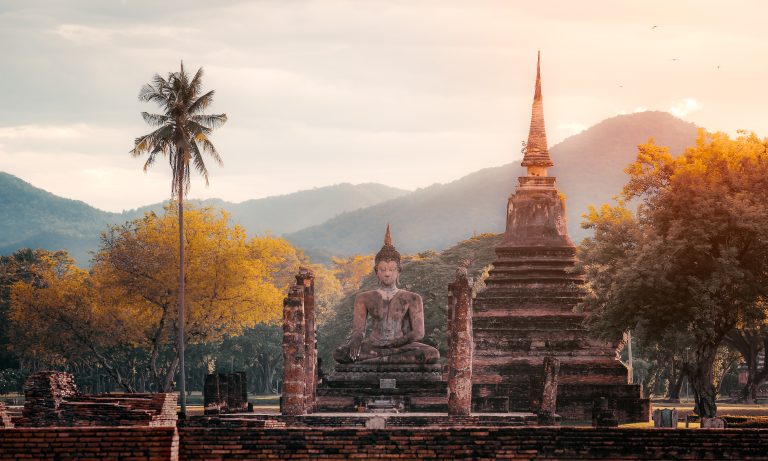
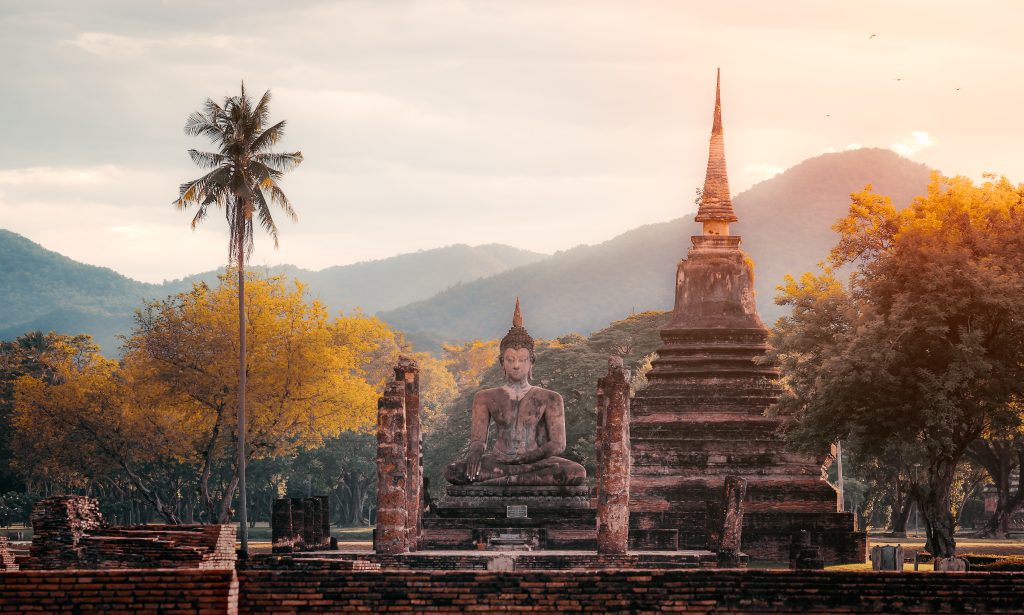
One of the most popular day trips from the capital Bangkok is to the ancient Thai capital of Ayutthaya. The ancient city is on the UNESCO World Heritage list and lies about 70 km north of Bangkok. Ayutthaya was built in the middle of the 14th century, and the kingdom was ruled from here until the war with Burma in the 17th century, when the city was completely destroyed and looted. Today all that remains of the ancient capital are ruins, some of them swallowed by vegetation, and legends of the splendour of the former city, but a sense of grandeur still hangs in the air. You’ll be able to stroll along the streets of the historic complex and see some of the oldest and most impressive ancient temples in the country. Along with the ruins of the ancient capital, in Ayutthaya you can also visit the nearby royal summer residence, as well as the largest statue of the Buddha in a reclining pose (32 metres long).

Author
Vilislav Alkantara