
Without a doubt, Plovdiv is one of the Bulgarian cities richest in sights and a favourite place for a day out – I suspect not only for me but for many of you too. I recently told you about the 10 most interesting sights in the City of the Seven Hills and, because of the great interest on your part, I decided to devote this blog post to the most attractive places near Plovdiv. That way you can easily combine your trip to the ancient city with another little spot nearby. The article is also suitable for those of you who live in Plovdiv or close to it and find it hard to choose where to go at the weekend.
The region around Plovdiv is especially rich in places that will take your breath away – protected areas, eco-trails, waterfalls, lakes, caves and unique rock formations, monasteries and fortresses that have preserved the Bulgarian spirit for centuries. I certainly couldn’t fit all the sights around Plovdiv into one article, so I decided to gather here the 10 most interesting places that are truly worth visiting.
Asenovgrad and Asen’s Fortress (22 km from Plovdiv)
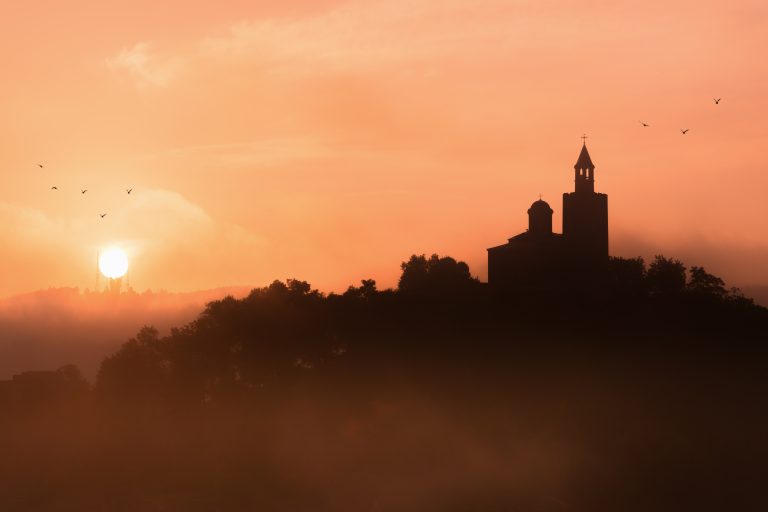
I’ll start with a place I’m very fond of – Asen’s Fortress in Asenovgrad. Only 15 minutes or so from Plovdiv, Asen’s Fortress stands tall in the foothills of the mountains like a true guardian, proudly watching over the pass between Thrace and the Aegean coast. It once played an important strategic role, and today it’s one of the most visited and best-known sights in the country. The fortress is truly astonishing from the moment it comes into view from the road. It’s one of the best-preserved and best-maintained fortresses in Bulgaria. The greatest sight in the fortress is definitely the church that rises above the rocks – “Holy Mother of God Petrichka”, built in the 13th century.
Besides Asen’s Fortress, you can also take a stroll around Asenovgrad. In the town you can visit the Palaeontology Museum, the History Museum and the Fish Church, which will make your trip here even more complete.

Bachkovo Monastery “Dormition of the Mother of God” (28 km from Plovdiv)
Right next to Asenovgrad, about 30 minutes by car from Plovdiv, lies Bachkovo Monastery “Dormition of the Mother of God” – one of the oldest monasteries in the Balkans, and one of the most visited and best-loved places among Bulgarians, as well as many foreigners, thanks to its unique ancient architecture.
The monastery was founded in 1083 by the Georgian Gregory Pakourianos, who made a donation for its construction, and in the 14th century it became Bulgarian. The monastery complex is linked to many legends and mysteries. It’s believed that after the fall of the Tarnovo Kingdom, it was precisely here that Patriarch Evtimiy was exiled, and where he later died. The monastery’s greatest treasure and the relic that draws the most visitors is the icon of the Mother of God, considered to be miracle-working.

Around the monastery there are also several eco-trails you can walk if you’re a nature lover. I also strongly recommend that you sit down in one of the restaurants in Bachkovo and try the local Rhodope cuisine, and the mekitsi are an absolute must.
The Wonderful Bridges (72 km from Plovdiv)
Nestled in the heart of the Rhodopes are the Wonderful Bridges – a uniquely beautiful place well known among tourists. It’s beautiful in winter and summer alike, thanks to the breathtaking 360-degree landscape views. The road is narrow with lots of bends, so drive carefully. What’s interesting about this rock phenomenon is that hundreds of thousands of years ago the Wonderful Bridges were a cave, formed by the waters of the Erkyupriya River. The karst rocks collapsed as a result of the mechanical action of the water, creating the magnificent rock formations that attract and impress so many tourists today. Once you’ve explored and are tired of clambering around the area, don’t miss the chance to enjoy some Mursalski tea at the hut right next to the car park.

Belintash (52 km from Plovdiv)
For centuries the Bulgarian mountains have been filled with spirituality, mysteries and legends. Belintash is one of the places in our lands that attract lovers of the mystical. Literally translated, the name of the area means “the white stone”. According to archaeological research, a sanctuary – probably Thracian – once stood on the plateau, surrounded by a fortress wall. Some archaeologists suggest that this is the famous sanctuary of Dionysus, but these remain unconfirmed facts. Local legends, meanwhile, say that during the Flood it was the rock massif of Belintash that served as a mooring for Noah’s Ark. The area is very beautiful, suitable both for a walk in nature and for a picnic. I recommend watching the sunset from here. An incredible view opens up towards Karadzhov Kamak and Krastova Gora. For those of you who haven’t yet had the chance to visit – do it.

Krastova Gora (62 km from Plovdiv)
Krastova Gora is in the Central Rhodopes, about an hour and twenty minutes’ drive from Plovdiv. The area is known for its high level of energy, and it’s believed that a fragment of the Cross of Christ is buried there and that the ground there is holy. The place attracts people from all over the country, who even sleep here under the open sky, hoping that their prayers will be heard and that they will be cleansed. Some even take pebbles from the area and bring them home. It’s believed that every pebble bears a cross and contains powerful energy. There are also many people who share stories of miracles that happened to them after spending a night at the holy site. Many tales about Krastova Gora circulate among the locals and make the area even more intriguing for visitors.

The Red Church near Perushtitsa (23 km from Plovdiv)

This Christian basilica was built in the early Middle Ages – around the 5th–6th century AD. Together with the Metropolitan Church in Nessebar, it is among the only surviving early Christian churches on the Balkan Peninsula. The church has been restored, and the area around it has been turned into a beautiful park. When you go to Perushtitsa, don’t miss a visit to the Church of St Archangel Michael, which served as a stronghold for the Bulgarians during the April Uprising of 1876.
The town of Perushtitsa is 30 minutes from Plovdiv. If you’re visiting the Red Church, I recommend you also take a look at the archaeological finds in the town’s History Museum. Near Perushtitsa there are also lots of eco-trails, waterfalls and places for walks in nature.
Koprivshtitsa (87 km from Plovdiv)
Koprivshtitsa is a Revival-era town nestled in the Sredna Gora mountains, and it certainly deserves your attention. It’s a little town that impresses with its narrow cobbled streets lined with colourful houses, and lots and lots of history. One of the symbols of the Bulgarian spirit and an absolute open-air architectural museum.
Koprivshtitsa is a suitable destination, both for a day trip and for a whole weekend. There’s definitely plenty to see in the area around the town too.

Hisarya (45 km from Plovdiv)
Hisarya is a real little corner of paradise in southern Bulgaria, less than an hour’s drive from Plovdiv. It’s no coincidence that it was here, in 1882, that Ivan Vazov wrote his poem “Beloved Fatherland, how beautiful you are!”. Besides being known for its healing mineral springs, the little town is also famous for one of the best-preserved late Roman fortresses in the country. In the last century Hisarya established itself as a spa resort thanks to its mineral springs, and today there are many spa centres here for rehabilitation and relaxation. That’s exactly why it’s suitable both for a day trip and for longer – who would turn down a spa weekend amid the greenery and tranquillity of the ancient town? Speaking of ancient, perhaps this is the place to mention that the natural features and healing properties of the water were appreciated by the Romans, and at the end of the 3rd century Emperor Diocletian founded Diocletianopolis (today’s Hisarya). Archaeological excavations have uncovered massive residential buildings, an amphitheatre, thermal baths, commercial facilities and a well-built street system. All of this points to the town’s high economic standing.

Starosel (50 km from Plovdiv)
Starosel is right next to Hisarya, so you could even combine the two places and explore them in a single day. It’s a magical place with wonderful nature, fresh air, cleansing energy and a rich history linked to the ancient Thracians. In the village you can visit the Thracian tomb, then take a walk around it and recharge in the calm that reigns all around. Nearby there’s a Thracian sanctuary, a Thracian royal residence and the remains of a fortress.
Evidently the area around Plovdiv is rich in mineral springs with healing properties. Like Hisarya, Starosel also has spa hotels, so you could easily treat yourself to a very pleasant weekend far from the noise of the city.

Sopot, Karlovo and Kalofer (64 km from Plovdiv)
Last but not least, I’m including three very important towns that were key to the Bulgarian National Revival. The little towns at the foot of the Balkan Mountains, Sopot, Karlovo and Kalofer, are so close to one another that I decided to bring them together as one destination. They are about an hour from Plovdiv. Sopot is the birthplace of the great Bulgarian poet and writer Ivan Vazov, Karlovo that of the freedom fighter and national hero Vasil Levski, and Kalofer is where the poet and revolutionary Hristo Botev was born. All three towns are of great importance both for our history and for our national identity, so it’s good to visit them at least once in our lives.
Besides the house-museums of Ivan Vazov, Vasil Levski and Hristo Botev respectively, you can visit a whole host of other sights – churches, monasteries, Revival-era schools, museum exhibitions, mosques, the remains of a fortress, eco-trails and waterfalls.

Author
Vilislav Alkantara