
I always talk about my home town, Veliko Tarnovo, with pride. Wherever I’ve been in the world, whatever beauty I’ve seen, Tarnovo still holds pride of place in my heart and mind. All those layers of thousand-year-old history, the winding lanes, the houses perched like a flock of swallows on the hills above the Yantra, the little workshops and shops along Samovodska Charshiya, the secret spots with romantic views over the town. Pure beauty! But most importantly, the town has managed to keep the Bulgarian spirit alive and to give Bulgarians hope in the darkest years of our history. There’s no doubt that, even today, Tarnovo is one of the pillars of Bulgarian identity.

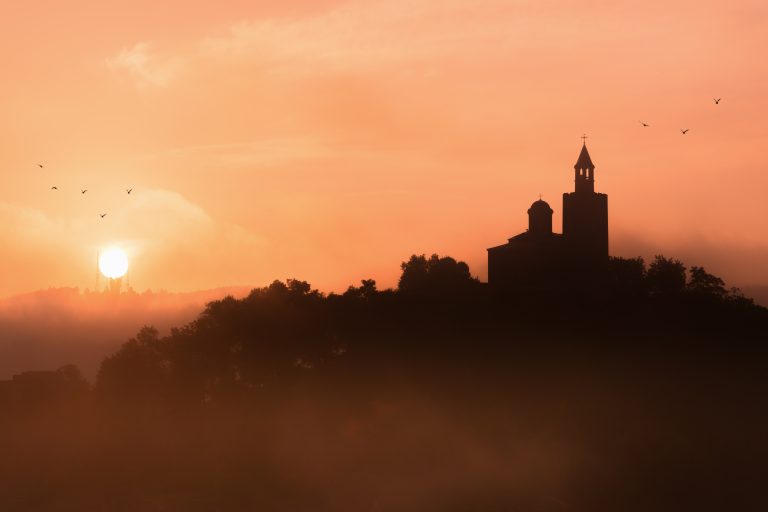
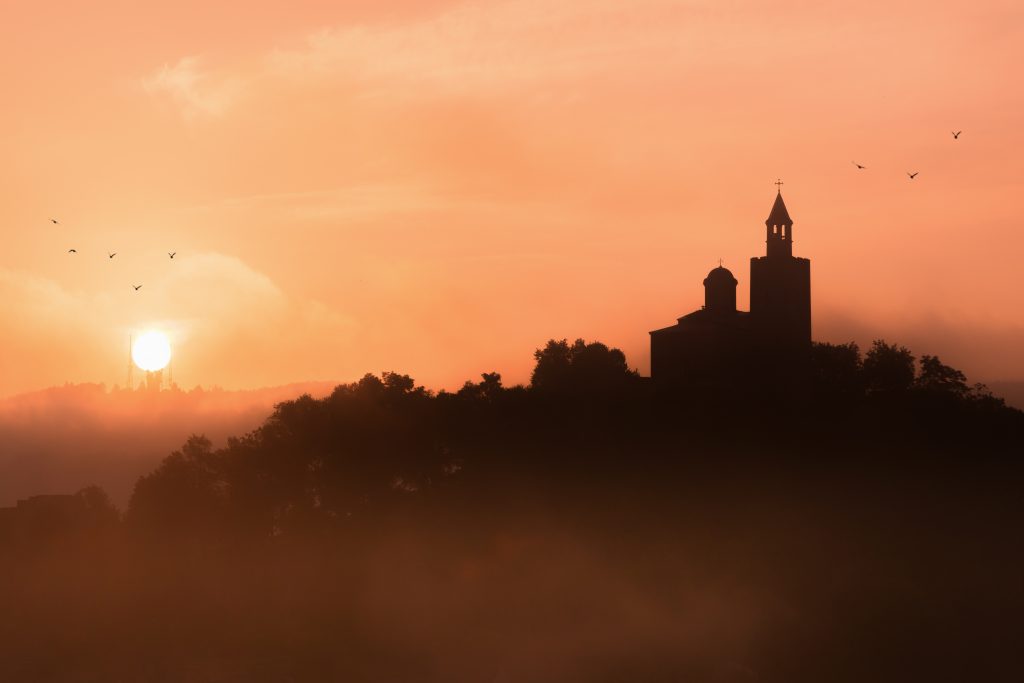
There’s no question that the first place to visit when you arrive in the Old Capital is Tsarevets. The largest and most important fortress of Tarnovgrad. The place from which the most powerful empire in the Balkans was ruled during the Second Bulgarian Empire. Having dusted itself off, the fortress is no less majestic today than it was back in the 12th century. This was the heart of a once-glorious kingdom. On the summit of the hill stood the royal palace, with its royal chambers, throne room and palace church.

Of course, through a combination of circumstances and a string of historical events, all that’s left of Tsarevets today are ruins – but they’ve been well conserved and restored, and presented in a way that gives visitors at least some idea of what the fortress once looked like. It’s one of the most visited tourist sites in the country, and that doesn’t surprise me at all. Ever since I was a child, Tsarevets has been one of my favourite places for a walk in my home town of Tarnovo.
Even today, there’s a strict procedure for getting into the fortress, but back in the day it was completely impregnable, with its three gates and a deep chasm right in front of the first one. On top of that, the high hill was further fortified with towers and walls 2.5–3.5 m thick.

Tsarevets in the time of the Thracians
The earliest traces of life on Tsarevets date back to the late Chalcolithic, around 4200 BC. Later, the hill was home to Thracian settlements, and in around the 5th century an early Byzantine fortress was built there. It’s thought that around this time part of the population of the Roman town of Nicopolis ad Istrum, which was then in decline, moved up onto the hill. Legends from this period tell of how the Romans carried the town’s riches into tunnels beneath the hill, reachable only through intricate labyrinths and galleries. When they had to retreat, they set deadly traps in the galleries and smeared them with poison. Either this story is entirely true and the treasure has buried itself for ever, or it’s pure legend. Supporting both theories, the mythical treasure has never been found to this day.
The hill of the tsars

Bulgarians actually settled the hill in the 8th century, building their town on the remains of an old Byzantine fortress. Even so, Tsarevets saw its greatest heyday during the Second Bulgarian State, and it all began with the uprising of the brothers Asen and Peter and the founding of the Asen dynasty. Today we still enter through the same main gate our tsars once used. Crossing the wooden bridge, built over the two rocks to make the crossing easier, I remember how as a child I’d look down, terrified of falling. It’s several dozen metres high, and back then the planks of the bridge were old and rickety. Today the bridge has been made safe and renovated. The fortress draws visitors from all over the world. What struck me was that on the very day we visited, three coachloads of Chinese tourists pulled up on the square in front of the hill, and the tourists marched off briskly towards the gates. They too were trying to take the fortress – just without a fight.

Today, the remains of the densely built medieval town have been fully excavated. You can make out individual quarters with their own churches and large homes – probably wealthy ones for their time – with narrow lanes winding between them. There was no shortage of little shops and workshops either. Between the 12th and 14th centuries around 3,000 people lived on the hill.
On the summit of the hill stand the royal palace and the Patriarchal Church of the Holy Ascension – both completely destroyed after Tarnovo fell to the Turks. Excavations at the fortress only began after the Liberation. The Patriarchal Church has been rebuilt, but only the foundations of the palace remain, as there isn’t enough evidence of exactly what it looked like or how tall it was, and any such reconstruction would be pure fantasy.
The Siege of Tarnovo
There are events in our history that we all know about, but whose details remain hazy because of a lack of historical records. One such moment is the siege of Tarnovo and its fall to the Ottomans. We’ve all studied, read and watched all sorts of things about this turning point in our history, but we don’t know what’s true, what’s legend and what’s an outright lie.

The Ottoman sultan was Bayezid I. Bulgaria was split into separate tsardoms and despotates (the Despotate of Dobrudzha, the Tsardom of Vidin and the Tsardom of Tarnovo) and the state was weakened. On the throne of the Tsardom of Tarnovo sat Tsar Ivan Shishman. In the spring of 1393 a huge Ottoman army surrounded Tarnovo, the capital of the Tsardom of Tarnovo. At the time it was the most developed and best-defended city, as well as the most important strategically. The Ottomans, led by Bayezid I’s son, besieged the city from all sides.
Meanwhile, Tsar Ivan Shishman was in the equally well-fortified town of Nikopol, waiting for reinforcements from Sigismund. The Bulgarian people were led by the Bulgarian Patriarch Euthymius of the day. After a three-month siege, Tarnovo fell. According to the officially accepted version, Patriarch Euthymius decided to surrender the city to spare the people from famine and disease, negotiating good terms, which the Turks failed to honour. There are also legends that the city fell through the treachery of a Bulgarian who revealed a secret passage to the Turks for a bag of gold coins, and who, once the city was taken, was killed by the Turks themselves for betraying his own people.
Whichever story is true, Tarnovo fell on 17 July 1393. The city was shown no mercy: all the boyars and people in power were slaughtered. Every church in Tarnovo was torn down and burned, and the Patriarchal Church was turned into a mosque. St Euthymius of Tarnovo, later canonised, was sent into exile.
Baldwin’s Tower

At the south-eastern end of the fortress, towering over the rocks, stands the defensive tower known as Baldwin’s Tower. Its name actually comes from a legend too – that in 1205, after his defeat by Tsar Kaloyan at Adrianople, the Latin Emperor Baldwin of Flanders was taken prisoner and met his death in the tower. Whether that’s exactly what happened has never been proven.
According to one of the best-known legends, the tsaritsa, Kaloyan’s wife, asked to see the captured Latin prince. The guards let her in to see him, and he was lying wounded on the cold stone floor. The tsaritsa went over to him, saw his wound and bandaged it. Captivated by her beauty and kind heart, Baldwin fell in love with her. She visited him in his cell often, until Tsar Kaloyan forbade the guards to let her see the prisoner. Baldwin fell ill with grief and threw himself from the tower to his death.
Sound and Light
If you’re lucky, or if you visit the town on a public holiday, you can enjoy the spectacular ‘Sound and Light’ show. I’ve seen it more than once, and the dramatic music, ringing bells and flashing lights take me back through the centuries, then leave me speechless with goosebumps. It was first staged in 1985 to mark the 800th anniversary of Asen and Peter’s uprising. Since then it has become one of Veliko Tarnovo’s biggest attractions, drawing thousands of people from all over Europe especially to see it.


Author
Vilislav Alkantara