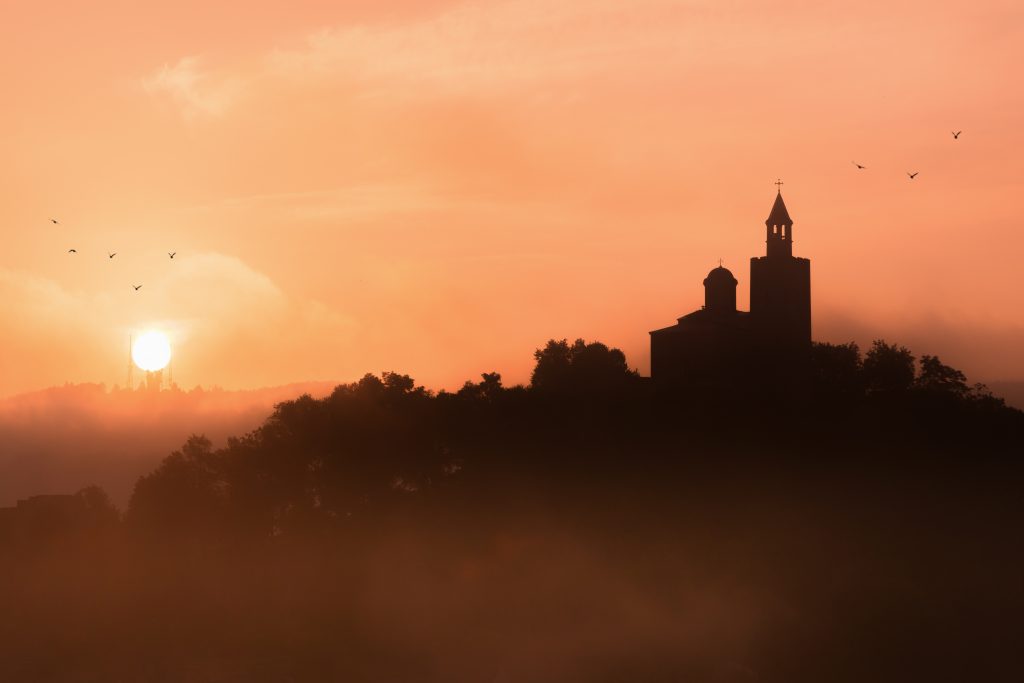

Endless meadows, forest paths carpeted with autumn leaves, a mystical hill, a wooden bridge and a Roman fortress hidden behind strangely shaped trees that guard centuries-old secrets. This was perhaps the last sunny weekend of 2020, and I managed to escape the capital and breathe in the fresh mountain air of the countryside. In this blog I’ll tell you about the ancient complex of Tsari Mali Grad near the village of Belchin, close to Samokov, just 53 km from Sofia – a brilliant choice for a quick escape from the madness of the city.

Where is Belchin?
I first heard about Tsari Mali Grad a few years ago, when the project to restore and conserve the fortress was completed, but I never had the chance to visit until now. We decided pretty much at the last minute, but these spontaneous, unplanned trips are my absolute favourites. We set off early in the morning – me and my friend and colleague from Dubai, Luiza. Belchin is a small village nestled between the Rila, Verila, Vitosha and Plana mountains, 53 km from the capital. The village is also known for its thermal mineral springs, whose water is said to help with a whole range of ailments.
In fact, this would be my third time in Belchin, but the first time I’d actually explore it and make it up to Tsari Mali Grad. The first two times I was there for team-building events a few years ago.

St Spas Hill
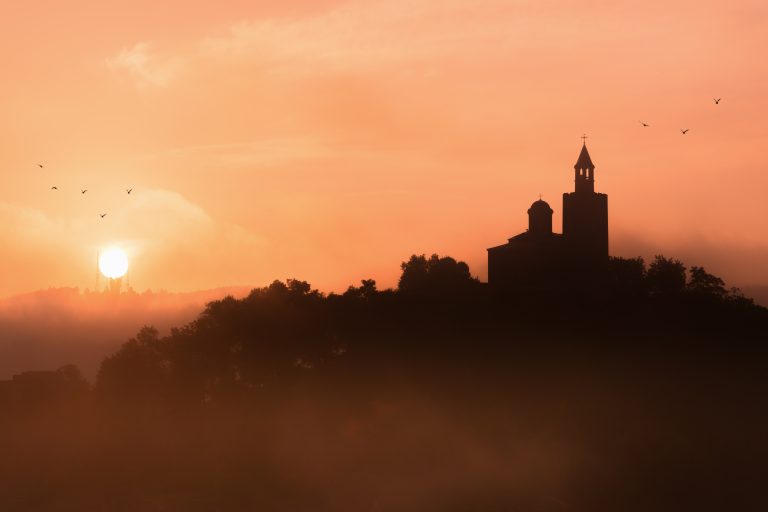
St Spas Hill sits on the ridge of the Verila mountains, above the village. At its foot there’s a large car park where you can leave the car right next to the funicular (lift) that takes you up to the fortress itself. The fortress of Tsari Mali Grad, whose name is thought to mean “Little Constantinople”, is an open-air museum – a textbook example of the continuity between the cultures and civilisations that have lived on our lands. Excavations in front of the fortress entrance uncovered a Christian church, probably built in the 14th–15th centuries. Further digging revealed that the church was built on top of an older basilica from the 6th century. And the surprises don’t stop there. Beneath it were found the foundations of a church dated to the 370s, making it one of the oldest Christian buildings in our lands. And further down still, the remains of a pagan sanctuary came to light.

Six watchtowers have been uncovered at the fortress, two of which have been fully restored and now house the museum display of coins and artefacts found during the excavations. Entry to the museum is included in the ticket. I recommend climbing to the top of the towers, where you get an incredible view of the four mountains that surround Belchin like loyal guardians. The large courtyard has been turned into a lovely park displaying ancient siege engines and a scale model of the complex.

I noticed that as well as the fortress itself, the area around it has been spruced up too. Two new eco-trails have been laid through the forest, which you can take back down to the car park, and there’s also a wooden rope bridge, wide paths and a children’s playground, with information boards everywhere. The fortress even offers audio guides, just like the world’s great museums and sights. The restoration project was funded by the “Regional Development” operational programme, and you can really tell it was done with genuine care.

Ethnographic Museum
The Ethnographic Museum was built in 2007 at the foot of St Spas Hill. The museum building is a newly built replica of an old 19th-century National Revival house in Belchin. The ground floor has an archaeological display of finds from the “Tsari Mali Grad” fortress and a collection of manuscripts and original early printed books. Among the unique pieces on show is the 16th-century prayer book (trebnik) of Bozhidar Vuković. Upstairs there’s an ethnographic collection of folk costumes, a rich collection of pots and vessels, original textiles and bed covers, children’s cradles and a working loom you can actually weave on.

The medieval church has been fully restored and declared an archaeological and architectural monument of national importance. Services are still held there, and at the same time it houses a permanent exhibition of icons. The church is covered in murals and has also kept a unique iconostasis.
Useful information
Combined ticket – adults: 6 leva; pupils, students and pensioners: 3 leva.
Fortress entry – adults: 4 leva; pupils, students and pensioners: 2 leva.
Ethnographic Museum entry – adults: 2 leva; pupils, students and pensioners: 1 lev. Children under 7 and people with disabilities go free.

Author
Vilislav Alkantara